
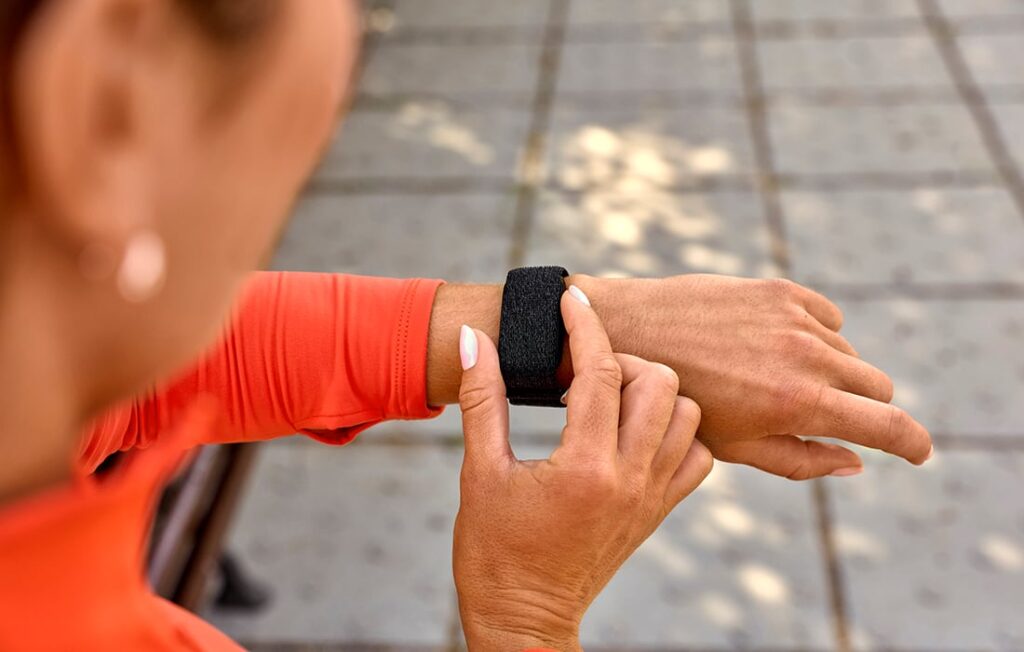
Key Takeaways — The Garmin CIRQA ($199.99) is the screenless fitness tracker most people should buy in 2026, delivering Whoop-style wear-and-forget tracking with no annual fee.
- Best for serious athletes: Whoop 5.0 — the most aggressive recovery coaching, at $199–$359/yr
- Budget pick: Amazfit Helio ($99) — everything free in the Zepp app, thinner software
- The catch: going screenless costs real-time feedback — if you pace off your wrist mid-run, buy a running watch
For years, “screenless fitness tracker” meant one thing: Whoop, plus a mandatory membership bill. That changed in July 2026, when Garmin shipped the CIRQA — its first screenless fitness tracker — at $199.99 with no subscription required for any core feature. The category now has five serious contenders, two business models, and one very clear question at the center of it: do you want to pay once, or pay forever?
Short version of our answer: the Garmin CIRQA ($199.99) is the screenless fitness tracker most people should buy in 2026, because it delivers the Whoop-style wear-it-and-ignore-it experience without the annual fee. Whoop 5.0 remains the pick for athletes who want the deepest recovery coaching and accept a $199–$359/yr membership. Amazfit Helio Strap ($99) is the budget sleeper with genuinely strong heart rate accuracy, Fitbit Air ($99) is the easiest entry point for casual users in the Google ecosystem, and Polar Loop ($199) is a defensible pick for Polar loyalists — with an app caveat we’ll get to.
One honesty note before the rankings: we haven’t strapped these on ourselves yet; here’s exactly where each claim comes from. This is a launch-window category audit. Every measurement we cite is labeled — hands-on test data comes from DC Rainmaker’s August 2026 accuracy deep-dive of these exact five devices, spec claims are marked (brand-supplied), and anything we couldn’t verify to a primary source simply doesn’t get printed as fact. When we get our own units on wrists, we’ll replace sections in place and log the changes.
The best screenless fitness trackers at a glance
| Pick | Product | Price | Subscription |
|---|---|---|---|
| Best overall | Garmin CIRQA | $199.99 | None required |
| Best for serious training data | Whoop 5.0 | $199–$359/yr (hardware included) | Mandatory |
| Best budget accuracy | Amazfit Helio Strap | $99 | None |
| Best for casual users | Fitbit Air | $99 | Core features free |
| For Polar ecosystem users | Polar Loop | $199 | None |
| Ring alternative | Oura Ring 4 | From $349 | Membership required |
Why would anyone want a fitness tracker with no screen?
A screenless fitness tracker strips the watch part out of the smartwatch: no display, no notifications, no glancing at your wrist mid-meeting. What’s left is a sensor band that records heart rate, sleep, strain, and recovery around the clock, and reports everything through a phone app.
That trade cuts three ways. First, battery: without a display to power, these bands run one to two weeks between charges, which matters enormously for sleep tracking — a tracker that’s charging on your nightstand at 2 a.m. records nothing. Second, distraction: there’s no screen to check, so there’s nothing to check. Reddit threads about Whoop and CIRQA keep returning to the same phrase — users want a “set it and forget it” device that collects data silently and stays out of the way. Third, wearability: a fabric band with a sensor pod is comfortable enough to sleep in and invisible under a shirt cuff, and several of these (Whoop, CIRQA, Helio) can be worn on the upper arm, where optical heart rate accuracy is measurably better than on the wrist.
The cost of going screenless is real-time feedback. If you’re a runner who paces off your wrist, or you want to see your heart rate zone mid-interval without pulling out a phone, a screenless band is the wrong tool — buy a running watch. For everyone whose actual use case is “track my sleep, recovery, and workouts without another screen in my life,” this category is now the most interesting corner of wearables.
The subscription question is the whole ballgame
Every other spec in this category — battery, sensors, comfort — is closer than the marketing suggests. The genuine divide is the business model, and 2026 is the year that divide became impossible to ignore. Here’s the full picture:
| Product | Subscription required? | What’s free | What’s paywalled |
|---|---|---|---|
| Garmin CIRQA | No | 24/7 heart rate, sleep, Body Battery, stress, auto activity detection, training metrics (VO2 max, Training Readiness, Load), HR broadcast, connected GPS | Optional Garmin Connect+: in-app Garmin Coach courses, structured workouts, nutrition tracking, manual laps and a live HR graph in Live Activity view |
| Whoop 5.0 | Yes — mandatory | Effectively nothing | Everything: Recovery, Strain, Sleep, Health Monitor. Tiers at $199/yr (One), $239/yr (Peak), $359/yr (Life), hardware included |
| Polar Loop | No | Full Polar Flow platform with hardware purchase | Nothing |
| Fitbit Air | Core features: no | Steps, sleep, heart rate, workout tracking | Gemini AI Health Coach requires Fitbit Premium (roughly $10; billing cycle unverified) |
| Amazfit Helio Strap | No | Everything, via the free Zepp app | Nothing |
| Oura Ring 4 | Yes — membership | Limited | Full insights require ongoing membership on top of the $349+ ring |
Sources: Garmin CIRQA subscription boundary per DC Rainmaker’s July 2026 hands-on FAQ (hands-on data: DC Rainmaker, Jul 2026); Whoop pricing per whoop.com (brand-supplied, Aug 2026); others as noted in the product sections below.
The pattern worth naming: over five years, a Whoop Life membership costs $1,795. A CIRQA costs $199.99 once. Whether Whoop’s software depth justifies a 9x cost difference is a personal call — we’ll make the case both ways below — but you should make it with the math in front of you. We ran the same numbers across the wrist-worn category in our guide to the best fitness trackers without a subscription, and the conclusion holds here: the free tier of 2026’s one-time-purchase trackers now covers what subscription services charged for in 2023.
1. Garmin CIRQA — best screenless fitness tracker for most people
$199.99 · no subscription · up to 10 days battery (brand-supplied)
The CIRQA is the product this category has been waiting for, and the reason this guide exists. Consider this section a launch-window Garmin CIRQA review, assembled from Garmin’s official documentation and DC Rainmaker’s two extensive hands-on reports — with our own wear-test to follow.
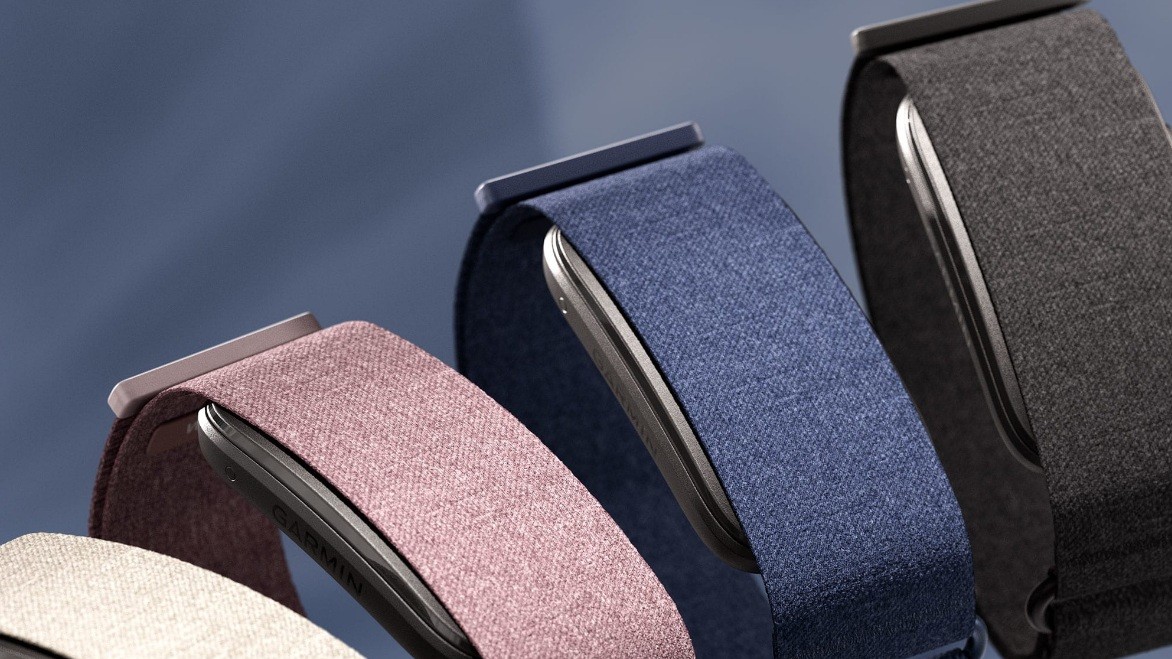
The CIRQA’s four fabric-band colorways. Image: Garmin press photo, via Android Central.
The pitch is simple: the Whoop experience, paid for once. The CIRQA is a screenless fabric band with a sensor pod that tracks heart rate, sleep, stress, and Body Battery (Garmin’s 0–100 energy score) continuously, auto-detects workouts, and feeds it all into Garmin Connect — the same free app that serves Garmin’s $1,000 watches. A single button on the pod lets you manually start any of 80+ activity types (brand-supplied). It borrows connected GPS from your phone for outdoor routes, broadcasts heart rate to gym equipment and cycling computers over ANT+ and Bluetooth, and syncs with the Natural Cycles fertility app for cycle tracking — that integration needs Natural Cycles’ own subscription, but nothing on the Garmin side does.
That last point deserves precision, because early coverage muddled it. One widely-shared roundup claimed “real-time heart rate” requires a subscription on CIRQA. DC Rainmaker’s FAQ settles it: “Does Garmin Cirqa require any subscription? No, it does not… there’s no core feature that requires it” (hands-on data: DC Rainmaker, Jul 2026). The actual boundary: Garmin Connect+ — the optional paid layer — adds in-app Garmin Coach training courses, structured workout support, nutrition tracking, and two conveniences inside the Live Activity phone view: manual lap marking and a live heart-rate graph. Your heart rate is recorded 24/7 and broadcast to external devices for free, always. Training metrics like VO2 max and Training Readiness — the numbers Whoop’s Recovery score competes with — are also free.
Where does it fall short? Battery is the honest asterisk. Garmin claims up to 10 days (brand-supplied), but DC Rainmaker’s August testing notes reader and reviewer experience of the “Cirqa already struggling (imho) to hit their battery claims” (hands-on data: DC Rainmaker, Aug 2026). Ten days is also simply less than Whoop’s claimed 14+. And Garmin Connect, deep as it is, presents data with less editorial hand-holding than Whoop’s app — Whoop tells you what to do today; Garmin shows you the numbers and expects you to read them.
Buy it if you want continuous health and recovery tracking with zero recurring cost, especially if you already live in the Garmin ecosystem. Skip it if you want the most aggressive recovery coaching available and don’t mind paying yearly for it — that’s the next pick.
Price: $199.99 (brand-supplied, garmin.com, Aug 2026)
2. Whoop 5.0 — the subscription incumbent, still the deepest coach
$199–$359/yr with hardware included · mandatory membership · 14+ days battery (brand-supplied)
Whoop invented this category, and its software is still the reference point. The 5.0 hardware tracks strain, recovery, and sleep continuously, and the app converts that into a daily prescription: how recovered you are, how hard to push, when to back off. The Journal feature correlates behaviors — alcohol, late meals, travel — against your recovery data over time, which no one else in this comparison matches. Battery is officially rated at 14+ days (brand-supplied, whoop.com, Aug 2026), the best claim in the category. A note on conflicting reports: some 2026 roundups still cite 4–5 days, a figure that contradicts Whoop’s current official spec and likely describes older hardware; we’re going with the primary source.
The structural issue is the model. There is no meaningful free tier: membership runs $199/yr (One), $239/yr (Peak), or $359/yr (Life), hardware included, and if you stop paying, the band stops being useful. Year one, Whoop One and CIRQA cost the same $199. Year two, one of them costs $199 again.
So the cirqa vs whoop decision comes down to a clean trade. Whoop gives you a longer battery claim, more opinionated coaching, and behavior-correlation tools that serious athletes genuinely use. CIRQA gives you the same fundamental loop — wear it, forget it, read your recovery in the morning — plus free HR broadcast and Garmin’s training metrics, for a single payment. DC Rainmaker’s August accuracy deep-dive tested both head-to-head along with the Fitbit Air, Helio, and Polar Loop (hands-on data: DC Rainmaker, Aug 2026); the takeaway for buyers is that optical sensor accuracy across this group is close enough that the decision should be made on software and cost, not sensors.
Buy it if you’re training seriously, you’ll actually act on daily recovery guidance, and the membership math doesn’t bother you. Skip it if you’re subscription-averse — in 2026 you no longer have to compromise much to be.
Price: from $199/yr (brand-supplied, whoop.com, Aug 2026)
3. Amazfit Helio Strap — best budget screenless tracker
$99 · no subscription · Zepp app free
The Helio Strap’s headline is a number: in Wareable’s testing, worn on the upper arm, its heart rate readings tracked within 1–2 BPM of a Garmin chest strap (hands-on data: Wareable, Aug 2026). A chest strap is the accuracy benchmark optical sensors chase, and a $99 band getting that close — at half the price of a CIRQA and a fraction of a Whoop membership — is the best value story in the category.
Everything is free in the Zepp app: no premium tier, no locked insights (media-reported). The trade-offs are the ones you’d expect at $99. Zepp’s software is functional rather than polished, the recovery guidance is thinner than Garmin’s and far thinner than Whoop’s, and Amazfit doesn’t have Garmin’s track record of multi-year software support. But as a pure training-data device — strap it to your arm, get chest-strap-grade heart rate, pay nothing ever again — it’s the pick we’d hand a lifter or a budget-minded athlete without hesitation.
Buy it if you want maximum heart rate accuracy per dollar and don’t need deep coaching. Skip it if app quality matters to you as much as sensor quality.
Price: $99 (hands-on data: DC Rainmaker, Jul 2026)
4. Fitbit Air — best screenless tracker for casual users
$99 · core tracking free · Gemini AI coach requires Fitbit Premium
The Fitbit Air is Google’s entry into the screenless band race, launched around May 2026, and by DC Rainmaker’s account the market response has been “borderline record-breaking” (hands-on data: DC Rainmaker, Aug 2026). It’s easy to see why: it’s $99, it carries the most recognizable name in casual fitness tracking, and the core package — steps, sleep, heart rate, workout tracking — is free, no Premium required.
Two things to know before buying. First, accuracy at launch was rough, but it’s moving fast: DC Rainmaker’s August deep-dive notes Fitbit “improved substantially in the ~3 months since the release” (hands-on data: DC Rainmaker, Aug 2026) — a reminder that these devices are software products, and Google is iterating. Second, the marquee feature, the Gemini AI Health Coach, sits behind Fitbit Premium at roughly $10 (billing cycle unverified). The free tier is genuinely useful; the AI coach is the upsell.
On battery, we’re deliberately not printing a number: published figures conflict (one outlet lists “7–9 hours,” almost certainly a units error), and we couldn’t confirm an official spec. Expect multi-day life (exact figure unverified), and check Google’s store listing before you buy.
Buy it if you want the simplest, cheapest on-ramp to screenless tracking, especially alongside Android and Google Health. Skip it if you want training depth — that’s CIRQA or Whoop territory.
Price: $99 (hands-on data: DC Rainmaker, Jul 2026)
5. Polar Loop — for Polar loyalists, with an app caveat
$199 · no subscription · full Polar Flow access included
Polar’s screenless band gets the business model right: $199 once (hands-on data: DC Rainmaker, Jul 2026), and the complete Polar Flow platform comes with it — a platform with decades of training-science credibility behind it. For someone already running Polar watches and sensors, the Loop slots into an existing data history, and that continuity is worth something no rival can offer.
The reservation is software experience. Wareable’s review describes Polar Flow as dated and not really redesigned around a screenless device (media-reported: Wareable, Aug 2026) — the app was built for watch owners, and a screenless tracker leans on its app for everything. Community reception has been rockier still, with some Reddit and forum threads describing the launch software as buggy (community reports, unverified). Polar can patch its way out of this, and its hardware pedigree is real. But in August 2026, buying a Loop over a CIRQA at the identical $199 price means betting on the app improving.
Buy it if you’re invested in Polar’s ecosystem or prefer its training-load methodology. Skip it if you’re brand-neutral — the CIRQA is the stronger package at the same price.
Price: $199 (hands-on data: DC Rainmaker, Jul 2026)
The ring alternative: Oura Ring 4
Not every screenless tracker is a band. The Oura Ring 4 (from $349, brand-supplied, ouraring.com, Aug 2026; up to 8 days battery, media-reported) remains the most refined sleep and recovery tracker you can wear on a finger, and for pure lifestyle tracking — sleep, readiness, temperature trends — it’s arguably the most comfortable option in this article. Two reasons it’s a sidebar here rather than a ranked pick: it requires a membership on top of the ring price, and rings are a poor fit for actual training. Reviewers consistently warn that rings scratch during lifting and misread heart rate in high-intensity work (media-reported: Wareable and TheGadgetFlow, 2026) — if you lift, wear a band, or take the ring off at the gym door. We compare Oura’s approach against Samsung’s subscription-free ring in our Oura Ring 4 vs Samsung Galaxy Ring breakdown.
Comparison table
| Garmin CIRQA | Whoop 5.0 | Amazfit Helio Strap | Fitbit Air | Polar Loop | |
|---|---|---|---|---|---|
| Price | $199.99 | $199–$359/yr (hw incl.) | $99 | $99 | $199 |
| Subscription | None required | Mandatory | None | Core free; AI coach paid | None |
| Battery (claimed) | Up to 10 days¹ | 14+ days | Multi-day² | Unverified³ | Multi-day² |
| HR broadcast | Yes (ANT+/BLE), free | No | No | No | Yes |
| GPS | Connected (phone) | Connected (phone) | Connected (phone) | Connected (phone) | Connected (phone) |
| App | Garmin Connect (free) | Whoop (membership) | Zepp (free) | Fitbit (free tier) | Polar Flow (free) |
| Best for | Most people | Coached athletes | Budget accuracy | Casual users | Polar users |
¹ Brand-supplied; DCR testing suggests real-world results may fall short. ² No verified official figure; multi-day per media reports. ³ Published figures conflict; not printed.
Frequently asked questions
What is the best fitness tracker with no screen?
For most people in 2026, the Garmin CIRQA ($199.99). It matches the screenless form factor Whoop established, tracks heart rate, sleep, stress, and recovery around the clock, and requires no subscription for any core feature — confirmed in DC Rainmaker’s hands-on FAQ (Jul 2026). Serious athletes who want prescriptive daily coaching may still prefer Whoop 5.0 and its mandatory membership; budget buyers should look at the $99 Amazfit Helio Strap or Fitbit Air.
Why would a fitness tracker be screenless?
Three reasons: battery life measured in weeks rather than days, better sleep tracking (nothing glowing on your wrist at night, and no nightly charging gap), and zero distraction — no notifications, no time-checking, nothing to fiddle with. The screenless design targets people who want health data collected passively and reviewed once a day in an app, with nothing on the wrist demanding attention. The cost is no real-time feedback during workouts.
Is Garmin coming out with a screenless fitness tracker?
It already has. The Garmin CIRQA launched July 21, 2026 at $199.99 — Garmin’s first screenless fitness tracker (brand-supplied: Garmin newsroom, Jul 2026). It’s a fabric band with a sensor pod, sold in seven colors, with a claimed 10-day battery, and no subscription required; an optional Garmin Connect+ tier adds coaching courses, structured workouts, and nutrition tracking.
Will Apple ever make a screenless fitness tracker?
Apple hasn’t announced one, and nothing verifiable points to one shipping. Apple’s health strategy centers on Apple Watch, where screens, apps, and services drive its ecosystem. The screenless segment’s momentum in 2026 came from Garmin, Google’s Fitbit, Amazfit, and Polar entering territory Whoop pioneered. Treat any specific “Apple screenless band” claim you encounter as rumor until Apple says otherwise.
Bottom line
The story of 2026 in this category is that the subscription toll booth now has a bypass lane. Whoop built the screenless fitness tracker and still runs its most sophisticated software — but the CIRQA delivers the essential experience for one payment of $199.99, and it comes from a company with a long record of not paywalling health data. Buy the CIRQA if you want the best all-around screenless fitness tracker with no subscription. Buy Whoop if the coaching depth earns its annual fee from you. Buy the Helio Strap if accuracy per dollar is the whole question, and the Fitbit Air if you just want to start. Whatever you pick, you’ll charge it every week or two, forget it’s there, and let the data accumulate — which is the entire point.
We’ll update this guide with our own hands-on findings; sections above will be replaced in place with a changelog as testing completes.
Sources
- DC Rainmaker — “Garmin Cirqa: Everything You Need to Know” — 📅 2026-07 — hands-on review (subscription boundary FAQ, pricing context)
- DC Rainmaker — “Accuracy Deep-Dive: Garmin Cirqa, Whoop 5.0, Fitbit Air, Amazfit Helio, Polar Loop” — 📅 2026-08 — hands-on review (comparative testing, battery caveat, Fitbit Air trajectory)
- Garmin — CIRQA product page (garmin.com/en-US/p/1989182/) — 📅 2026-08 — brand-supplied (price, battery claim)
- Garmin — Newsroom press release, “Meet cirqa smart band” — 📅 2026-07-21 — brand-supplied (launch date, colors, feature list, Natural Cycles)
- Whoop — Membership page (whoop.com) — 📅 2026-08 — brand-supplied (tier pricing, 14+ day battery claim, hardware generation)
- Oura — ouraring.com — 📅 2026-08 — brand-supplied (Ring 4 as current flagship, from $349)
- Wareable — “Best wearables for discreet fitness tracking” — 📅 2026-08-04 — media review (Helio Strap HR test vs chest strap, Polar Flow app critique, Oura Ring 4 battery, ring-vs-lifting guidance)
- AskVora — screenless tracker roundup — 📅 ~2026-07 — media (commercial blog; used only where cross-confirmed)
- TheGadgetFlow — screenless tracker roundup — 📅 ~2026-06 (timestamp inconsistent; treated cautiously) — media (used only where cross-confirmed)
Unpocket independently evaluates every product we recommend. When you buy through our links, we may earn a commission at no extra cost to you. This doesn’t influence our rankings.
Related reads: