
Best Smartwatch for Android Users 2026: 7 Picks Beyond Apple Watch
Let’s address the elephant in every Android user’s room: the Apple Watch is great, and you can’t use it.
Apple’s ecosystem lock-in strategy means the world’s most popular smartwatch requires an iPhone. No exceptions, no workarounds, no clever Bluetooth hacks. If you carry an Android phone, the Apple Watch is a product that exists only in YouTube reviews and on the wrists of your iPhone-owning friends. And based on the community frustration we’ve tracked across Reddit, tech forums, and wearable communities throughout 2025 and into 2026, this isn’t just mildly annoying — it’s a genuine pain point that shapes how Android users think about smartwatches.
“Apple Watch ecosystem lock-in is frustrating for Android users” is one of the most consistent sentiments we see in wearable technology discussions. But here’s the thing most people don’t realize: the Android smartwatch market in 2026 is better than it’s ever been. Not “almost as good as Apple Watch” better — genuinely, distinctively better in several important ways.
Wear OS has matured into a serious platform. Google’s acquisition of Fitbit has infused health tracking expertise into the Pixel Watch line. Samsung’s partnership with Google produced Galaxy Watch 8, which arguably surpasses the Apple Watch in hardware design. Garmin continues to dominate sports tracking by a margin nobody else is close to matching. And budget players like Amazfit and Huawei deliver shocking value for under $150.
Here at Unpocket, we tested seven Android-compatible smartwatches across every dimension that matters — design, health tracking, performance, app ecosystem, battery life, and value. Whether you’re a premium buyer who wants the absolute best, a fitness enthusiast who needs GPS accuracy that can handle an ultramarathon, or a budget shopper who wants a capable smartwatch without spending $300+, we’ve found your watch.
Let’s get into it.
How We Evaluate Smartwatches for Android
Smartwatches serve a fundamentally different purpose than smart rings or smart glasses. They’re active interaction devices — you tap them, glance at them, respond to notifications, track workouts in real time, and navigate with them on your wrist. Our evaluation framework reflects this active use case.
1. Wear OS Integration & App Ecosystem
For Android smartwatches, the software platform is as important as the hardware. We evaluate Wear OS implementation quality, app availability, Google Assistant/Gemini integration, Google Maps navigation, and notification handling. Watches running proprietary operating systems are evaluated on their own merits but noted for their ecosystem limitations.
2. Health & Fitness Tracking
Heart rate accuracy during exercise (not just rest), GPS accuracy for outdoor activities, sleep tracking quality, SpO2 monitoring, and the depth of workout tracking modes. We test during actual runs, bike rides, and gym sessions — not just sitting at a desk.
3. Display Quality
Brightness, resolution, always-on display quality, and outdoor readability. A smartwatch you can’t read in sunlight fails its most basic function. We test in direct sun, shade, and indoor conditions.
4. Battery Life
Real-world battery with typical usage: always-on display, continuous heart rate, notifications, and a 30-minute GPS workout per day. Manufacturer claims are fantasy numbers; our testing reflects reality.
5. Design & Comfort
Weight, case thickness, band quality, and all-day wearability. A watch that’s uncomfortable after four hours or looks like a hockey puck on your wrist has failed before you even open the app.
6. Value Proposition
Features per dollar, longevity, and update commitment. A $349 watch that gets three years of OS updates is a better value than a $249 watch abandoned after one year.
Best Smartwatch for Android 2026: Our Top 7 Picks
1. Google Pixel Watch 4 — Best for Pure Android Experience
If you want a smartwatch that feels like it was designed to work with your Android phone — not adapted from another platform, not bolted onto an existing ecosystem, but purpose-built from the ground up for Android — the Google Pixel Watch 4 is the answer.
Google’s fourth-generation smartwatch represents the maturation of everything the company learned from acquiring Fitbit and developing Wear OS. The hardware is refined, the software is seamless, and the integration with Google’s services (Assistant, Gemini AI, Maps, Wallet, Calendar) is so tight that the watch feels less like a companion device and more like an extension of your phone.
Key Specs
| Spec | Detail |
|---|---|
| Price | $349 |
| OS | Wear OS 5 |
| Processor | Qualcomm Snapdragon W7 Gen 2 |
| Display | 1.4″ AMOLED, 456×456, 2000 nits |
| Battery | ~24 hours (AOD on), ~36 hours (AOD off) |
| Health Sensors | Heart rate, SpO2, ECG, skin temperature, cEDA |
| GPS | Multi-band GNSS |
| Water Resistance | 5 ATM |
| Connectivity | LTE optional, Wi-Fi, Bluetooth 5.3, NFC |
| Weight | 31g (without band) |
Deep Dive
Wear OS Integration. The Pixel Watch 4 runs the purest version of Wear OS 5, unencumbered by Samsung’s One UI overlay or other manufacturer customizations. This means you get Google’s vision of a smartwatch OS without compromise — and that vision has gotten remarkably good. Notification handling is smooth and intuitive, with smart replies powered by Gemini AI that actually feel relevant to the conversation. Google Maps navigation on your wrist provides turn-by-turn directions with haptic feedback, which is genuinely useful during walking or cycling navigation. Google Wallet enables tap-to-pay everywhere NFC is accepted.
The Gemini AI integration is the headline feature for 2026. Ask the watch a question, and Gemini provides contextually aware answers that account for your location, calendar, and preferences. It’s not just a voice assistant — it’s a genuine AI companion that understands context. “What time is my next meeting?” pulls from your calendar. “Where’s the nearest coffee shop?” uses your location. “Summarize my notifications” distills a screen full of alerts into a sentence. This is the smartwatch AI experience that every manufacturer promised and Google finally delivered.
Health & Fitness Tracking. Google merged Fitbit’s health expertise into the Pixel Watch line, and the results are excellent. The heart rate sensor is accurate during both rest and moderate exercise, with readings consistently within 2–4 BPM of our chest strap reference during running. ECG capability provides on-demand heart rhythm assessment. Sleep tracking is comprehensive, with sleep staging, skin temperature trends, and a Sleep Profile feature that characterizes your sleep patterns over time.
The Fitbit integration means you also get the Fitbit community features — challenges with friends, badges, and a social accountability layer that Samsung and Garmin don’t match. For users motivated by social fitness, this is a real advantage.
GPS accuracy has improved significantly with the Pixel Watch 4’s multi-band GNSS. Route tracking during outdoor runs is reliable, with minimal drift in urban canyons (a persistent weakness of earlier Pixel Watches). It’s still not Garmin-level GPS performance, but it’s more than adequate for recreational runners and cyclists.
Display Quality. The 1.4″ AMOLED display is bright (2000 nits peak), sharp (456×456), and readable in direct sunlight. The always-on display mode is well-implemented, showing time and complications without excessive battery drain. The circular design is elegant and feels like a proper watch face rather than a shrunken phone screen.
Battery Life. This is the Pixel Watch 4’s weakest point, though it’s improved over previous generations. With always-on display enabled, continuous heart rate monitoring, and typical notification volume, expect about 24 hours of battery life. Turn off AOD and you can stretch it to 36 hours. Either way, this is a watch you charge every night. For users accustomed to multi-day smartwatch battery life, this is a dealbreaker. For users coming from Apple Watch (similar battery), it’s expected.
Design & Comfort. The Pixel Watch 4 is small, light (31g), and beautifully designed. The domed glass creates a distinctive look that’s immediately recognizable as a Pixel Watch. The case is thinner than previous generations, reducing the “bubble on wrist” criticism of earlier models. It’s comfortable for all-day wear including sleep tracking, though the proprietary band connection means you’re limited to Pixel Watch-specific bands.
Pros
- Purest Wear OS experience with direct Google service integration
- Gemini AI on wrist is genuinely transformative
- Excellent health tracking with Fitbit expertise baked in
- Beautiful, lightweight design
- NFC payments via Google Wallet
- Multi-band GPS with improved accuracy
Cons
- 24-hour battery life (with AOD) requires nightly charging
- Proprietary band system limits strap choices
- $349 price point is premium territory
- GPS accuracy still trails Garmin for serious athletes
- Smaller display than Samsung Galaxy Watch 8
Best For
Pixel phone owners and Android purists who want the most seamless, integrated smartwatch experience with best-in-class AI features. If you value Google ecosystem integration above all else, this is your watch.
Price: $349 | [AFFILIATE_LINK_PixelWatch4]
2. Samsung Galaxy Watch 8 — Best All-Around Android Smartwatch
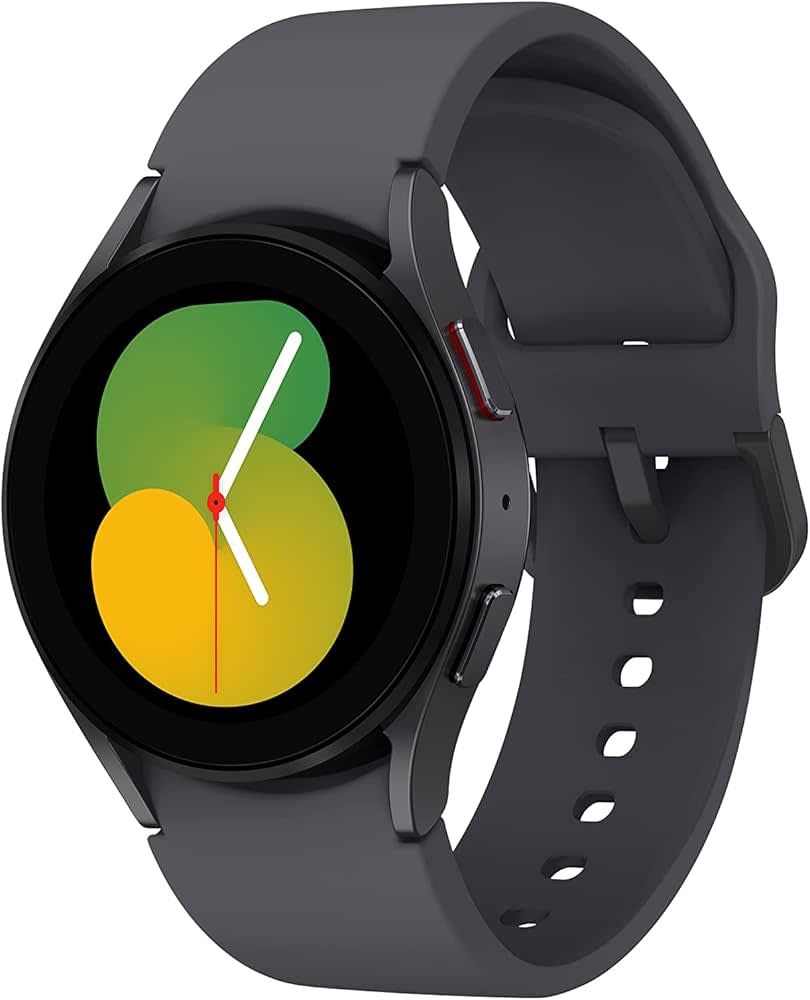
The Samsung Galaxy Watch 8 is the Swiss Army knife of Android smartwatches — it does everything well and most things excellently. It’s the watch we recommend to anyone who asks “what’s the best smartwatch for Android?” without qualifying the question further. Not the best for running, not the best for budget, not the best for Google fans — the best for most people.
Key Specs
| Spec | Detail |
|---|---|
| Price | $299 (40mm) / $329 (44mm) |
| OS | Wear OS 5 with One UI Watch 6 |
| Processor | Samsung Exynos W1000 |
| Display | 1.5″ Super AMOLED (44mm), 480×480, 3000 nits |
| Battery | ~40 hours (typical use) |
| Health Sensors | BioActive Sensor (HR, SpO2, ECG, BIA, skin temp) |
| GPS | Dual-frequency GNSS |
| Water Resistance | 5 ATM + IP68 |
| Connectivity | LTE optional, Wi-Fi, Bluetooth 5.3, NFC |
| Weight | 33g (40mm without band) |
Deep Dive
Wear OS + One UI. Samsung runs Wear OS 5 with their One UI Watch 6 overlay, which adds Samsung-specific features and design elements on top of Google’s base. The result is a more feature-rich but also more opinionated experience than the Pixel Watch. You get Samsung’s rotating digital bezel (a brilliant interaction method that makes the Pixel Watch’s touch-only navigation feel primitive), Samsung Pay alongside Google Wallet, and Samsung Health alongside Google Fit.
The dual-ecosystem approach is both a strength and a mild annoyance. You have access to both Samsung’s and Google’s app ecosystems, but you’ll occasionally encounter duplicated features or apps. Google Maps and Samsung’s own navigation both work. Google Assistant and Bixby both live on the watch (though most users immediately disable Bixby). It’s not messy, exactly, but it’s not as clean as the Pixel Watch’s single-ecosystem approach.
Health & Fitness Tracking. Samsung’s BioActive Sensor is the most comprehensive sensor package on any smartwatch. Beyond standard heart rate and SpO2, it includes electrical heart signal monitoring (ECG), bioelectrical impedance analysis (BIA) for body composition, and continuous skin temperature monitoring. Body composition measurement — estimating body fat percentage, skeletal muscle mass, and body water — is unique to Samsung among the watches on this list. It’s not laboratory-accurate, but for trend tracking over time, it’s a fascinating and useful data point.
Heart rate accuracy during exercise is excellent, matching or beating the Pixel Watch 4 in our testing. Sleep tracking is comprehensive and has improved significantly, with sleep coaching features that provide actionable recommendations. The integration with Samsung Galaxy Ring (if you own one) creates a powerful 24/7 health monitoring combination.
Display Quality. The 44mm model’s 1.5″ Super AMOLED display is the largest and brightest on this list at 3000 nits peak. It’s gorgeous — vibrant, sharp, and effortlessly readable in any lighting condition. The always-on display is well-optimized, and the watch face ecosystem (including both Samsung and third-party designs) is the largest in the Android smartwatch world.
Battery Life. Here’s where Samsung pulls ahead of Google. The Galaxy Watch 8 consistently delivers 36–40 hours of battery life with always-on display, continuous heart rate, and typical notification volume. That’s enough to wear it through a full day, sleep in it, and still have juice the next morning. With battery saver modes, you can push it to 2+ days. It’s not Garmin territory, but it’s meaningfully better than the Pixel Watch 4.
Design & Comfort. The Galaxy Watch 8 is a proper-looking timepiece. The 44mm version hits the sweet spot for most wrists — large enough to be functional, small enough to be elegant. Standard 20mm watch bands fit all models, giving you access to thousands of third-party strap options — a significant advantage over the Pixel Watch’s proprietary system. Build quality is excellent, and the sapphire crystal display resists scratches admirably.
Pros
- Best all-around feature set for Android users
- BioActive Sensor with unique body composition measurement
- Excellent 36–40 hour battery life
- Brightest display (3000 nits) among Wear OS watches
- Standard 20mm bands — massive strap ecosystem
- Samsung Galaxy Ring integration for 24/7 monitoring
- Rotating digital bezel is the best smartwatch interaction method
Cons
- Best experience requires a Samsung Galaxy phone
- One UI overlay adds complexity (dual ecosystems)
- Bixby still ships as default assistant (replace with Google Assistant immediately)
- BIA body composition is directional, not clinical
- $299–$329 is mid-premium pricing
Best For
Samsung Galaxy phone owners who want the most feature-complete smartwatch available, and Android users who prioritize battery life and display quality over Google ecosystem purity. The safest, most versatile choice for most people.
Price: $299–$329 | [AFFILIATE_LINK_GalaxyWatch8]
3. Samsung Galaxy Watch Ultra — Best Premium Android Smartwatch
Samsung’s answer to the Apple Watch Ultra, and a compelling one. The Galaxy Watch Ultra is for users who want the absolute best Samsung has to offer — the largest display, the longest battery, the toughest build, and the most capable GPS tracking in a Wear OS package.
Key Specs
| Spec | Detail |
|---|---|
| Price | $649 |
| OS | Wear OS 5 with One UI Watch 6 |
| Processor | Samsung Exynos W1000 |
| Display | 1.5″ Super AMOLED, 480×480, 3000 nits |
| Battery | ~60 hours (typical) / ~100 hours (battery saver) |
| Health Sensors | BioActive Sensor (full suite) |
| GPS | Multi-band GNSS with dual-frequency |
| Water Resistance | 10 ATM + IP68 |
| Connectivity | LTE, Wi-Fi, Bluetooth 5.3, NFC |
| Weight | 60g (without band) |
| Material | Titanium case, sapphire crystal |
Deep Dive
The Premium Proposition. The Galaxy Watch Ultra is about excess in the best possible way. The titanium case is built for abuse — hiking, climbing, water sports, construction sites, whatever punishment your lifestyle delivers. The 10 ATM water resistance exceeds the standard Galaxy Watch 8 and handles swimming, snorkeling, and water sports without concern. The sapphire crystal is effectively scratch-proof for daily wear.
Battery Life. This is the Ultra’s defining advantage. Approximately 60 hours of typical use with always-on display means you can wear it for two and a half days without charging. Enable battery saver mode and you’re looking at four days. For Wear OS smartwatches — a category plagued by mediocre battery life — this is exceptional. Weekend trips without a charger? Absolutely possible.
GPS Performance. The multi-band GNSS system is the most accurate GPS implementation on any Wear OS watch we’ve tested. Route tracking during runs is precise even in urban canyons and dense forest. For trail runners, hikers, and cyclists who need reliable navigation and accurate distance tracking, the Ultra competes with Garmin’s mid-range offerings — high praise given Garmin’s dominance in this area.
Health Tracking. Identical BioActive Sensor to the Galaxy Watch 8, which means you get the same excellent health tracking in a tougher package. The larger battery means the Ultra can maintain higher-frequency sensor polling without the battery anxiety of smaller watches.
Design Consideration. At 60g and with a 47mm case, the Galaxy Watch Ultra is big. On smaller wrists, it looks and feels like a statement piece. On larger wrists, it’s substantial but proportional. This isn’t a watch for people who want discretion — it’s a watch for people who want the most capable wearable tech strapped to their wrist and don’t mind it being visible.
Pros
- Exceptional 60-hour battery life (100 hours in battery saver)
- Titanium construction for extreme durability
- Best GPS accuracy among Wear OS watches
- Full BioActive Sensor suite
- 10 ATM water resistance for serious water sports
- Premium materials and build quality
Cons
- $649 is a significant investment
- 60g weight is heavy for daily wear
- 47mm case is too large for smaller wrists
- Identical software to Galaxy Watch 8 (you’re paying for hardware)
- Requires Samsung Galaxy phone for full feature set
- Diminishing returns vs. Galaxy Watch 8 for most users
Best For
Adventure enthusiasts, outdoor athletes, and premium buyers who want the toughest, longest-lasting Wear OS watch available. If you regularly push your gear to its limits — or just want the confidence that your watch can handle anything — the Ultra delivers.
Price: $649 | [AFFILIATE_LINK_GalaxyWatch8]
4. Garmin Venu X1 — Best for Sports & Fitness
Garmin doesn’t make the prettiest smartwatch. They don’t make the smartest one. They make the one that athletes actually trust, and there’s a reason Garmin remains the default choice for serious runners, cyclists, triathletes, and outdoor enthusiasts despite Apple and Samsung pouring billions into their smartwatch lines.
The Garmin Venu X1 bridges Garmin’s sports expertise with smartwatch-level daily features, making it the first Garmin that doesn’t require you to sacrifice connectivity and smart features for athletic capability.
Key Specs
| Spec | Detail |
|---|---|
| Price | $249+ |
| OS | Garmin OS |
| Display | 1.4″ AMOLED, 416×416, always-on |
| Battery | ~5 days (smartwatch mode), ~8 hours (GPS mode) |
| Health Sensors | Elevate v5 (HR, SpO2, skin temp), altimeter, compass |
| GPS | Multi-GNSS (GPS, GLONASS, Galileo) |
| Water Resistance | 5 ATM |
| Connectivity | Bluetooth, Wi-Fi, ANT+ |
| Weight | 40g (without band) |
Deep Dive
Sports & Fitness Tracking. This is Garmin’s domain, and nobody comes close. The Venu X1 offers over 30 built-in sport profiles with sport-specific metrics that competitors don’t even attempt. Running gets cadence, ground contact time, vertical oscillation, and training effect analysis. Cycling gets power zone estimates, VO2 max tracking, and FTP testing. Swimming gets stroke recognition, SWOLF scores, and pool/open water distinction.
The Training Readiness score combines HRV, sleep, recovery, and training load history to tell you whether today should be a hard day, easy day, or rest day. Race Predictor estimates your finishing time for 5K, 10K, half marathon, and marathon based on your current fitness. Training Effect shows the aerobic and anaerobic impact of each workout immediately after you finish. These aren’t gimmicks — they’re tools that competitive athletes use to structure their training.
GPS Accuracy. Garmin’s multi-GNSS implementation is the gold standard for wrist-based GPS. Route tracking is consistently accurate across environments — urban, forest, mountains, canyons. In our side-by-side testing with the Samsung Galaxy Watch 8 and Pixel Watch 4, the Garmin consistently produced the tightest, most accurate GPS traces. For runners who care about accurate pace data and cyclists who track exact routes, this matters.
Health Tracking. Garmin’s Elevate v5 sensor provides solid heart rate, SpO2, and skin temperature tracking. It’s not quite Samsung’s BioActive Sensor in breadth (no ECG, no BIA), but the basics are well-executed. Sleep tracking uses Garmin’s Sleep Score and Body Battery energy monitoring system, which is intuitive and useful — Body Battery gives you a single number (0–100) representing your energy reserves throughout the day, based on sleep, stress, activity, and HRV.
Battery Life. Five days in smartwatch mode is excellent for an AMOLED-equipped device. Eight hours of continuous GPS tracking handles even ultramarathon-length activities for most runners. Compared to the Pixel Watch 4’s 24-hour battery, the Garmin offers a fundamentally different ownership experience — you charge it twice a week instead of every night.
The Smart Feature Gap. Here’s Garmin’s weakness: it doesn’t run Wear OS. That means no Google Assistant, no Google Maps turn-by-turn navigation, no app store with thousands of third-party apps, no Google Wallet for NFC payments (Garmin Pay works but with fewer bank partnerships). Notifications are display-only on most interactions — you can see them but replying is limited. If you want a wrist-sized smartphone companion, Garmin isn’t it. If you want a health and fitness powerhouse that also shows your notifications, Garmin is unmatched.
Garmin Connect Ecosystem. Garmin’s app ecosystem is deep and passionate. Garmin Connect provides detailed analysis of every activity, and the community features — segment leaderboards, challenge groups, and course sharing — are built by athletes for athletes. The Connect IQ store offers watch faces, data fields, and apps, though the selection is narrower than Google Play’s Wear OS offerings.
Pros
- Best-in-class sports and fitness tracking — nobody is close
- Most accurate GPS among all watches tested
- 5-day battery life in smartwatch mode
- Training Readiness, Race Predictor, and Body Battery are genuinely useful
- Over 30 sport profiles with deep, sport-specific metrics
- ANT+ connectivity for cycling power meters, heart rate straps, and more
- Passionate, athlete-focused community and ecosystem
Cons
- Not Wear OS — limited smart features compared to Samsung and Google
- No Google Assistant, Google Maps, or Google Wallet
- Notification handling is basic (view-only for most)
- Design is functional rather than fashionable
- No LTE option
- Learning curve for Garmin’s extensive settings and data
Best For
Runners, cyclists, swimmers, hikers, and any athlete who prioritizes workout tracking accuracy over smartwatch features. If your wearable’s primary job is to make you a better athlete, the Garmin Venu X1 is the clear choice.
Price: $249+ | [AFFILIATE_LINK_GarminVenu]
5. OnePlus Watch 3 — Best Value Wear OS Watch
OnePlus has a proven formula: take a premium category, strip out the parts you don’t need, and deliver 80% of the flagship experience at 50% of the price. The OnePlus Watch 3 applies this formula to Wear OS smartwatches with impressive results.
Key Specs
| Spec | Detail |
|---|---|
| Price | $229 |
| OS | Wear OS 5 with OxygenOS Watch |
| Processor | Snapdragon W5+ Gen 1 |
| Display | 1.43″ AMOLED, 466×466, 2000 nits |
| Battery | ~4 days (typical use) |
| Health Sensors | Heart rate, SpO2, skin temperature |
| GPS | Dual-frequency GNSS |
| Water Resistance | IP68 |
| Connectivity | Bluetooth, Wi-Fi, NFC |
| Weight | 37g (without band) |
Deep Dive
The Value Equation. At $229, the OnePlus Watch 3 undercuts both the Pixel Watch 4 ($349) and Galaxy Watch 8 ($299) while delivering a Wear OS experience that’s genuinely competitive with both. You get full Google Play Store access, Google Assistant, Google Wallet NFC payments, and Google Maps — the same core Wear OS capabilities as watches costing $100+ more.
Performance. The Snapdragon W5+ processor isn’t the latest generation, but it handles Wear OS 5 smoothly for daily tasks. App opening times are slightly slower than the Pixel Watch 4’s W7 Gen 2 chip, but the difference is measured in fractions of a second — not something you’ll notice in real-world use. Scrolling, notification handling, and workout tracking all feel responsive and fluid.
Battery Life. Four days of real-world battery life splits the difference between the Pixel Watch 4’s 24 hours and the Galaxy Watch 8’s 40 hours. It’s competitive and means you’ll charge roughly twice a week — a reasonable cadence that doesn’t require nightly charging.
Health Tracking. The sensor suite covers the basics well: continuous heart rate, SpO2, sleep tracking with staging, and stress monitoring. Accuracy is solid — within 3–5 BPM of our chest strap during running, which is typical for this sensor tier. You won’t get Samsung’s BIA body composition or ECG, but for standard health monitoring, the OnePlus Watch 3 delivers.
Design. The 1.43″ AMOLED display is bright and sharp, with 2000 nits making it readable in sunlight. The design language is clean and minimalist — neither as distinctive as the Pixel Watch’s domed glass nor as premium as the Galaxy Watch 8’s sapphire crystal, but attractive and professional enough for any setting. Standard band compatibility means endless strap options.
The OnePlus Ecosystem Question. If you own a OnePlus phone, the Watch 3 offers tighter integration — phone camera control, enhanced Bluetooth connectivity, and OxygenOS-specific features. For non-OnePlus Android users, these extras disappear, but the core Wear OS experience remains fully functional.
Pros
- $229 price significantly undercuts Pixel Watch 4 and Galaxy Watch 8
- Full Wear OS 5 with Google Assistant, Wallet, Maps
- 4-day battery life balances smart features with longevity
- Solid health tracking for the price
- Standard band compatibility
- Bright 2000-nit AMOLED display
Cons
- Older Snapdragon W5+ processor (not the latest silicon)
- Health sensors lack ECG and BIA
- IP68 water resistance (less than 5 ATM competitors)
- Smaller brand means fewer accessories and watch face options
- OxygenOS Watch overlay is less refined than One UI Watch
- Update commitment may not match Google or Samsung
Best For
Budget-conscious Android users who want full Wear OS capabilities without the $300+ price tag. The OnePlus Watch 3 is the smartest entry into the Wear OS ecosystem.
Price: $229
6. Amazfit Active 3 — Best Budget Smartwatch
Not everyone needs Wear OS. Not everyone needs Google Assistant on their wrist. Some people want a smartwatch that tracks health accurately, lasts a week on a charge, shows notifications reliably, and costs less than a fancy dinner. The Amazfit Active 3 is that watch.
Key Specs
| Spec | Detail |
|---|---|
| Price | $99 |
| OS | Zepp OS |
| Display | 1.32″ AMOLED, 466×466 |
| Battery | ~14 days (typical use) |
| Health Sensors | BioTracker PPG (HR, SpO2), accelerometer |
| GPS | Single-band GPS |
| Water Resistance | 5 ATM |
| Connectivity | Bluetooth |
| Weight | 36g (without band) |
Deep Dive
The $99 Proposition. The Amazfit Active 3 costs less than a single AirPod. For that price, you get a genuinely capable health tracker with a beautiful AMOLED display, GPS, 14-day battery life, and the mature Zepp app ecosystem. The value is almost absurdly good.
Health Tracking. Amazfit’s BioTracker sensor provides continuous heart rate monitoring, SpO2 measurement, sleep tracking with staging, and stress monitoring. Accuracy is a step below the premium tier — heart rate readings during exercise can deviate 5–8 BPM from reference devices, and sleep staging isn’t as granular as Oura or Samsung’s implementations. But for the price, the health tracking is more than adequate for general wellness monitoring.
Battery Life. Fourteen days. Two full weeks. That’s the Amazfit advantage that no Wear OS watch can touch. The combination of Zepp OS efficiency and AMOLED display optimization means you charge this watch twice a month. For users who are exhausted by the nightly charging ritual of Apple Watch and Pixel Watch, this is a revelation.
Display & Design. The 1.32″ AMOLED display is sharp and colorful, with an always-on mode that barely impacts battery life. At 36g, the watch is light and comfortable. The design is generic but inoffensive — it looks like a smartwatch, not a toy. Multiple color options and standard 20mm bands let you personalize the aesthetic.
Smart Features. This is where the $99 price shows. Zepp OS is not Wear OS. There’s no Google Play Store, no Google Assistant, no Google Wallet. Notifications appear on screen but reply options are very limited. The app ecosystem is Amazfit’s own, which is functional but narrow. If you need your smartwatch to be a mini smartphone on your wrist, the Active 3 isn’t for you. If you need it to track your health and show you the time, it’s exceptional.
Zepp App. The Zepp app is surprisingly polished for a budget device ecosystem. Data visualization is clean, trend tracking works well, and the health insights are useful if not groundbreaking. Integration with major health platforms (Apple Health, Google Fit, Strava) means your data isn’t siloed in Amazfit’s ecosystem.
Pros
- $99 price point is unbeatable for the feature set
- 14-day battery life — charge twice a month
- AMOLED display looks great at any price point
- Adequate health tracking for general wellness
- 5 ATM water resistance
- Mature Zepp app with platform integrations
- GPS for basic outdoor activity tracking
Cons
- Not Wear OS — no Google services, limited app ecosystem
- Health tracking accuracy trails premium watches
- Single-band GPS is less accurate than dual-frequency
- Limited notification interaction (view-only for most)
- No NFC payments
- No ECG, no BIA, no skin temperature
Best For
Budget buyers, smartwatch newcomers, and anyone who values battery life above all else. At $99, the Amazfit Active 3 is also an excellent “try before you invest” option — if you discover you love having a smartwatch, you can upgrade to a Wear OS device later with minimal sunk cost.
Price: $99
7. Huawei Watch Fit 4 — Best Affordable Fitness Watch
Huawei occupies a unique space in the wearable market: banned from Google services in the US, yet producing some of the best-designed, best-performing budget wearables anywhere. The Watch Fit 4 is a fitness-focused watch with an elongated display design that maximizes screen real estate while minimizing wrist presence.
Key Specs
| Spec | Detail |
|---|---|
| Price | $129 |
| OS | HarmonyOS |
| Display | 1.64″ AMOLED rectangular |
| Battery | ~10 days (typical use) |
| Health Sensors | TruSeen 5.5+ (HR, SpO2), accelerometer |
| GPS | Single-band GPS |
| Water Resistance | 5 ATM |
| Connectivity | Bluetooth |
| Weight | 26g (without band) |
Deep Dive
The Rectangular Advantage. Most smartwatches are round. The Watch Fit 4’s rectangular display breaks convention with a 1.64″ elongated AMOLED screen that displays more information per glance — notifications show more text, workout metrics stack more cleanly, and the overall information density is higher than any round watch at this price. If you’ve ever been frustrated by truncated notification text on a round smartwatch, the rectangular format is a revelation.
Health & Fitness. Huawei’s TruSeen 5.5+ sensor delivers heart rate and SpO2 monitoring that’s competitive with Amazfit’s offerings at this price point. The fitness tracking includes over 100 workout modes — an impressive breadth, even if the depth of analytics per mode doesn’t match Garmin. The animated workout guide feature provides on-screen exercise demonstrations, which is genuinely useful for gym workouts.
Battery Life. Ten days of typical use places the Watch Fit 4 between the Amazfit Active 3’s 14-day marathon and the Wear OS watches’ daily charging. It’s a comfortable cadence — once-a-week charging that never causes battery anxiety.
Smart Features. HarmonyOS has no Google services. No Google Assistant, no Google Play, no Google Wallet, no Google Maps. If Google integration is important to you, the Watch Fit 4 is a non-starter. What it does offer is reliable notification display, music control, phone call handling (with the watch’s speaker and microphone), and Huawei’s own health app ecosystem.
The Huawei Consideration. Huawei devices operate outside the Google ecosystem due to US trade restrictions. This means no Google services, limited app ecosystem, and potential concerns about long-term software support and data privacy depending on your perspective. For users who simply want a well-made fitness tracker with smart features and don’t need Google integration, Huawei delivers exceptional hardware value. For users who consider Google services essential, this is a dealbreaker.
Design & Comfort. At 26g without the band, the Watch Fit 4 is the lightest device on this list. The slim rectangular profile hugs the wrist naturally, and the silicone band is comfortable for extended wear including sleep. It looks more like a fitness band than a traditional watch — which is either a pro or a con depending on your aesthetic preferences.
Pros
- $129 price with premium build quality
- Rectangular display shows more information per glance
- 10-day battery life
- Lightest watch on this list (26g)
- Over 100 workout modes with animated guides
- 5 ATM water resistance
- Excellent hardware design for the price
Cons
- No Google services (HarmonyOS)
- No app ecosystem comparable to Wear OS
- No NFC payments (in most markets)
- Single-band GPS accuracy is basic
- Huawei health data ecosystem is relatively isolated
- US trade restriction concerns for some buyers
Best For
Budget fitness enthusiasts who want a lightweight, long-lasting fitness watch with excellent build quality and don’t need Google ecosystem integration. Also a strong choice for users who prefer rectangular display formats.
Price: $129
Complete Comparison Table
| Feature | Pixel Watch 4 | Galaxy Watch 8 | Galaxy Watch Ultra | Garmin Venu X1 | OnePlus Watch 3 | Amazfit Active 3 | Huawei Watch Fit 4 |
|---|---|---|---|---|---|---|---|
| Price | $349 | $299 | $649 | $249+ | $229 | $99 | $129 |
| OS | Wear OS 5 | Wear OS 5 | Wear OS 5 | Garmin OS | Wear OS 5 | Zepp OS | HarmonyOS |
| Battery | ~24h (AOD) | ~40h | ~60h | ~5 days | ~4 days | ~14 days | ~10 days |
| GPS | Multi-band | Dual-freq | Multi-band | Multi-GNSS | Dual-freq | Single-band | Single-band |
| HR Accuracy | Excellent | Excellent | Excellent | Excellent | Good | Adequate | Good |
| ECG | Yes | Yes | Yes | No | No | No | No |
| NFC Pay | Google Wallet | Samsung Pay + Wallet | Samsung Pay + Wallet | Garmin Pay | Google Wallet | No | Limited |
| Display | 1.4″ AMOLED | 1.5″ AMOLED | 1.5″ AMOLED | 1.4″ AMOLED | 1.43″ AMOLED | 1.32″ AMOLED | 1.64″ AMOLED |
| Weight | 31g | 33g | 60g | 40g | 37g | 36g | 26g |
Android Smartwatch Buying Guide

Wear OS vs. Proprietary OS: The Core Decision
This is the first fork in the road:
Choose Wear OS (Pixel Watch 4, Galaxy Watch 8, Galaxy Watch Ultra, OnePlus Watch 3) if you want:
- Google Assistant / Gemini AI on your wrist
- Google Maps navigation
- NFC payments via Google Wallet
- Third-party apps from Google Play Store
- Deep Android phone integration
- Reply to messages from your wrist
Choose Proprietary OS (Garmin, Amazfit, Huawei) if you want:
- Multi-day battery life (5–14 days vs. 1–4 days)
- Superior fitness tracking (Garmin)
- Lower price points (Amazfit, Huawei)
- Charge your watch weekly instead of nightly
There is no wrong choice here — only different priorities. If you’re coming from an Apple Watch, Wear OS will feel most familiar. If you’re coming from a Fitbit or fitness band, the proprietary OS watches will feel like natural upgrades.
Budget Tiers
Under $150 (Entry): Amazfit Active 3 ($99) or Huawei Watch Fit 4 ($129). Excellent health tracking, multi-day battery, limited smart features. Best for health monitoring and fitness tracking without the frills.
$200–$350 (Mid-Range): OnePlus Watch 3 ($229), Garmin Venu X1 ($249), Galaxy Watch 8 ($299), or Pixel Watch 4 ($349). Full-featured smartwatches with meaningful differences in ecosystem, fitness focus, and smart capabilities. Best for users who want a daily-driver smartwatch.
$500+ (Premium): Galaxy Watch Ultra ($649). Maximum durability, battery life, and GPS performance. Best for outdoor enthusiasts and premium buyers.
The Ecosystem Question
Your phone largely determines your best smartwatch choice:
- Samsung Galaxy phone → Samsung Galaxy Watch 8 (best integration)
- Google Pixel phone → Google Pixel Watch 4 (best integration)
- OnePlus phone → OnePlus Watch 3 (best integration) or Galaxy Watch 8 (best features)
- Other Android phone → Galaxy Watch 8 (most compatible) or Garmin Venu X1 (if fitness-focused)
Fitness Priority?
If fitness tracking is your primary use case, the hierarchy is clear:
- Garmin Venu X1 — unmatched for serious athletes
- Samsung Galaxy Watch 8 — best all-around with strong fitness
- Google Pixel Watch 4 — good fitness with Fitbit integration
- Others — adequate for basic fitness tracking
Frequently Asked Questions
Can I use an Apple Watch with an Android phone?
No. The Apple Watch requires an iPhone for initial setup and ongoing connectivity. There are no workarounds, third-party apps, or hacks that make it work with Android. This is a deliberate Apple ecosystem strategy and is unlikely to change.
Which Android smartwatch is closest to the Apple Watch experience?
The Samsung Galaxy Watch 8 offers the closest comparable experience — excellent health tracking, polished software, NFC payments, and broad app support. The Pixel Watch 4 offers the closest software experience with pure Google integration.
Is Wear OS better than it used to be?
Dramatically. Wear OS 5 (built on Google’s collaboration with Samsung) is a different platform from the sluggish, app-barren Wear OS of 2020–2022. Performance is smooth, battery efficiency has improved significantly, and the app ecosystem has expanded substantially. If you tried Wear OS years ago and were disappointed, it’s worth revisiting.
Do I need LTE on my smartwatch?
Most people don’t. LTE allows your watch to make calls, receive messages, and stream music without your phone nearby. It’s useful for runners who leave their phone at home, or for emergencies when your phone isn’t accessible. But it adds cost (both for the hardware upgrade and the additional cellular plan), reduces battery life, and most smartwatch interactions work fine over Bluetooth connection to your phone.
How accurate is GPS on smartwatches for running?
Garmin leads GPS accuracy by a significant margin. Samsung and Google have improved substantially with multi-band GPS, and their accuracy is more than adequate for recreational runners (typically within 1–2% of actual distance). For competitive runners who need precise pace data for interval training, Garmin remains the gold standard.
Can Android smartwatches measure blood pressure?
Samsung Galaxy Watch models have received regulatory approval for blood pressure monitoring in some markets (not the US as of early 2026). The feature requires calibration against a traditional cuff monitor and is intended for trend monitoring rather than diagnostic use. No other Android smartwatch on this list offers blood pressure measurement.
How long will my smartwatch receive software updates?
Google and Samsung both commit to 4 years of Wear OS updates for their flagship watches. Garmin provides updates for significantly longer (some models receive updates for 5+ years). OnePlus, Amazfit, and Huawei have shorter or less defined update commitments. Update longevity directly impacts the long-term value of your purchase.
Our Verdict
The Android smartwatch market in 2026 isn’t playing catch-up to Apple anymore. It’s playing a different game entirely — one with more choices, more price points, and more variety than Apple’s one-watch-fits-all approach.
Here are our picks by use case:
- Best overall for most people: Samsung Galaxy Watch 8 ($299) — the safest, most feature-complete choice that excels at everything without being the absolute best at any single thing.
- Best for Google enthusiasts: Google Pixel Watch 4 ($349) — purest Android experience with transformative Gemini AI integration.
- Best for athletes: Garmin Venu X1 ($249+) — nothing else comes close for serious training.
- Best premium: Samsung Galaxy Watch Ultra ($649) — when you want the absolute best hardware Samsung makes.
- Best value Wear OS: OnePlus Watch 3 ($229) — full Wear OS at the lowest price.
- Best budget: Amazfit Active 3 ($99) — incredible value with 14-day battery life.
- Best affordable fitness: Huawei Watch Fit 4 ($129) — lightest, excellent fitness features, rectangular display.
For the reader who just wants one recommendation: get the Samsung Galaxy Watch 8. It works with any Android phone, tracks health comprehensively, looks good on any wrist, lasts nearly two days on a charge, and does everything a smartwatch should do in 2026. It’s not the cheapest option, and it’s not the most exciting option, but it’s the option you’re least likely to regret.
And if you’re still envying your friend’s Apple Watch? Stop. The grass isn’t greener — it’s just a different shade of green that requires an iPhone to see.
Unpocket independently evaluates every product we recommend. When you buy through our links, we may earn a commission at no extra cost to you. This doesn’t influence our rankings — our methodology and testing process remain the same regardless of affiliate relationships.
Related reads:
- [INTERNAL_LINK_BestSmartGlasses] — Best smart glasses for every budget
- [INTERNAL_LINK_BestSmartRings] — Best smart rings including no-subscription options
- [INTERNAL_LINK_FitnessTrackersNoSubscription] — Own your health data without monthly fees
[AFFILIATE_LINK_PixelWatch4] | [AFFILIATE_LINK_GalaxyWatch8] | [AFFILIATE_LINK_GarminVenu]