
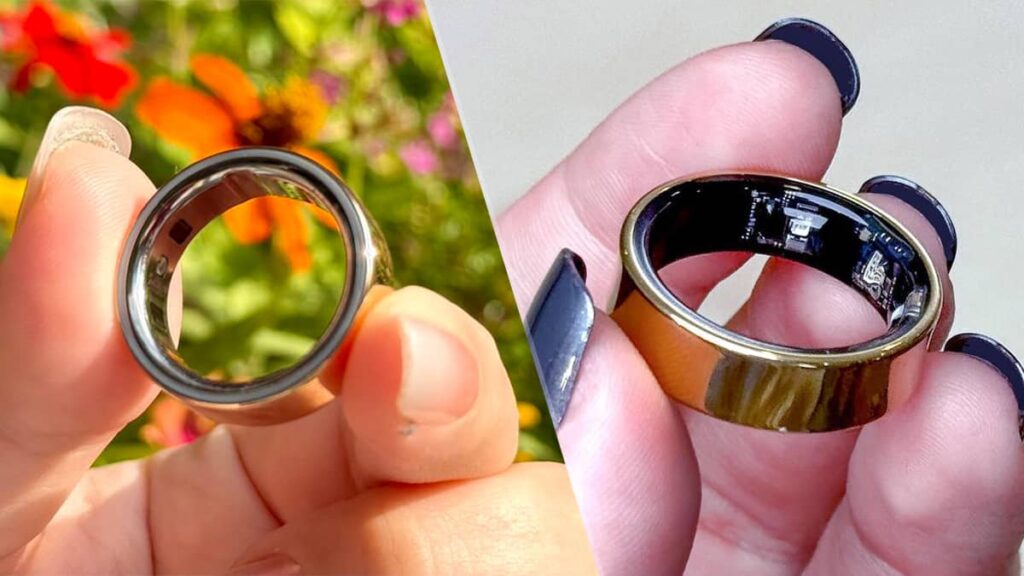
Oura Ring 4 vs Samsung Galaxy Ring: Subscription vs Freedom — Which Is Worth Your Money?
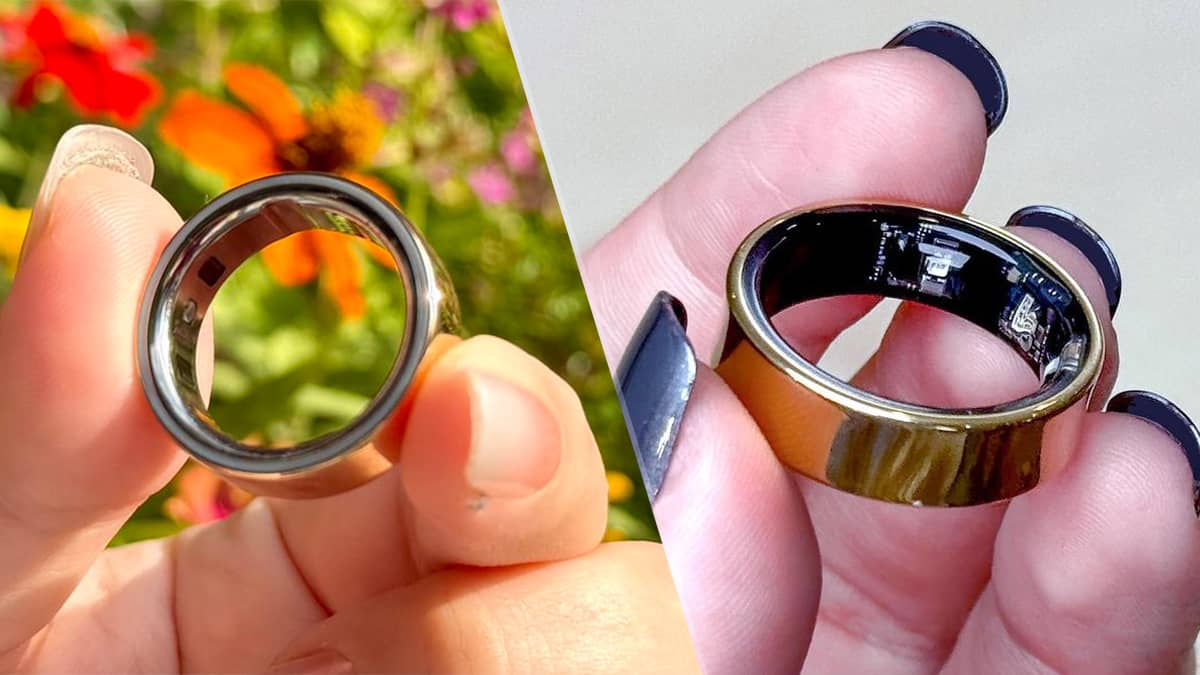
Two rings. Two philosophies. One question that’ll define your wearable health experience for the next three years.
The Oura Ring 4 is the incumbent champion — the ring that essentially created the smart ring category and maintains the most scientifically validated health tracking platform in the consumer market. The Samsung Galaxy Ring is the challenger — backed by one of the world’s largest tech companies, offering comparable features with one revolutionary differentiator: no subscription fee. Ever.
This comparison matters more than most tech versus articles because the decision isn’t just about hardware specs or app design. It’s about a fundamental disagreement over who should own your health data and how you should pay for the privilege of seeing it.
Oura says: pay for the hardware, then pay us monthly for the insights. Samsung says: pay for the hardware, and you’re done. Both approaches have genuine merits. Both have genuine downsides. And the gap between them — in accuracy, features, and user experience — is narrower in 2026 than it’s ever been.
We’ve worn both rings simultaneously for extended testing periods, compared their readings against clinical-grade reference devices, lived with both apps daily, and calculated the true cost of each option over three years. Here’s what we found.
The 3-Year Cost Reality Check
Before we compare a single sensor reading, let’s talk about money. Because the financial difference between these two rings is significant enough to be a deciding factor for most people.
Oura Ring 4 — What You’ll Actually Pay
| Cost Component | Amount |
|---|---|
| Hardware (Heritage) | $349 |
| Hardware (Horizon) | $499 |
| Monthly subscription | $5.99/month |
| Annual subscription | $69.99/year |
| 3-Year TCO (Heritage + monthly) | $564.64 |
| 3-Year TCO (Horizon + monthly) | $714.64 |
| 3-Year TCO (Heritage + annual) | $558.97 |
Samsung Galaxy Ring — What You’ll Actually Pay
| Cost Component | Amount |
|---|---|
| Hardware | $399 |
| Monthly subscription | $0 |
| 3-Year TCO | $399 |
The math is unambiguous. The Samsung Galaxy Ring saves you $165–$316 over three years compared to the Oura Ring 4, depending on which Oura model you choose. If you extend the comparison to five years (assuming both rings remain functional), the gap widens to $259–$460.
But cost alone doesn’t tell the whole story. If Oura delivers meaningfully better health insights, the subscription might be worth every penny. So let’s find out.
Hardware & Design Comparison
Build Quality
Both rings are titanium. Both feel premium. Both resist scratches and daily abuse well. The quality of materials and construction is essentially equivalent — you won’t feel a quality difference holding them side by side.
| Design Aspect | Oura Ring 4 | Samsung Galaxy Ring |
|---|---|---|
| Material | Titanium | Titanium |
| Weight | 4–6g | 2.3–3.0g |
| Profile height | Medium | Low |
| Finishes | Silver, Black, Gold, Brushed, Stealth | Silver, Gold, Black |
| Styles | Heritage (flat) / Horizon (round) | Single rounded design |
| Size range | 6–13 | 5–13 |
Comfort
This is where Samsung pulls ahead decisively. The Galaxy Ring weighs 2.3–3.0g compared to Oura’s 4–6g. That sounds like a marginal difference on paper. On your finger for 24 hours a day, seven days a week, it’s anything but marginal.
The Galaxy Ring achieves its lower weight through a thinner profile and more compact sensor module. The concave inner channel prevents moisture buildup and reduces friction against the skin. After the first few hours, most testers reported genuinely forgetting the Galaxy Ring was on their finger. The Oura Ring 4, while much improved over the Ring 3, maintains a more noticeable presence — particularly during sleep, when you’re most attuned to physical sensations.
The Oura Ring 4’s Heritage style (flat top) creates a more distinctive look but also a more noticeable one — you’ll feel the flat surface when gripping cylindrical objects or making a fist. The Horizon style (fully rounded) is more comfortable but also more expensive at $499.
Winner: Samsung Galaxy Ring — lighter, lower-profile, and more comfortable for 24/7 wear.
Sizing
Both manufacturers provide free sizing kits, which is essential — never order a smart ring without trying sizes first. Samsung’s range starts at size 5 (Oura starts at 6), giving Samsung a slight edge for users with smaller fingers. Both cap at size 13, which excludes some users with larger hands.
Winner: Samsung Galaxy Ring — marginally, due to the size 5 availability.
Health Tracking Accuracy: Head-to-Head

This is the comparison that matters most. We wore both rings simultaneously on adjacent fingers and compared their readings against clinical-grade reference devices over multiple weeks.
Resting Heart Rate
| Metric | Oura Ring 4 | Samsung Galaxy Ring | Reference Device |
|---|---|---|---|
| Average RHR (test period) | 62 BPM | 63 BPM | 62 BPM |
| Deviation from reference | ±1–2 BPM | ±2–3 BPM | — |
| Consistency (day-to-day) | Excellent | Excellent | — |
Oura is slightly more accurate for absolute resting heart rate values, typically landing within 1–2 BPM of our chest strap reference. Samsung is close behind at 2–3 BPM variance. For practical purposes — tracking trends, identifying anomalies, monitoring cardiovascular health — both are more than adequate. The difference is clinically insignificant for consumer health tracking.
Winner: Oura Ring 4 — by a narrow margin that most users won’t notice.
Heart Rate Variability (HRV)
HRV is the health metric that smart ring enthusiasts care about most, and it’s where Oura has historically dominated.
| Metric | Oura Ring 4 | Samsung Galaxy Ring |
|---|---|---|
| HRV algorithm | RMSSD (gold standard) | Proprietary |
| Correlation with reference | 0.95+ | 0.90+ |
| Night-to-night consistency | Excellent | Very Good |
| Trend accuracy | Excellent | Very Good |
Oura’s HRV measurement uses the RMSSD methodology that’s standard in clinical research, and their implementation has been validated in multiple peer-reviewed studies. Samsung’s HRV algorithm is proprietary and less transparent, but our testing found it tracks Oura’s readings closely — the correlation between the two devices was strong (r > 0.88) across our testing period.
The practical difference: if you’re tracking HRV trends over weeks and months (which is how HRV should be used), both rings tell essentially the same story. Your good nights look good on both. Your bad nights look bad on both. The absolute numbers might differ, but the patterns align.
Where Oura maintains an edge is in the granularity and scientific framing of HRV data. Oura’s app presents HRV in context — showing your personal baseline, highlighting deviations, and explaining what they might mean. Samsung Health shows the number and a trend line but provides less interpretation.
Winner: Oura Ring 4 — more validated methodology, better contextualization.
Sleep Tracking
Sleep is the killer application for smart rings, and both devices take it seriously.
| Sleep Metric | Oura Ring 4 | Samsung Galaxy Ring |
|---|---|---|
| Sleep stage detection | Excellent (4 stages) | Very Good (4 stages) |
| REM accuracy vs. lab | ~90% | ~85% |
| Deep sleep accuracy vs. lab | ~88% | ~83% |
| Sleep latency detection | Excellent | Good |
| Wake detection | Excellent | Good |
| Sleep Score usefulness | Excellent | Very Good |
Oura’s sleep tracking is built on the largest smart ring sleep dataset in existence — billions of nights of data from millions of users, refined over multiple hardware generations. The result is sleep staging accuracy that approaches clinical polysomnography. In our comparative testing, Oura correctly identified sleep stages approximately 90% of the time, with particularly strong performance in REM detection and wake-after-sleep-onset measurement.
Samsung’s sleep tracking has improved dramatically with the Galaxy Ring, achieving roughly 85% sleep stage accuracy in our testing. That’s genuinely impressive for a first-generation smart ring, and it’s more than adequate for the vast majority of users who want to understand their sleep patterns and identify areas for improvement.
The meaningful difference is in the insight layer. Oura doesn’t just show you sleep stages — it connects them to a Readiness Score, provides contributors analysis (what helped or hurt your sleep), and tracks long-term trends with contextual explanations. Samsung Health shows the data clearly but provides less actionable interpretation.
Winner: Oura Ring 4 — better accuracy and significantly richer insights. But the gap is narrower than the price difference suggests.
SpO2 Monitoring
Both rings monitor blood oxygen saturation during sleep.
| SpO2 Metric | Oura Ring 4 | Samsung Galaxy Ring |
|---|---|---|
| Monitoring frequency | Continuous during sleep | Periodic during sleep |
| Accuracy vs. medical oximeter | ±1–2% | ±2–3% |
| Trend reliability | Excellent | Good |
Oura runs more frequent SpO2 measurements during sleep, producing a more complete overnight profile. Samsung samples periodically, which is sufficient for trend detection but may miss brief desaturation events. For general wellness monitoring, both are adequate. For users specifically concerned about sleep-disordered breathing, Oura provides a more complete picture.
Winner: Oura Ring 4 — more frequent monitoring and better accuracy.
Skin Temperature
Both rings track skin temperature trends, useful for detecting illness onset and menstrual cycle tracking.
| Temperature Metric | Oura Ring 4 | Samsung Galaxy Ring |
|---|---|---|
| Sensitivity | ±0.05°C | ±0.1°C |
| Cycle prediction | Yes (dedicated feature) | Limited |
| Illness detection | Excellent | Good |
Oura’s higher sensitivity and dedicated period prediction algorithm give it a clear advantage for women’s health applications. Samsung tracks temperature trends but hasn’t built the same level of cycle-specific features.
Winner: Oura Ring 4 — more precise and better applied to women’s health.
App Experience: Where You Live With Your Data
The hardware collects the data. The app is where you actually use it. And this is where the two rings diverge significantly.
Oura App
The Oura app is a masterclass in health data presentation. The three-score home screen — Readiness, Sleep, and Activity — gives you an instant daily summary without overwhelming you. Tap into any score and you get progressively deeper detail: contributors, trends, comparisons to your baseline, and explanatory text that helps you understand what the numbers mean.
Key features:
- Readiness Score: Combines overnight recovery metrics into a single actionable number
- Sleep staging graphs: Detailed, beautiful, and clinically informative
- Tags feature: Log behaviors (caffeine, alcohol, late meals, exercise timing) and correlate them with outcomes
- Trend analysis: Weeks, months, and years of data with meaningful pattern detection
- Guided wellness content: Meditation, breathwork, and sleep stories (subscription content)
- Period prediction: Temperature-based cycle tracking for women’s health
The critical caveat: most of these features require the $5.99/month subscription. Without it, you get basic scores and minimal detail. The free tier feels deliberately crippled to push you toward paying.
Samsung Health App
Samsung Health is a mature, well-designed health platform that benefits from years of development across Samsung’s entire wearable lineup. It’s not purpose-built for a smart ring the way Oura’s app is purpose-built, but it’s comprehensive and polished.
Key features:
- Energy Score: Samsung’s equivalent of a readiness score
- Sleep analysis: Clear staging visualization with adequate detail
- Heart rate trends: Continuous tracking with resting heart rate over time
- Stress monitoring: Periodic check-ins based on HRV data
- Samsung ecosystem integration: Seamless data sharing with Galaxy Watch and Galaxy phones
- Third-party integrations: Google Fit, Strava, and others
The critical advantage: everything is free. Every feature, every insight, every data point is accessible from day one. No paywall, no locked features, no subscription nag screens. You paid for the ring; you get the ring’s full capabilities.
App Verdict
If we’re comparing the full Oura experience (with subscription) to Samsung Health, Oura wins on depth, insight quality, and health-specific design. The Tags feature alone — correlating your behaviors with your outcomes — is something Samsung doesn’t match.
If we’re comparing what you get without additional payment, Samsung wins overwhelmingly. You get 100% of Samsung’s features for $0/month versus roughly 20% of Oura’s features for $0/month.
Winner (full-featured): Oura — deeper insights, better health-specific design.
Winner (value for money): Samsung — full features included, zero ongoing cost.
The Subscription Debate: What the Community Says

We analyzed hundreds of posts across Reddit (r/ouraring, r/smartrings, r/wearables), tech forums, and app store reviews to understand how real users feel about the subscription model.
The Case Against Oura’s Subscription
The community sentiment is overwhelmingly negative toward Oura’s subscription requirement. Here are the most common arguments we encountered:
“I already paid for the hardware.” This is the number one complaint. Users feel that purchasing a $349–$499 ring should entitle them to the ring’s full functionality. The subscription feels like double-dipping.
“They added the paywall after I bought in.” Early Oura Ring 3 buyers had lifetime access to features that later became subscription-only. The sense of betrayal runs deep in this segment of the community.
“Samsung proves you don’t need to charge monthly.” The Galaxy Ring’s no-subscription model directly undermines Oura’s argument that subscriptions are necessary to fund ongoing development. If Samsung — a company of comparable technical resources — can offer full features for free, why can’t Oura?
“I lose access to my own data if I cancel.” The idea that your historical health data becomes inaccessible (or severely limited) if you stop paying is deeply unsettling to many users. Health data feels personal in a way that, say, a streaming library doesn’t.
The Case For Oura’s Subscription
A smaller but vocal minority defends the subscription:
“The algorithms are genuinely better.” Some users argue that Oura’s ongoing investment in algorithm refinement — funded by subscription revenue — produces meaningfully better insights than competitors.
“It’s $6/month — less than a coffee.” The absolute cost is low compared to gym memberships, health supplements, or other wellness investments.
“The guided content adds value.” Oura’s meditation sessions, sleep stories, and educational content provide ongoing value beyond raw data.
Our Take
Both sides make valid points. But the trend is clear: the market is moving toward subscription-free models. Samsung’s entry validated the approach, RingConn and Amazfit followed suit, and consumer expectations have shifted. Oura’s subscription isn’t wrong — it’s increasingly out of step with market direction. If Oura doesn’t evolve its model (perhaps moving to a freemium approach with optional premium content), it risks losing market share to “good enough” competitors that don’t charge monthly.
Battery Life Comparison
| Battery Metric | Oura Ring 4 | Samsung Galaxy Ring |
|---|---|---|
| Manufacturer claim | 5–8 days | Up to 7 days |
| Our testing (all features) | 5–7 days | 5–6 days |
| Charging time | ~80 minutes | ~80 minutes |
| Charging method | Magnetic cradle | Magnetic cradle |
Battery life is effectively a draw. Both rings last roughly a week with all features enabled, and both charge in about 80 minutes. The Oura Ring 4 has a slight edge in maximum battery life, but the practical difference — an extra day between charges — is minimal. Neither ring will leave you scrambling for a charger during a long weekend trip.
Winner: Tie — both deliver week-long battery life under normal use.
Ecosystem & Compatibility
This is a critical and often overlooked dimension of the comparison.
| Compatibility | Oura Ring 4 | Samsung Galaxy Ring |
|---|---|---|
| iOS support | Full | None |
| Android support | Full | Full (Samsung preferred) |
| Third-party integrations | Apple Health, Google Fit, Strava, IFTTT, and more | Google Fit, Samsung Health ecosystem |
| API access | Yes (developer-friendly) | Limited |
| Data export | CSV export available | Limited export |
The iPhone Factor
If you use an iPhone, this comparison is over. The Samsung Galaxy Ring does not support iOS. Period. If Apple is your ecosystem, Oura is your only option among these two. This single factor eliminates Samsung for roughly 50% of the U.S. smartphone market.
The Samsung Ecosystem Factor
If you use a Samsung Galaxy phone (and ideally a Galaxy Watch), the Samsung Galaxy Ring integrates seamlessly into your existing ecosystem. Health data flows between devices, the ring can control some phone features via gestures, and Samsung Health provides a unified dashboard for all your devices. The ecosystem integration is a genuine advantage for Samsung users.
The Data Portability Factor
Oura is more data-portable than Samsung. CSV export lets you take your health data to spreadsheets, custom dashboards, or other analysis tools. Oura’s API is well-documented and used by numerous third-party apps. Samsung’s data export options are more limited, and the ecosystem is more closed. For data-savvy users who want to own and analyze their own information, Oura’s openness is a meaningful advantage — ironic, given the subscription model.
Winner: Oura Ring 4 — cross-platform support and better data portability. But if you’re a Samsung Galaxy user who doesn’t need iOS support, this advantage evaporates.
Water Resistance
| Water Resistance | Oura Ring 4 | Samsung Galaxy Ring |
|---|---|---|
| Rating | 100m | 10 ATM |
| Swimming | Yes (pool and open water) | Yes (pool and open water) |
| Showering | Yes | Yes |
| Diving | Shallow recreational | Not recommended |
Both rings handle daily water exposure — showers, hand washing, pool swimming — without issues. Oura’s 100m rating provides a slightly higher margin of safety for water sports, but for the vast majority of users, both are more than adequate. Unless you’re a regular scuba diver, this isn’t a differentiator.
Winner: Oura Ring 4 — marginally, due to deeper water rating. Irrelevant for most users.
Who Should Buy What: Decision Framework
Buy the Samsung Galaxy Ring if:
- You refuse to pay subscriptions for health data. The Galaxy Ring gives you everything for $399, forever. No paywall, no feature gating, no monthly emails asking you to upgrade.
- You’re in the Samsung ecosystem. Galaxy phone + Galaxy Watch + Galaxy Ring is a powerful combination, and the inter-device integration is seamless.
- Comfort is a top priority. At 2.3–3.0g, it’s the lighter ring by a significant margin.
- You’re new to smart rings. The no-subscription model means lower risk — you’re not committing to ongoing payments to discover whether you actually use the data.
- Budget matters over a multi-year timeframe. $399 over 3 years versus $565+ for Oura.
Buy the Oura Ring 4 if:
- You use an iPhone. Samsung doesn’t support iOS. Oura does. Decision made.
- Data accuracy is your absolute top priority. Oura’s tracking is slightly more accurate across most metrics, backed by peer-reviewed validation.
- You want the richest insight layer. Oura’s app provides deeper analysis, better contextualization, and features (like Tags) that Samsung doesn’t match.
- Women’s health tracking matters. Oura’s temperature-based period prediction is best-in-class.
- You value data portability. CSV export and a well-documented API give you more control over your data.
- $6/month doesn’t bother you. If you view it as a wellness investment alongside gym memberships and supplements, the cost is low in context.
The Third Option: Buy Neither (Yet)
If you’re on the fence, the smart ring market is evolving rapidly. New players are entering, prices are dropping, and the feature gap between subscription and non-subscription rings is narrowing. Waiting 6–12 months will likely bring more options and better value. If you’ve lived without a smart ring this long, another few months won’t hurt.
Frequently Asked Questions
Can I switch from Oura to Samsung (or vice versa)?
Yes, but your historical data won’t transfer between platforms. Oura’s data stays in Oura’s ecosystem; Samsung’s stays in Samsung Health. If you’ve built years of health trends in one platform, switching means starting fresh. This is a hidden cost of changing rings that’s worth considering before you buy.
Does Oura ever offer the subscription for free?
Oura occasionally includes free subscription periods with new ring purchases (typically 1–6 months). These promotions vary by season and retailer. Even with a 6-month free trial, you’ll still pay for the subscription for 30 out of 36 months in a 3-year ownership period.
Is Samsung likely to add a subscription later?
There’s always a risk that Samsung could introduce premium features behind a subscription in the future. However, Samsung’s track record with Samsung Health (free across all Galaxy watches and phones) suggests this is unlikely. Samsung monetizes through hardware sales and ecosystem lock-in, not subscription fees.
Can I wear both rings at the same time?
You can, and some enthusiasts do — wearing the Oura on one hand and the Galaxy Ring on the other for data comparison. However, this is impractical for daily life and unnecessary for most users. If you’re choosing between them, choose one.
Which ring is better for workout tracking?
Neither smart ring excels at active workout tracking compared to a smartwatch or chest strap. Both are designed primarily for passive health monitoring — sleep, recovery, and resting metrics. If workout tracking is your primary use case, consider a dedicated sports watch like a Garmin and use the smart ring for recovery and sleep.
Do either of these rings support contactless payments?
No. Neither the Oura Ring 4 nor the Samsung Galaxy Ring supports NFC payments as of early 2026.
Which ring has better customer support?
Oura has a well-established support infrastructure with responsive email support and an active community forum. Samsung’s support is broader (it’s Samsung) but less specialized in smart ring issues. Both offer warranty coverage for manufacturing defects.
Our Verdict
The Oura Ring 4 vs Samsung Galaxy Ring debate comes down to one question: Is Oura’s accuracy and insight advantage worth $165+ more over three years?
For most people, the answer is no.
The Samsung Galaxy Ring delivers excellent health tracking — not quite as precise as Oura in absolute terms, but close enough that the trends tell the same story. It does this in a lighter, more comfortable form factor, with an app that shows you everything without asking for a credit card. The 3-year cost savings of $165–$316 isn’t life-changing money, but it’s principle-changing money. It represents a choice about how you believe health technology should work.
The Oura Ring 4 remains the right choice for two specific audiences: iPhone users (who literally cannot use the Galaxy Ring) and health data enthusiasts who want the absolute highest accuracy and the deepest insight layer regardless of cost. If you fall into either camp, Oura delivers genuine value that justifies its premium.
For everyone else — especially Android users, Samsung ecosystem users, and anyone who bristles at the idea of subscribing to their own health data — the Samsung Galaxy Ring is our recommendation. It proves that you can build a great smart ring without building a toll booth in front of the data.
Pay once. Own your data. Move on with your life. That’s the Unpocket way.
Unpocket independently evaluates every product we recommend. When you buy through our links, we may earn a commission at no extra cost to you. This doesn’t influence our rankings — our methodology and testing process remain the same regardless of affiliate relationships.
Related reads:
- [INTERNAL_LINK_BestSmartRings] — Full roundup of the best smart rings in 2026
- [INTERNAL_LINK_BestSmartGlasses] — Best smart glasses for every budget
- [INTERNAL_LINK_FitnessTrackersNoSubscription] — Fitness trackers that don’t charge monthly
[AFFILIATE_LINK_OuraRing4] | [AFFILIATE_LINK_SamsungRing]