
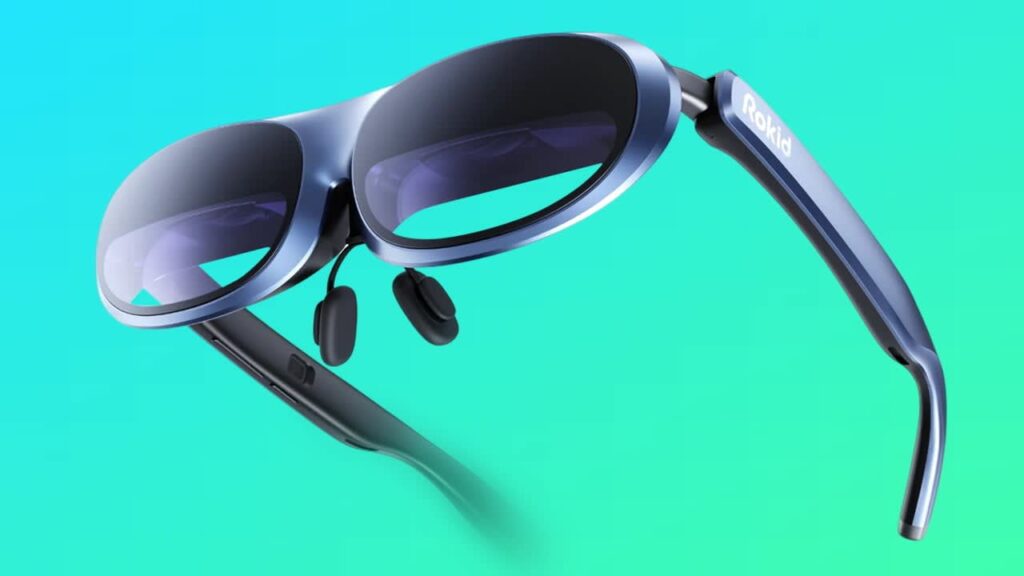
Best Smart Glasses for Prescription Wearers 2026: See Clearly and Stay Connected
Key Takeaways — For prescription wearers, the best smart glasses in 2026 is the Even Realities G2 — built prescription-first with lens support from -12.00 to +12.00 diopters. The Ray-Ban Meta is the familiar mainstream choice; Rokid AI Glasses Style offers a global prescription-lens service.
- Best prescription-first: Even Realities G2 (-12 to +12 diopters)
- Best mainstream: Ray-Ban Meta
- Best global prescription service: Rokid AI Glasses Style
- Also supports prescription: Rokid Glasses (AR)
Here’s a number that should make every smart glasses company uncomfortable: 42% of Americans are nearsighted. Add in farsightedness, astigmatism, and presbyopia, and you’re looking at roughly three out of four adults who need some form of vision correction. That’s not a niche — that’s the majority of the market.
Yet if you search for “prescription smart glasses” today, you’ll find a wasteland. A handful of forum threads. A few outdated articles from 2023. Some vague mentions on product pages that say “prescription compatible” without explaining what that actually means, what it costs, or how long you’ll wait.
We spent the last month mapping every smart glass on the market that genuinely supports prescription lenses — not “you can probably find a third-party lens maker” compatible, but actually designed or officially supported for prescription wearers. The list is shorter than you’d expect. But the options that do exist? Some of them are genuinely excellent.
If you need corrective lenses and refuse to choose between seeing clearly and staying connected, this is the only guide you need.
Why Prescription Compatibility Matters More Than You Think
Let’s be direct about why this matters. If you’re one of the 150+ million Americans who wear glasses or contacts, “prescription compatibility” isn’t a nice-to-have feature. It’s the difference between a product you can actually use and an expensive gadget that collects dust.
The Contact Lens Workaround Doesn’t Work
The most common advice you’ll find online is “just wear contacts underneath.” And sure, that technically works — you pop in contacts, then put on your smart glasses like any other sunglasses. Problem solved, right?
Not really. About 45 million Americans wear contacts, which means over a hundred million glasses wearers don’t. Some have dry eye conditions that make contacts painful. Some have astigmatism levels that contacts can’t fully correct. Some simply hate the daily ritual of poking themselves in the eye. And some — particularly older adults dealing with presbyopia — need progressive or multifocal lenses that contacts handle poorly.
Telling these people to “just wear contacts” is like telling someone who needs a wheelchair ramp to “just take the stairs.” It’s not a solution; it’s an exclusion.
Clip-On Adapters: Better Than Nothing, Barely
Some smart glasses — particularly AR-display models like XREAL — offer clip-on prescription lens adapters. These work in a functional sense: they put corrective lenses between your eyes and the display. But they add weight, often look awkward, reduce the field of view, and can create optical distortions where the clip-on lens meets the device’s optics.
More importantly, clip-on adapters only work for devices that were designed to accommodate them. For everyday smart glasses like Ray-Ban Meta, there’s no clip-on option because the lenses are the corrective surface.
The Real Solution: Built-In Prescription Lenses
The gold standard — and the focus of this guide — is smart glasses that accept prescription lenses ground to your exact specifications and fitted directly into the frame. No adapters. No contacts underneath. You put them on and you see perfectly, just like your regular glasses, except now you also have an AI assistant, speakers, a camera, or an AR display built in.
This is what prescription smart glasses should mean. Let’s look at every option that actually delivers it.
Every Smart Glass with Prescription Support in 2026
Before we dive into individual reviews, here’s the full landscape at a glance.
| Product | Prescription Method | Extra Cost | Delivery Time | Single Vision | Progressive | Lens Source |
|---|---|---|---|---|---|---|
| Ray-Ban Meta | Official Rx program | $0–$150+ (lens upgrades) | 5–7 business days | Yes | Yes | Ray-Ban / LensCrafters |
| Even Realities G2 | Built-in Rx program | Included in base price | Ships with frames | Yes | Yes | Even Realities |
| Rokid AI Glasses Style | Global Rx service | ~$50–100 (prescription fee) | 7–10 days | Yes | Limited | Rokid official |
| Rokid Glasses (AR) | Official Rx support | Varies | 7–10 days | Yes | TBD | Rokid official |
| OhO Sunshine | Not supported | N/A | N/A | No | No | N/A |
| XREAL One / One Pro | Clip-on adapter only | ~$50–80 | Separately shipped | Adapter only | No | Third-party |
Now let’s break down each option in detail.
Ray-Ban Meta — The Familiar Choice
Starting at $329 with prescription lenses | Prescription: Official program via Ray-Ban
If you already wear Ray-Bans — or even if you’ve just walked past a LensCrafters — you know the brand. And that familiarity is precisely what makes Ray-Ban Meta the most accessible entry point for prescription smart glasses. The ordering process works almost identically to buying regular prescription Ray-Bans, because fundamentally, that’s what these are: Ray-Ban frames with Meta’s technology built into the temples.
How Prescription Works
You have two paths to prescription Ray-Ban Meta glasses:
Online (ray-ban.com): Select your frame style (Wayfarer, Headliner, etc.), choose “Prescription” during customization, upload your prescription or enter it manually, and select your lens type. Ray-Ban’s optical lab grinds your lenses and ships the complete package. Turnaround is typically 5–7 business days after order confirmation.
In-store (LensCrafters): Walk in, try on frames, hand over your prescription, and let them handle everything. This option adds the benefit of professional fitting, which matters more than you’d think — temple pressure and nose pad alignment directly affect comfort for a device you’ll wear all day. Some LensCrafters locations can even do same-day or next-day prescription lenses.
Lens Options
Ray-Ban Meta supports a genuinely impressive range of prescription lens configurations:
- Single vision — standard correction for nearsightedness, farsightedness, or astigmatism
- Progressive (no-line bifocal) — smooth transition between distance, intermediate, and reading zones
- Clear lenses — for indoor / everyday use
- Transitions (photochromic) — darken in sunlight, clear indoors
- Polarized sun lenses — with prescription ground in
- Blue-light filtering — for screen-heavy days
This flexibility is Ray-Ban Meta’s biggest advantage for prescription users. No other smart glass on the market offers this breadth of lens customization through an official channel.
What’s Great
- Brand trust. You’re getting prescription lenses from the same supply chain that’s made billions of glasses. Quality control is proven at scale.
- Style selection. Multiple frame shapes mean you can find something that actually suits your face, not just one “tech glasses” silhouette.
- Retail support. Being able to walk into a LensCrafters, try frames on, and get professional fitting eliminates the guesswork that plagues online-only brands.
- Full feature set. 12MP camera, Meta AI assistant, open-ear speakers, 5-mic array — prescription doesn’t compromise any functionality.
What’s Not
- Weight. At ~49g, Ray-Ban Meta is the heaviest option here. With prescription lenses (especially progressive), you’re adding a few more grams. All-day comfort depends heavily on proper fitting.
- Prescription cost adds up. The base frame starts at $299, but prescription lenses — especially Transitions or progressive — can push the total to $450–$500+. Not outrageous for premium prescription eyewear, but significantly more than the sticker price suggests.
- No AR display. These are camera + AI + audio glasses. If you want heads-up notifications or navigation overlays, Ray-Ban Meta doesn’t do that.
Best For
Prescription wearers who want the safest, most proven option with the widest lens selection and retail support. If you value choosing exactly the right frame shape and lens type over cutting-edge features, this is your pick.
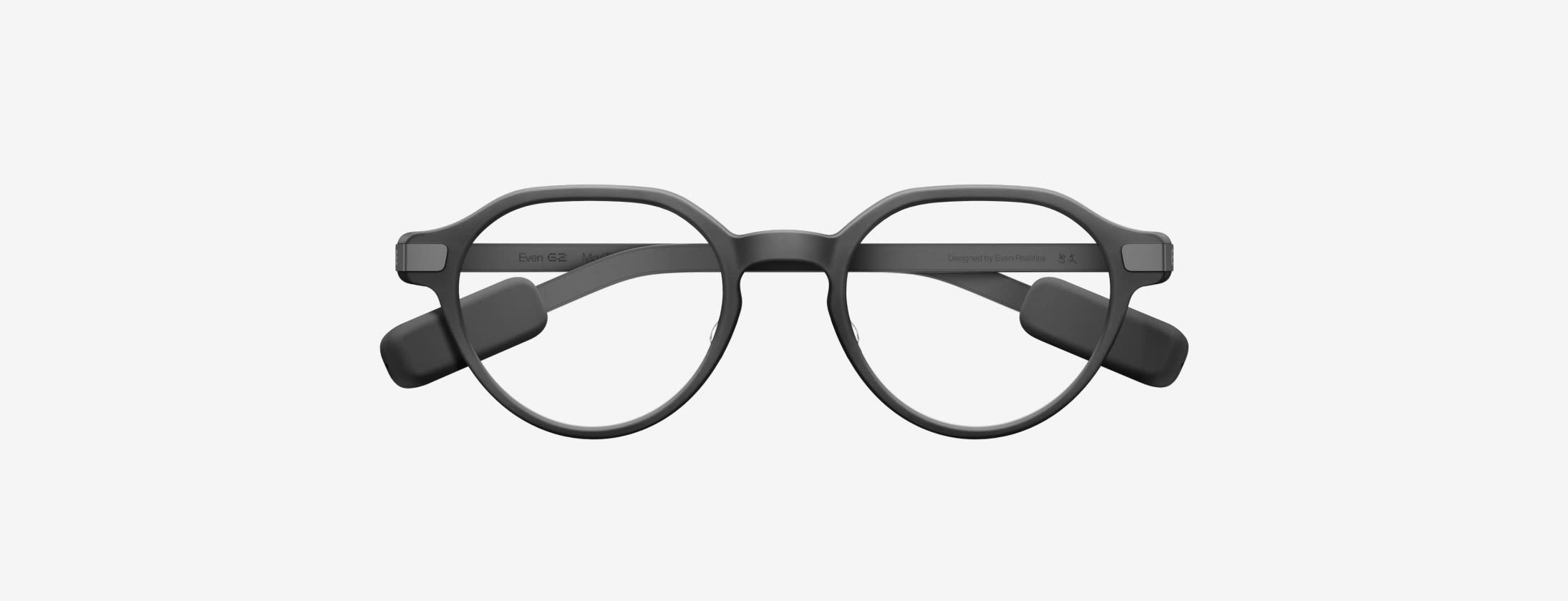
Even Realities G2 — Built for Prescription First
Price TBD (expected $400–$600 range) | Prescription: Core design philosophy
Even Realities takes a fundamentally different approach from everyone else on this list. Where other companies designed smart glasses first and added prescription support as an afterthought, Even Realities designed the G2 around prescription lenses from day one. The entire product philosophy assumes you need corrective lenses, and every engineering decision flows from that assumption.
How Prescription Works
This is where Even Realities truly differentiates. When you order the G2, you submit your prescription as part of the ordering process. The glasses ship with your prescription lenses already installed. There’s no secondary lens order. No waiting for a separate prescription fulfillment. No adapter. You open the box and put on glasses that are both smart and perfectly corrected to your eyes.
Even Realities partners with professional optical labs to grind lenses that integrate seamlessly with the G2’s micro-LED display. The prescription lens and the display optics are calibrated together, which means you’re not looking through a corrective lens at a display — the two optical systems are designed to work as one.
The Display Advantage
The G2 features a discreet micro-LED display visible in your peripheral vision. For prescription wearers, this is particularly significant because the display is calibrated to work with your corrective lenses. You see notifications, navigation prompts, and message previews in focus — not the blurry overlay that clip-on solutions sometimes produce.
The display is deliberately minimal: it shows text notifications, calendar alerts, navigation arrows, and teleprompter-style text. It doesn’t try to overlay 3D holograms or replace your phone screen. This restraint is a feature, not a limitation. It means the display works reliably in real-world conditions — bright sunlight, dim restaurants, while driving — without demanding your full attention.
What’s Great
- Prescription-first design. No adapters, no compromises, no second-class citizen feeling. Prescription wearers are the primary audience.
- Integrated optics. Display and prescription lens calibrated together means sharper, more comfortable HUD viewing.
- Lightweight. Even Realities has been aggressive about weight optimization, targeting frames that feel like regular glasses despite housing a display.
- Privacy-conscious. No camera — which means no social anxiety about wearing them around others, and no recording indicator needed.
What’s Not
- No camera. If you want to take photos or use visual AI (like pointing at something and asking “what is this?”), the G2 can’t do that. The deliberate omission of a camera is a privacy win but a functionality trade-off.
- Availability. Even Realities is a newer company with a smaller distribution network. You’re unlikely to find these at your local optician for try-on.
- Progressive lens support. While single vision is fully supported, progressive lens integration with the micro-LED display adds optical complexity. Verify current progressive support before ordering if you need multifocal correction.
Best For
Prescription wearers who want the most seamless, purpose-built experience — especially those who value a heads-up display for notifications and navigation but don’t need a camera. If you’ve been waiting for smart glasses that treat prescription as a feature rather than a checkbox, the G2 is the answer.
Rokid AI Glasses Style — Global Prescription Service
$299 + prescription fee | Prescription: Official global service
Rokid has carved out an interesting niche in the smart glasses space: they’re one of the few companies offering a dedicated global prescription service, complete with international shipping of finished prescription lenses. If you’re outside the US or in a region where LensCrafters doesn’t exist, Rokid might be your most accessible option.
How Prescription Works
Rokid offers prescription lens fulfillment through their official website. The process:
- Order your frames — choose the Style model
- Submit your prescription — upload a photo of your prescription or enter the values manually (SPH, CYL, AXIS, PD)
- Lens fabrication — Rokid’s optical partner grinds your lenses
- Shipping — finished glasses ship to your address in 7–10 business days
The prescription service adds approximately $50–100 to the base price depending on lens complexity (single vision vs. progressive, coatings, etc.). This is competitive with — and often cheaper than — what you’d pay for prescription lenses through a traditional optician.
Key Features with Prescription
The Style model is Rokid’s camera + AI + audio offering, similar in concept to Ray-Ban Meta:
- Camera for photos and video capture
- AI assistant with visual recognition capabilities
- Open-ear speakers for audio and calls
- Microphone array for voice commands and calls
All features remain fully functional with prescription lenses installed. The lens cutouts and frame geometry are designed to accommodate prescription grinding without interfering with the camera, speakers, or microphones.
What’s Great
- Global availability. The prescription service ships internationally, which is a genuine differentiator for users outside major US/EU metro areas.
- Competitive pricing. $299 base + $50–100 for prescription puts the total under $400 for most configurations — below Ray-Ban Meta’s typical prescription total.
- Full feature parity. Camera, AI, audio — prescription doesn’t disable or degrade any feature.
What’s Not
- Longer turnaround. 7–10 business days for prescription fulfillment is reasonable but slower than LensCrafters’ potential same-day service.
- No in-person fitting. You’re ordering online without trying frames on your face. Rokid provides sizing guides and measurements, but if temple pressure or nose pad fit is wrong, you’re dealing with returns and re-orders.
- Progressive lens support is limited. Single vision is well-supported; progressive/multifocal options may be restricted depending on your prescription values.
- Smaller brand. Less community support, fewer YouTube reviews, and fewer real-world wear reports compared to Ray-Ban Meta.
Best For
Budget-conscious prescription wearers who want camera + AI functionality without Ray-Ban’s premium pricing, or international buyers who need a prescription smart glass option with global shipping.
Rokid Glasses (AR Version) — Display + Prescription
Price varies | Prescription: Official support
Rokid’s AR glasses are a different beast from the Style model. These feature an actual AR display — think translucent screen floating in your field of view — combined with prescription lens support. It’s the only option on this list that gives you both a full AR display and prescription lenses in one package.
How Prescription Works
Similar to the Rokid Style, the AR version supports prescription lenses through Rokid’s official service. You submit your prescription during or after ordering, and Rokid’s optical partner fabricates lenses that work with the AR display’s optical system. Turnaround is 7–10 business days.
The engineering challenge here is significant: the AR display projects light through the lens to reach your eye, which means the prescription lens has to correct your vision without distorting the projected AR content. Rokid addresses this through careful optical design, but the result is that extremely strong prescriptions (typically beyond ±6.00 diopters) may experience some display quality degradation.
What’s Great
- AR display + prescription. This is the closest thing to “normal glasses that are also AR glasses” for prescription wearers.
- Official support. Not a hack or third-party solution — Rokid designed the frame geometry to accommodate prescription lenses alongside the AR optics.
- Expanding ecosystem. As Rokid’s software platform matures, the AR display gains more functionality through updates.
What’s Not
- Optical complexity. Strong prescriptions may not play well with the AR display optics. If your prescription is above ±4.00, request confirmation from Rokid before ordering.
- Weight. AR optics add weight compared to non-display smart glasses. With prescription lenses on top, comfort for extended wear depends heavily on your prescription strength (thicker lenses = more weight).
- Still maturing. The AR software ecosystem is younger and less polished than Meta’s AI or Even Realities’ notification system.
Best For
Prescription wearers who specifically want AR display capabilities — navigation overlays, app interfaces, extended screen functionality — and are willing to accept some trade-offs in weight and optical perfection for that futuristic feature set.
What About Smart Glasses WITHOUT Prescription Support?
Not every smart glass supports prescription lenses, and it’s worth calling out which ones don’t — so you don’t buy first and discover the limitation later.
OhO Sunshine Smart Glasses
OhO’s budget-friendly smart glasses (starting around $50–80) are essentially Bluetooth audio sunglasses with an optional camera. They do not support prescription lenses. The frame geometry and lens mounting system aren’t designed for optical lab grinding, and OhO doesn’t offer a prescription service.
Alternative for prescription wearers: Wear contacts underneath, or consider the OhO as a secondary pair for outdoor activities where you’d wear contacts anyway. At the price point, it’s a low-risk experiment — but it’s not a daily-driver solution for prescription wearers.
XREAL One / One Pro
XREAL makes some of the most impressive AR display glasses on the market, but they’re designed as secondary eyewear — you look through them at a virtual screen, typically while seated. They don’t function as everyday glasses.
For prescription users, XREAL offers clip-on prescription inserts that sit between your eyes and the AR display. These work — the virtual screen appears sharp through the corrective lenses — but they add bulk, reduce the field of view slightly, and mean you’re wearing a two-layer optical sandwich on your face.
Alternative for prescription wearers: The clip-on inserts are serviceable for media consumption and productivity sessions. But if you’re looking for prescription smart glasses you can wear all day as your primary glasses, XREAL isn’t designed for that use case.
Brilliant Labs Frame
An open-source AI-powered monocle/glasses concept. Interesting from a developer perspective, but prescription support is not part of the current hardware design. Not recommended for prescription wearers seeking a daily-driver solution.
How to Order Prescription Smart Glasses: Step-by-Step
If you’ve never ordered prescription eyewear online — or you’ve only ever gotten glasses from a walk-in optician — the process for prescription smart glasses can feel opaque. Here’s exactly what to do.
Step 1: Get a Current Prescription
You need a valid eyeglass prescription from a licensed optometrist or ophthalmologist. In the US, prescriptions are typically valid for 1–2 years depending on your state.
Your prescription should include:
- OD (right eye) and OS (left eye) values
- SPH (sphere) — nearsightedness (–) or farsightedness (+)
- CYL (cylinder) — astigmatism correction
- AXIS — angle of astigmatism correction
- PD (pupillary distance) — distance between your pupils in millimeters
Pro tip: If your prescription doesn’t include PD, ask your optometrist to measure it. Some doctors omit PD to steer you toward buying glasses from their office, but you’re legally entitled to your complete prescription including PD. Alternatively, apps like GlassesOn or EyeMeasure can measure PD using your phone’s camera with reasonable accuracy.
Step 2: Check Your Prescription Against Product Limits
Each brand has an acceptable prescription range:
| Brand | SPH Range | CYL Range | Progressive |
|---|---|---|---|
| Ray-Ban Meta | –8.00 to +6.00 | –2.00 to 0 | Yes |
| Even Realities G2 | –8.00 to +4.00 | –2.00 to 0 | Yes (verify) |
| Rokid Style | –6.00 to +4.00 | –2.00 to 0 | Limited |
| Rokid AR | –6.00 to +4.00 | –2.00 to 0 | TBD |
If your prescription falls outside these ranges, contact the manufacturer before ordering. Strong prescriptions (especially high CYL values) may require custom consultation.
Step 3: Choose Your Frame
For brands with multiple frame options (Ray-Ban Meta), choose based on:
- Face shape compatibility — just like regular glasses
- Lens width — wider lenses accommodate stronger prescriptions with less edge thickness
- Intended use — sunglasses (tinted/polarized) vs. everyday (clear/Transitions)
Step 4: Place Your Order
Ray-Ban Meta: Order on ray-ban.com with prescription, or visit LensCrafters in person.
Even Realities G2: Order on evenrealities.com. Prescription is part of the standard order flow.
Rokid: Order frames on rokid.ai, then follow the prescription submission process (upload or manual entry).
Step 5: Fitting and Adjustment
When your glasses arrive:
- Check lens clarity — put them on and look at objects at various distances. Everything should be sharp at the distances your prescription corrects.
- Verify alignment — look straight ahead at a doorframe or window. Vertical lines should appear straight, not tilted or curved.
- Test smart features — camera, AI assistant, speakers, display. Confirm nothing is blocked or degraded by the prescription lenses.
- Adjust fit — temples should rest comfortably without squeezing. Nose pads should distribute weight evenly. If anything feels off, most opticians can adjust smart glasses frames the same way they adjust regular glasses — carefully.
Adaptation period: If you’re switching from a different prescription or a different frame shape, give yourself 3–5 days to adapt. Your brain needs time to recalibrate to the new lens geometry, especially with progressive lenses.
Lens Types Explained: What to Choose for Smart Glasses

Choosing the right lens type matters even more for smart glasses than regular glasses, because some lens types interact with smart features (cameras, displays) in ways you might not expect.
Single Vision
The simplest and lightest option. One focal distance across the entire lens. Choose this if you primarily need distance correction (myopia) or reading correction (hyperopia), but not both.
Best for smart glasses because: Lightest weight, no optical distortion zones, no impact on camera or display clarity.
Progressive (No-Line Bifocal)
Smooth gradient from distance vision (top) through intermediate (middle) to reading (bottom). No visible line between zones.
Smart glasses consideration: Progressive lenses add thickness and weight. In smart glasses with a fixed-position display (like Even Realities G2), the display location relative to your progressive zones matters — a display positioned in the distance zone won’t be clear when your eyes are in the reading position, and vice versa. Manufacturers that support progressive lenses typically position the display in the intermediate zone, which works for most scenarios but may require slight head tilting for optimal clarity.
Transitions (Photochromic)
Lenses that darken in UV light (outdoors) and clear up indoors. Available for both single vision and progressive.
Smart glasses consideration: Transitions lenses can slightly affect camera color accuracy on models like Ray-Ban Meta, since the camera captures through or near the lens. In bright conditions where Transitions darken, your photos may have a subtle warm/dark tint. This is minor and correctable in editing, but worth knowing.
Polarized
Fixed tint + polarization that cuts glare from reflective surfaces (water, roads, snow). Sunglasses only — these don’t go clear indoors.
Smart glasses consideration: Excellent for outdoor-focused smart glasses use. Polarization doesn’t interfere with AI, audio, or camera functionality. However, polarized lenses will make some digital screens hard to read at certain angles — not an issue for built-in displays (which are designed for it) but potentially annoying if you’re trying to look at your phone or laptop while wearing them.
Blue-Light Filtering
Coatings that reduce blue light transmission from digital screens. Mostly relevant for clear/indoor lenses.
Smart glasses consideration: No impact on smart features. Some users report reduced eye strain during extended AI assistant use or display viewing, though scientific evidence on blue-light filtering benefits remains mixed.
Cost Breakdown: What You’ll Actually Pay
Smart glasses pricing is misleading because the sticker price almost never includes prescription lenses. Here’s what you’ll actually spend.
| Configuration | Ray-Ban Meta | Even Realities G2 | Rokid Style | Rokid AR |
|---|---|---|---|---|
| Base frame | $299 | ~$400–500* | $299 | Varies |
| Single vision clear | +$0–50 | Included | +$50–80 | +$50–80 |
| Single vision sun | +$30–80 | N/A** | +$60–100 | N/A |
| Progressive clear | +$100–150 | Included | +$80–120 | TBD |
| Transitions | +$80–130 | TBD | N/A | N/A |
| Polarized Rx | +$80–130 | N/A** | N/A | N/A |
| Typical total (single vision) | $329–$379 | ~$400–500 | $349–$399 | ~$350–400 |
| Typical total (progressive) | $399–$479 | ~$400–500 | $379–$419 | TBD |
Even Realities G2 pricing is estimated based on pre-order information. Final retail pricing may differ.
*Even Realities G2 ships as clear indoor glasses. Separate sun lens configurations may be available.
Hidden Costs to Watch For
- Shipping. Rokid charges international shipping fees. Ray-Ban offers free US shipping over a threshold. Even Realities varies by region.
- Returns with prescription. Most brands will accept returns of prescription smart glasses, but the process is more complex than non-prescription returns. Ray-Ban/LensCrafters has the most forgiving return policy. Check each brand’s policy before purchasing.
- Replacement lenses. If your prescription changes, you’ll need new lenses. Ray-Ban Meta lenses can be replaced at any LensCrafters. For Rokid and Even Realities, you’ll reorder through their prescription service.
- Insurance/FSA/HSA. Prescription smart glasses may be partially covered by vision insurance or eligible for FSA/HSA spending, since they contain legitimate prescription lenses. Check with your provider — coverage varies widely, and many plans haven’t caught up to smart eyewear yet.
FAQ
Can I use my existing glasses prescription for smart glasses?
Yes, as long as your prescription is current (within 1–2 years depending on your state’s regulations). You’ll need the full prescription including SPH, CYL, AXIS, and PD values. The same prescription you’d use at any optician works for smart glasses.
Do prescription lenses affect smart glasses features?
In most cases, no. Cameras, AI assistants, speakers, and microphones function identically with or without prescription lenses. The one exception is AR displays in strong prescriptions (above ±6.00 diopters), where some edge distortion of the displayed content is possible.
Can I get bifocal or progressive lenses in smart glasses?
Ray-Ban Meta and Even Realities G2 both support progressive (no-line bifocal) lenses. Rokid offers limited progressive support for the Style model. True lined bifocals are not typically available — progressive lenses are the standard for multifocal correction in smart glasses.
How much more do prescription smart glasses cost than non-prescription?
Expect to add $0–$150 to the base price depending on brand and lens complexity. Single vision is cheapest; progressive and specialty coatings (Transitions, polarized) cost more. Even Realities G2 includes prescription in its base price.
What if my prescription is very strong?
Check the manufacturer’s SPH and CYL limits before ordering. Ray-Ban Meta accepts up to –8.00 SPH, which covers the vast majority of prescriptions. If you’re beyond these limits, contact the manufacturer — some may accommodate stronger prescriptions on a case-by-case basis with thinner high-index lenses.
Can I replace the lenses if my prescription changes?
Yes. Ray-Ban Meta lenses can be replaced at LensCrafters or through the Ray-Ban website. Rokid and Even Realities offer re-orders through their prescription services. You keep the frame and smart components — only the lenses are replaced. This is typically cheaper than buying a new pair.
Are prescription smart glasses covered by vision insurance?
Potentially. Since prescription smart glasses contain legitimate prescription lenses ground by licensed optical labs, some vision insurance plans will cover the lens portion (not the smart technology portion). FSA and HSA accounts may also be used. Contact your vision insurance provider for specifics — coverage is evolving as the category grows.
How long does it take to get prescription smart glasses?
Ray-Ban Meta: 5–7 business days online, potentially same-day at LensCrafters. Even Realities G2: ships with prescription (standard order timeline). Rokid: 7–10 business days after prescription submission.
Our Pick for Prescription Wearers
If you’ve read this far, you know there’s no single “best” — it depends on what you need. So here’s our framework:
Choose Ray-Ban Meta if you want the widest lens selection, retail fitting support, and the most proven smart glasses platform. The combination of Meta AI, a good camera, and the full range of Ray-Ban prescription lens options makes this the safest, most flexible choice. You’ll pay a premium, but you’ll get exactly the prescription lens configuration you need — single vision, progressive, Transitions, polarized, clear — through a supply chain that’s been making prescription lenses for decades.
Choose Even Realities G2 if you want the purest prescription-first experience. No other smart glass was designed around prescription wearers the way the G2 was. Prescription included in the base price, display optics calibrated to your lenses, and a privacy-conscious design (no camera) that makes them socially invisible. The trade-off: you lose the camera and visual AI that Ray-Ban Meta offers.
Choose Rokid AI Glasses Style if you want camera + AI functionality at a lower price point than Ray-Ban Meta, or you’re outside the US and need a prescription service that ships globally. The 7–10 day turnaround is longer, and you’ll miss the retail fitting experience, but the savings are real.
Skip XREAL, OhO, and other non-prescription options unless you’re comfortable with contacts or clip-on adapters. These are good products for their intended audiences, but they’re not designed for prescription wearers, and forcing them to be something they’re not leads to a compromised experience.
The prescription smart glasses market in 2026 is small but real. Four years ago, you had essentially zero options. Today, you have four legitimate choices with official prescription support, ranging from $300 to $500. That’s not perfect — we’d love to see more frame styles, faster turnaround times, and universal progressive support — but it’s a genuine inflection point.
For the 150 million Americans who need corrective lenses, the message from the smart glasses industry is finally changing from “sorry, this isn’t for you” to “welcome — let us fit you properly.”
It’s about time.