

Even Realities G2 Review: The Privacy-First Smart Glasses That Skip the Camera
Key Takeaways — Quick answer: The Even Realities G2 ($599) is the privacy-first smart glasses — no camera, no speakers, just a microLED HUD display, Even AI, 33-language translation, prescription lenses (-12 to +12 diopters), 2-day battery, and a 36g frame. Rated 8.2/10. Best for people who want information glasses, not camera or media glasses.
- Rating: 8.2 / 10
- Weight: 36g | Battery: up to 2 days (192mAh) | Price: $599
- Camera / speakers: none, by design (privacy-first)
- Best for: HUD notifications, translation, prescription wearers
What if the best feature of a smart glass is what it doesn’t have?
Every other smart glasses maker is racing to cram more into their frames. More cameras. More sensors. More speakers. More reasons for the person sitting across from you at a coffee shop to wonder if they’re being recorded. Even Realities looked at that arms race and walked the other direction — deliberately, confidently, and with a design philosophy that might be the most interesting bet in wearable tech right now.
The Even Realities G2 has no camera. No speakers. No microphone array broadcasting your Spotify playlist to the person next to you on the subway. What it does have is a microLED heads-up display, an AI assistant, real-time translation in 33 languages, prescription lens support from -12.00 to +12.00, and a frame so light at 36 grams that you’ll forget you’re wearing technology at all.
In a market defined by “more is more,” the G2 is a deliberate exercise in “less, but better.” We’ve been wearing them daily for weeks. Here’s whether that bet pays off.
Key Specs at a Glance
| Spec | Detail |
|---|---|
| Price | $599 |
| Weight | 36g (1.26 oz) |
| Frame Material | Magnesium alloy frame, titanium temples |
| Display | Dual monochrome green microLED HUD |
| Camera | None (by design) |
| Speakers | None (by design) |
| Microphones | 4-mic array (voice commands + translation) |
| AI Assistant | Even AI (3x faster than G1) |
| Battery | 2+ days; charging case adds 7 full recharges |
| Prescription | Yes (-12.00 to +12.00) |
| Water Resistance | IP67 |
| Connectivity | Bluetooth 5.2 |
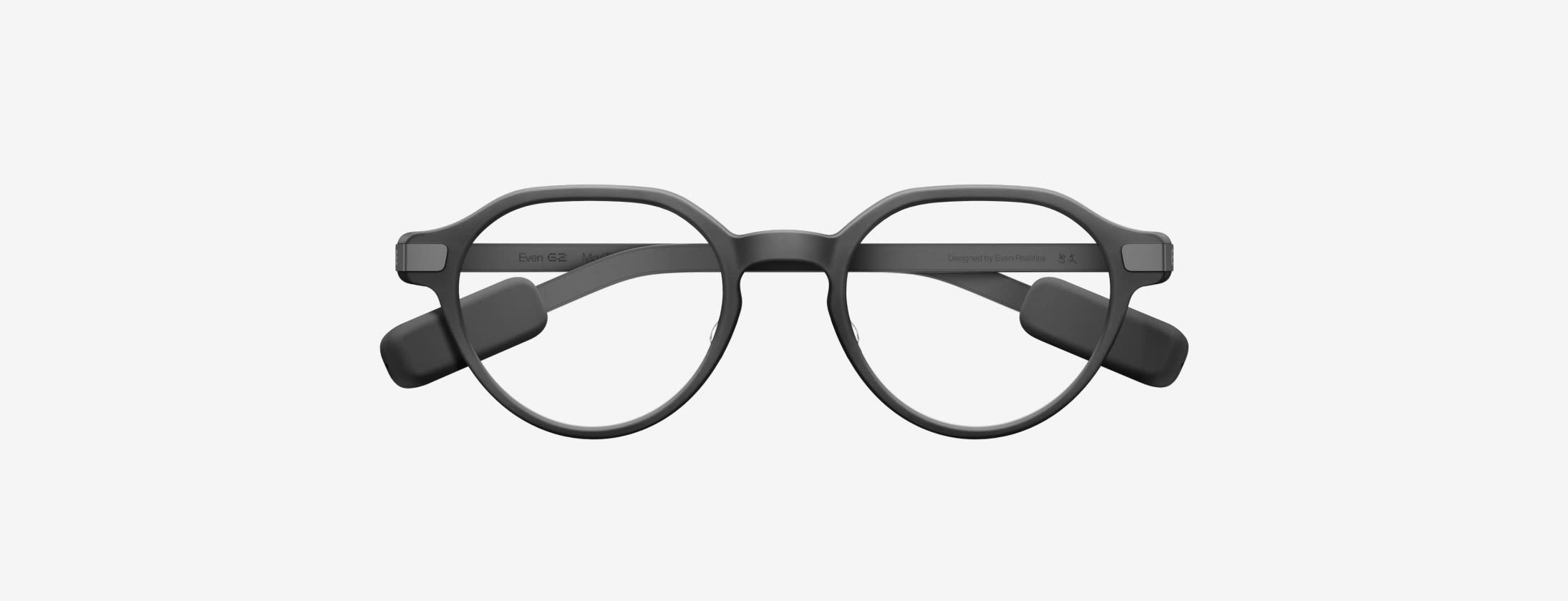
| Styles | Panto, Rectangular (Gray, Brown, Green) |
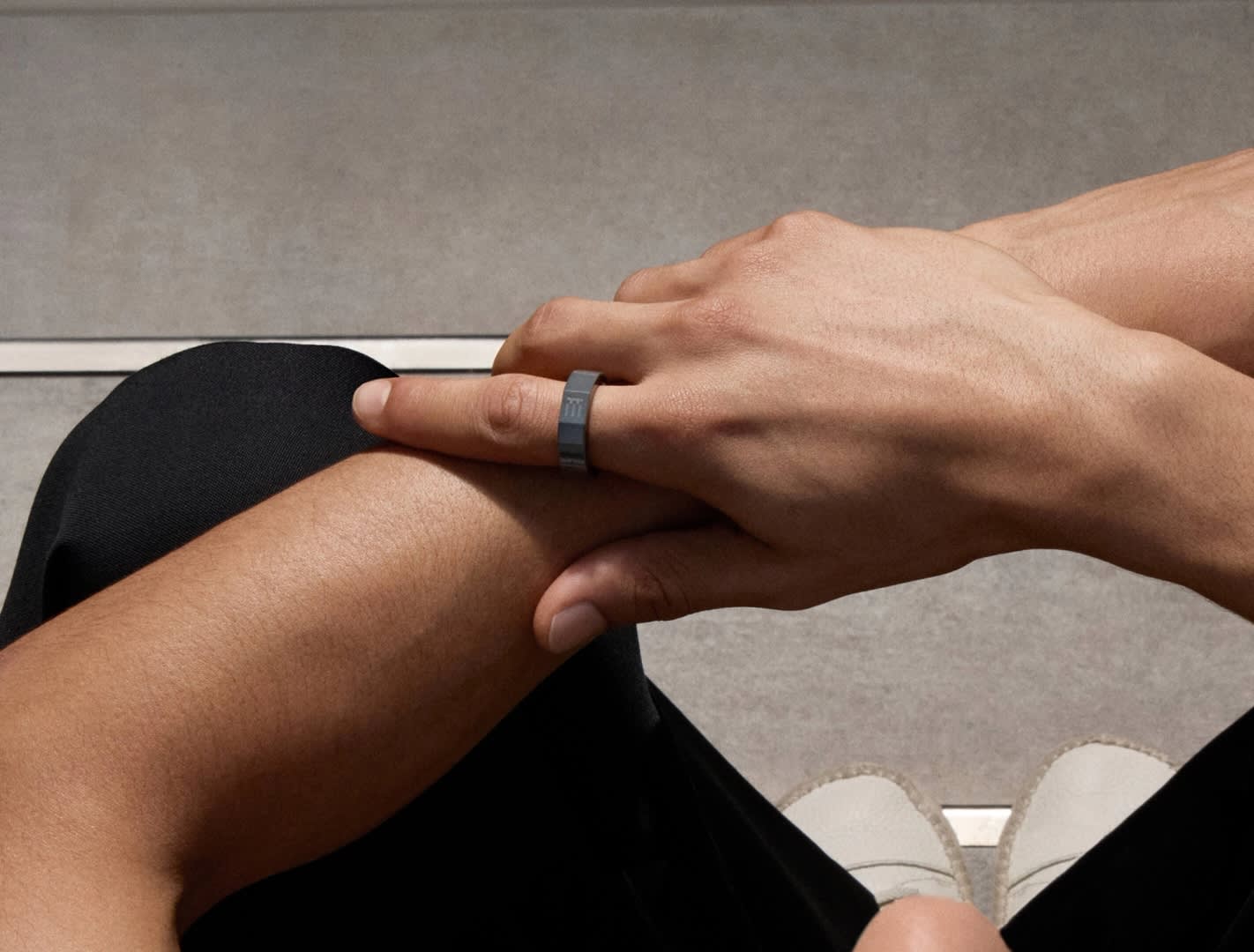
| Companion Device | Even R1 Smart Ring ($249, optional) |
Design & Build Quality
The first time you pick up the Even Realities G2, you’ll do a double take. At 36 grams — roughly the weight of six sheets of paper — these are the lightest full-featured smart glasses on the market. For context, the Ray-Ban Meta weighs 49 grams. That 13-gram difference sounds trivial in a spec sheet. On your nose bridge at hour ten, it’s the difference between “I forgot I was wearing these” and “I need a break.”
The frame is a combination of magnesium alloy for the front piece and aerospace-grade titanium for the temples. It’s a material pairing you’d normally find in high-end luxury eyewear, not consumer electronics. The build communicates quiet confidence — there’s no flex, no creak, no feeling that you’re wearing a prototype. These are glasses first, technology second.
Even Realities offers two frame styles: Panto (the rounded classic) and Rectangular (a sharper, more modern profile). Each comes in gray, brown, or green. They look like frames you’d find at a premium optician, which is precisely the point. We wore the Panto style to meetings, dinners, and a weekend trip without a single person asking “are those smart glasses?” That social invisibility is a feature, not a bug — and it’s one of the G2’s most underrated advantages.
The IP67 water and dust resistance rating is a welcome addition. You can wear these in rain, sweat through a gym session, or accidentally splash them at the sink without worrying. For a device you’re expected to wear all day, every day, weather-proofing isn’t a luxury — it’s a requirement.
The No-Camera Philosophy

Here’s where the Even Realities G2 gets genuinely interesting — and where it diverges from virtually every competitor on the market.
There is no camera on these glasses. Not a hidden one, not a low-resolution one, not one you can disable in settings. The lens housing is pure glass. The temples contain microphones, processing hardware, and a battery — nothing else that points at the world.
This isn’t a cost-cutting measure. It’s a philosophical stance.
Why Removing the Camera Is Smarter Than It Sounds
Privacy anxiety around smart glasses is real and well-documented. In our VOC research, recording concerns consistently rank among the top pain points preventing mainstream adoption. People aren’t just worried about their own privacy — they’re worried about how others perceive them. “Am I making the person across from me uncomfortable?” is a question that never crosses your mind with the G2. There’s nothing to be uncomfortable about.
Consider the social dynamics. Camera-equipped smart glasses create an invisible tension in every interaction. Even if the LED recording indicator is off, even if you’d never record someone without consent, the possibility changes the dynamic. It’s the same reason many gyms and locker rooms ban phone usage: the capability itself creates discomfort, regardless of intent.
The Even Realities G2 eliminates that tension entirely. You can wear these into a courtroom, a doctor’s office, a school, a corporate boardroom, or a government facility — environments that would immediately flag camera-equipped smart glasses — without a second thought. That access advantage is enormous for professionals who need smart features but operate in camera-sensitive environments.
What the Industry Gets Wrong About Privacy
Most smart glasses manufacturers treat privacy as a checkbox: add an LED indicator, include a physical shutter, bury some settings in the companion app, done. Even Realities treats privacy as an architecture decision. You don’t solve privacy with toggles. You solve it by removing the attack surface entirely.
This is the same logic that drove Apple to process Face ID data exclusively on-device rather than in the cloud. The most secure data is data that doesn’t exist. The most private camera is no camera at all.
Even Realities extends this philosophy to their data handling. No data is stored in the cloud without explicit user consent. When processing is required, data is encrypted with personally identifiable information stripped out. It’s a full-stack commitment to privacy that goes far beyond “we added a recording light.”
HUD Display: What It Shows and How
The Even Realities G2’s display is a dual-lens monochrome green microLED system that Even calls HAO 2.0 — Holistic Adaptive Optics. The display is 75% larger than the first-generation G1, using mini microLED projectors combined with gradient wavelengths and high-definition optics for a sharper, brighter, and more stable image — even when you’re moving.
Let’s be direct about what this display is and isn’t. It’s not a full-color AR overlay that lets you watch YouTube videos floating in space. It’s a functional, text-based heads-up display that pushes essential information into your peripheral vision. Think fighter jet HUD, not Iron Man helmet.
What Appears on the Display
- Notifications: Incoming messages, calls, and app alerts displayed as readable text
- Navigation: Turn-by-turn walking and driving directions
- Translation: Real-time translation of speech in 33 languages, displayed as subtitles
- Teleprompter: Scrolling script for presentations and speeches
- Transcription: Live speech-to-text for meetings and conversations
- AI Responses: Answers from Even AI displayed as text overlays
- Calendar & Weather: Quick-glance daily information
- Conversate: Real-time dialogue assistance for meetings
The monochrome green display might sound limiting compared to full-color competitors, but it’s a deliberate trade-off. Green is the wavelength the human eye perceives most efficiently, which means higher perceived brightness at lower power consumption. The text is crisp, readable in both indoor and bright outdoor lighting, and — crucially — doesn’t demand your full attention. Information appears, you glance at it, it fades. The display works with your natural vision rather than competing against it.
The interface is minimalist by design. There’s no app grid, no home screen, no notification overload. Information surfaces when it’s relevant and disappears when it’s not. If you’ve ever wished your phone would stop screaming for attention, the G2’s approach to information delivery feels like a revelation.
Display Limitations to Know
The monochrome green palette means no photos, no video playback, and no rich media of any kind. If you’re expecting an entertainment display, look elsewhere. The G2’s display is a utility — it delivers information, not experiences. That’s a perfectly valid trade-off for the weight savings, battery life, and discreet form factor it enables, but it’s one you should understand before buying.
Prescription-First Design
Here’s a stat that reshapes how you think about smart glasses: nearly 75% of American adults need some form of vision correction. That’s roughly 235 million people who can’t just pick up a pair of smart glasses and start using them — they need prescription lenses first.
Most smart glasses treat prescription as an afterthought. “Oh, you need lenses? Here’s our prescription program — it’ll cost extra and take a few weeks.” Even Realities treats prescription as the primary use case. The G2 was designed from the ground up to be your everyday eyeglasses that happen to be smart, not smart glasses that can be adapted to hold your prescription.
The prescription support range is remarkable: -12.00 to +12.00 diopters. That covers the vast majority of nearsighted and farsighted prescriptions, including many that other smart glasses simply can’t accommodate. If your prescription falls within this range, you can use the G2 as your only pair of glasses — no switching between your “smart” pair and your “seeing” pair.
This matters more than specs suggest. The #1 predictor of whether someone actually uses a wearable device long-term is whether it fits into their existing daily routine without adding friction. If you already wear glasses, the G2 replaces them. Zero added friction. Zero behavior change. You put on your glasses in the morning like you’ve always done — except now they show you directions, translate conversations, and surface your calendar.
Both the Panto and Rectangular styles are designed as proper optical frames, not tech hardware adapted to hold lenses. An optician looking at these would see a well-made pair of titanium-and-magnesium frames, not a gadget.
Battery Life: Two Days Changes Everything
Battery life is the silent killer of wearable adoption. A device that dies mid-day isn’t a daily driver — it’s a novelty you charge more than you use.
The Even Realities G2 delivers over two days of battery life on a single charge. Let that sink in. You charge them Sunday night, wear them all day Monday and all day Tuesday, and still have juice left Tuesday evening. In a category where four hours of mixed use is considered competitive (looking at you, Ray-Ban Meta), two days feels almost disruptive.
How does Even Realities achieve this? By not having a camera, speakers, or a power-hungry color display. Every component they removed is a component that doesn’t drain the battery. The monochrome microLED display sips power compared to full-color alternatives. The absence of speakers eliminates another significant drain. The result is a power budget that’s dramatically lower than camera-equipped competitors, enabling dramatically longer runtime from a smaller battery in a lighter frame.
And then there’s the charging case.
The G2’s case carries enough stored power for seven full recharges. Quick math: 2+ days per charge × 7 case charges = roughly two weeks of use before you need to plug the case into a wall. For travel, this is transformative. Pack the G2 and its case for a week-long business trip and leave the charger cable at home. You won’t need it.
The case itself is compact enough to pocket or toss in a bag — it serves double duty as the glasses’ protective storage and their power station. It’s an elegant system that removes charging anxiety entirely. The Ray-Ban Meta’s case also charges, but with a 4-hour runtime versus the G2’s 48+ hours, the math on daily charging frequency isn’t even close.
AI Assistant Performance
The Even AI assistant is the G2’s brain, powered by a 3x faster processing pipeline than the first-generation G1. You activate it with “Hey Even” or through the companion R1 smart ring (sold separately at $249), and responses appear as text on the HUD display.
What Even AI Can Do
- Answer general knowledge questions
- Set reminders and manage calendar events
- Provide contextual information (weather, news, sports scores)
- Power the real-time translation engine (33 languages)
- Run the teleprompter for presentations
- Transcribe conversations in real-time
- Fact-check claims on the fly (a standout feature noted by multiple reviewers)
- Remember context from previous questions within a session
The quality of responses is solid for a first-party assistant. It handles factual queries, scheduling, and translation with reliability. The 3x speed improvement over the G1 is noticeable — responses that previously felt sluggish now appear within a second or two of asking.
What Even AI Can’t Do
Because the G2 has no camera, Even AI cannot do anything visual. No identifying objects, no reading signs, no scanning documents, no visual search. This is the most significant capability trade-off of the no-camera design. Meta AI on the Ray-Ban Meta can look at a plant and tell you its species, read a restaurant menu in a foreign language, or identify a landmark. Even AI cannot. If visual AI is your primary use case for smart glasses, the G2 isn’t for you.
The AI also lacks speakers, so all responses are text-only via the HUD. There’s no voice response, no audio feedback, no “she talks back to you” experience. You ask with your voice (through the four-microphone array), and you read the answer on the display. This creates a unique interaction pattern — more like glancing at a smartwatch than talking to Siri — that some users will prefer for its discretion and others will find limiting.
The R1 Smart Ring: Worth It?
Even Realities sells the R1 companion ring ($249) as an optional controller. It adds gesture-based controls — swipe to scroll through notifications, tap to dismiss, rotate to navigate — that eliminate the need to touch your glasses in public. The touch panels on the G2 temples are responsive, but reaching up to tap your glasses is both conspicuous and sometimes awkward. The ring makes control invisible.
Whether it’s worth $249 depends on how self-conscious you are about touching your glasses. For professionals in client-facing roles where subtlety matters, it’s a compelling add-on. For casual users, the temple controls work fine.
What You’re Giving Up
Honesty is our policy. The Even Realities G2’s minimalist philosophy comes with real trade-offs, and you deserve to understand them before spending $599.
No Camera Means:
- No photos or video capture. You can’t snap a quick POV photo of a sunset, your kid’s soccer game, or a whiteboard in a meeting. Your phone stays as your camera.
- No visual AI. Can’t ask the AI “what plant is this?” or “translate this sign.” Any AI task requiring vision is off the table.
- No video calling through the glasses. No FaceTime or Zoom from your frames.
No Speakers Means:
- No music or podcast playback. You’ll still need earbuds or headphones for audio.
- No audio navigation. Turn-by-turn directions appear on the display but aren’t spoken aloud.
- No phone call audio. You can’t take calls through the glasses. You’ll see who’s calling on the HUD, but answering means reaching for your phone or pairing earbuds.
- AI responses are text-only. No voice feedback — you read everything.
The Monochrome Display Means:
- No rich media. No photos, videos, or color content.
- Text only. Everything is green text on a transparent background.
- Limited entertainment value. These are information glasses, not media glasses.
These aren’t flaws — they’re the cost of the G2’s strengths. Every feature removed is weight saved, battery preserved, and privacy protected. But if you’re coming from a camera-equipped, speaker-equipped competitor expecting a strict upgrade, you’ll feel the absence of these features daily. The G2 isn’t better or worse than camera-equipped alternatives. It’s different — built for a different user with different priorities.
Who Is This For?
The Even Realities G2 isn’t for everyone. It’s not trying to be. Here’s who will love it and who should look elsewhere.
You’ll Love the G2 If You:
- Already wear prescription glasses and want to add smart features without carrying a second pair. This is the G2’s killer use case. If you wear glasses daily, the G2 replaces them seamlessly.
- Work in camera-sensitive environments. Healthcare, legal, government, education, finance — anywhere cameras are restricted or frowned upon. The G2 is the only serious smart glass that can go everywhere you go.
- Value social invisibility. You want smart features but don’t want to be “that person with the tech glasses.” Nobody will know your glasses are smart unless you tell them.
- Prioritize battery life over features. Two days of runtime with a case that adds two weeks means charging is something you do occasionally, not daily.
- Need real-time translation. The 33-language translation displayed on the HUD is genuinely useful for travel, multilingual workplaces, and international business.
- Want a teleprompter for presentations. Scrolling script in your field of vision during speeches and meetings is a legitimate superpower for public speakers.
Look Elsewhere If You:
- Want to capture POV photos and video. The Ray-Ban Meta is the clear choice for first-person content creation.
- Need audio playback from your glasses. If replacing earbuds is a priority, camera-equipped competitors with built-in speakers are the better pick.
- Want full-color AR experiences. The monochrome display is functional, not immersive.
- Rely on visual AI. If “what am I looking at?” queries are your top use case, you need glasses with a camera.
Even G2 vs Ray-Ban Meta: A Philosophical Choice
This isn’t a specs-versus-specs comparison. It’s a worldview comparison. These two products have fundamentally different answers to the question “what should smart glasses be?”
| Dimension | Even Realities G2 | Ray-Ban Meta |
|---|---|---|
| Philosophy | Less is more — utility through restraint | More is more — full-featured platform |
| Camera | None | 12MP photo, 1080p video |
| Speakers | None | Open-ear speakers, 5-mic array |
| Display | Monochrome green microLED HUD | None (audio-only interface) |
| AI | Text-only responses via HUD | Voice + visual AI via camera + speakers |
| Weight | 36g | ~49g |
| Battery | 2+ days | ~4 hours mixed use |
| Prescription | Core design priority (-12.00 to +12.00) | Supported but secondary |
| Price | $599 | $299–$379+ |
| Privacy | Zero concern — no recording capability | LED indicator when recording |
| Social Comfort | Invisible — nobody knows | Mostly invisible, slight camera awareness |
The Ray-Ban Meta is the better gadget. It does more things. It takes photos, plays music, makes calls, and has the most capable visual AI assistant in smart glasses today. If you want one device that maximizes capability per dollar, the Ray-Ban Meta wins handily at nearly half the price.
The Even Realities G2 is the better tool. It does fewer things but commits fully to the things it does. The display gives it a capability the Ray-Ban Meta completely lacks — visual information delivery. You can read your notifications, follow navigation, and get translated conversations on a HUD that the Ray-Ban Meta has no answer for. The battery outlasts it by a factor of 10x. And the no-camera design opens doors that the Ray-Ban Meta can’t walk through.
The question isn’t which is better. It’s which problem you’re solving. If your life revolves around capturing moments and having an AI that can see what you see, go Meta. If your life revolves around consuming information hands-free, working in camera-restricted environments, and wearing glasses you never have to explain, go Even.
The Verdict
Rating: 8.2 / 10
The Even Realities G2 is the most opinionated smart glasses on the market — and that’s exactly what makes them compelling. In a category full of products trying to be everything to everyone, Even Realities made hard choices. No camera. No speakers. No color display. And then they executed the remaining feature set — HUD, AI, translation, prescription, battery — at a level that justifies the $599 asking price.
The 36-gram weight and titanium-magnesium construction make these the most comfortable smart glasses we’ve tested for all-day wear. The two-day battery life with a seven-recharge case is genuinely class-leading and eliminates the charging anxiety that plagues every competitor. The prescription support from -12.00 to +12.00 makes these a true everyday eyeglasses replacement, not a tech accessory you swap in and out. And the no-camera, no-speaker design creates a level of social invisibility and universal acceptability that no other smart glass can match.
The trade-offs are real. No camera means no POV content and no visual AI. No speakers means no audio — for anything. The monochrome display is functional but won’t impress anyone looking for rich media. And at $599 — or $848 with the R1 ring — it’s a significant investment for a device that deliberately does less than cheaper alternatives.
But “less” is the whole point. The Even Realities G2 is proof that in smart glasses, what you leave out might matter more than what you put in. For prescription wearers, privacy-conscious professionals, and anyone who wants smart glasses that disappear into daily life, the G2 is the most thoughtful, most wearable option available in 2026.
What We Love:
- 36g weight — the lightest full-featured smart glasses available
- 2+ days battery (case extends to ~2 weeks)
- No-camera design eliminates all privacy friction
- Prescription range -12.00 to +12.00
- IP67 water and dust resistance
- Real-time 33-language translation on HUD
- Looks like premium eyeglasses, not tech hardware
What Could Be Better:
- $599 is steep for a no-camera, no-speaker device
- Software stability still needs polish (per Wired’s findings, which align with ours)
- R1 ring at $249 feels like it should be included at this price
- Monochrome green display limits use cases
- No audio output of any kind
Frequently Asked Questions
How much does the Even Realities G2 weigh?
The Even Realities G2 weighs 36 grams (about 1.27 oz), making it one of the lightest AR smart glasses available. A magnesium frame paired with titanium temples keeps the weight low enough that most wearers forget they have technology on their face — the single biggest factor for all-day comfort on the nose bridge. That is lighter than many ordinary eyeglasses fitted with thick prescription lenses.
What is the Even Realities G2 battery life?
The Even Realities G2 lasts up to 2 days of regular use on a single charge, powered by a 192mAh battery. The included charging case extends total runtime to roughly a week between wall charges. Real-world battery life scales with how often you trigger the HUD display and Even AI: heavy real-time translation and turn-by-turn navigation will pull the estimate below two days, while notification-only use can stretch beyond it.
What are the Even Realities G2’s key specs?
Key Even Realities G2 specs: 36g weight, $599 price, a microLED heads-up display (640×350 per eye, 1200 nits brightness, 27.5° field of view), a 192mAh battery rated for up to 2 days, a 4-microphone array for voice commands and 33-language real-time translation, the Even AI assistant (3× faster than the G1), prescription support from -12.00 to +12.00 diopters, and IP67 water resistance. By design the G2 has no camera and no speakers — both omitted for privacy.
Does the Even Realities G2 have a camera?
No, and that’s by design. The G2 deliberately omits a camera to eliminate privacy concerns entirely. There’s no hidden camera, no shutter, no recording capability of any kind. This is a core design principle, not a missing feature.
Can I make phone calls with the Even G2?
Not directly through the glasses. The G2 has no speakers, so there’s no way to hear a caller’s voice through the frames. You’ll see incoming call notifications on the HUD display and can use the microphones for voice commands, but taking calls requires your phone or paired earbuds. If hands-free calling is essential, the Ray-Ban Meta is a better fit.
How does translation work without speakers?
The G2’s four microphones pick up the other person’s speech, the Even AI processes it, and the translated text appears on the HUD display — essentially real-time subtitles floating in your field of vision. It supports 33 languages. You read the translation instead of hearing it, which is actually more discreet in public settings than having a translated voice broadcast from your glasses.
Is the Even G2 worth $599 without a camera or speakers?
That depends on what you value. If you’re paying for features-per-dollar, the Ray-Ban Meta offers more at $299. But the G2 provides capabilities the Ray-Ban Meta lacks entirely: a HUD display, two-day battery life, prescription-first design, IP67 resistance, and zero privacy friction. You’re paying for a different category of product — information glasses rather than media glasses.
Can I use the Even G2 without the R1 smart ring?
Absolutely. The G2 has responsive touch panels on the temples and supports “Hey Even” voice commands. The R1 ring ($249) adds gesture control that’s more discreet in public, but it’s entirely optional. We used the glasses for weeks without the ring and found the built-in controls perfectly adequate for daily use.
What prescription range does the Even G2 support?
The G2 supports prescriptions from -12.00 to +12.00 diopters, which covers the vast majority of nearsighted and farsighted prescriptions. You can order prescription lenses directly through Even Realities or through select authorized opticians. The frames are designed as proper optical frames — your optician will recognize them as legitimate eyewear, not adapted tech hardware.
Even Realities G2 smart glasses are available at evenrealities.com starting at $599. The Even R1 companion ring is $249. Prices and availability subject to change.
Unpocket independently reviews smart wearable products. We may earn affiliate commissions from links in this article, which helps support our work at no additional cost to you. Learn more about our review process.