
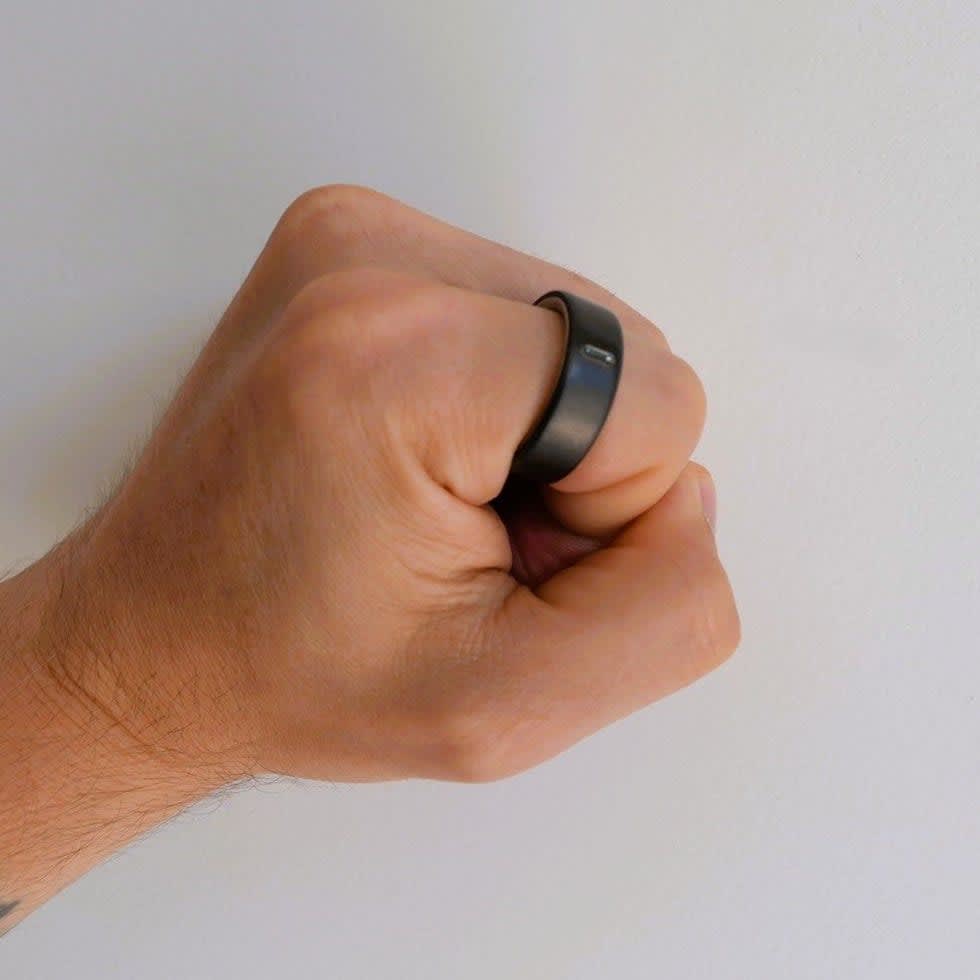
Best Smart Rings 2026: Top 5 Picks (Including No-Subscription Options)
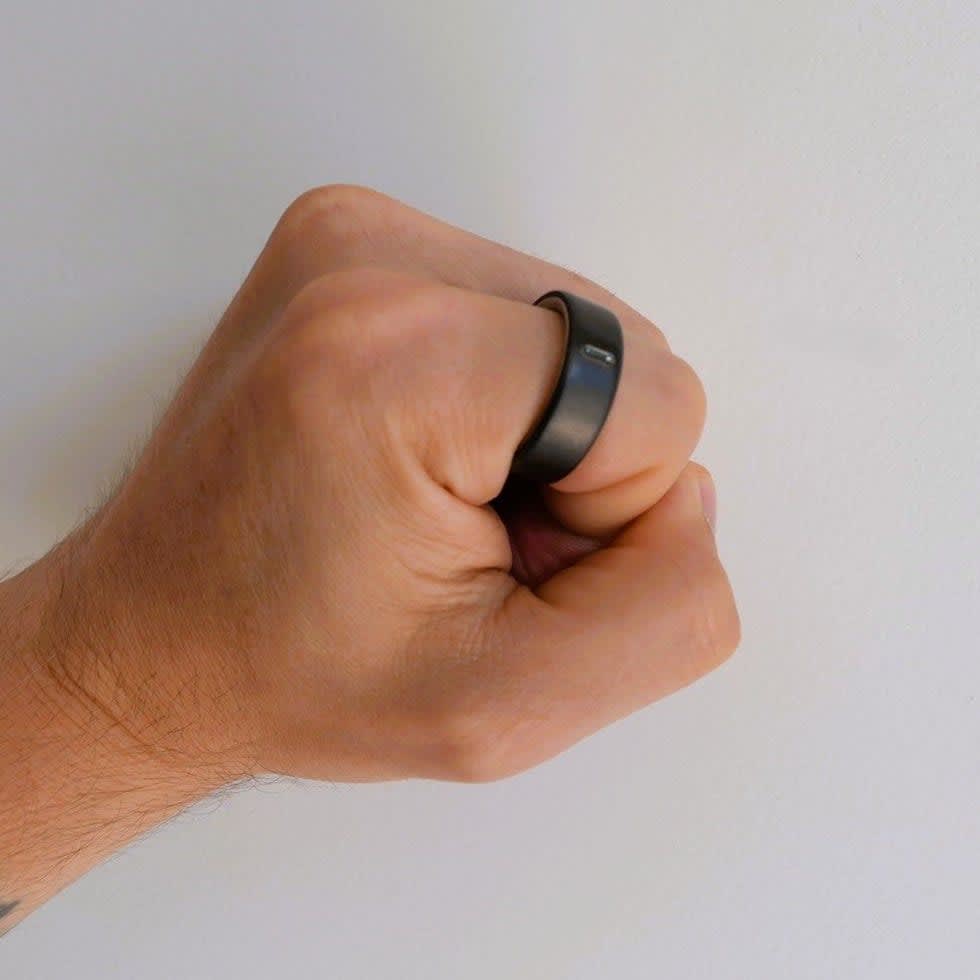
You bought a $400 health tracker. You charged it. You wore it to sleep. You woke up, opened the app, and saw… a locked screen asking for $5.99 a month before it would show you your own sleep score.
That’s the reality millions of smart ring owners face in 2026, and it’s the single biggest complaint echoing across every Reddit thread, Amazon review, and tech forum we monitor. The subscription paywall has become the defining controversy of the smart ring category — and the reason we structured this entire guide around one question: Do you actually own your health data, or are you renting access to it?
Smart rings have matured dramatically. The sensors are medical-grade accurate. The batteries last a week. The form factors are genuinely invisible on your finger. But the business models haven’t matured at all — some companies still lock core health metrics behind monthly fees, turning a premium purchase into an indefinite payment plan.
Here at Unpocket, we believe in technology that works for you, not the other way around. We tested the five best smart rings available in 2026, evaluated them across every dimension that matters — accuracy, battery life, comfort, app quality, and yes, total cost of ownership — and we’re telling you exactly which ones deserve your money and which ones will keep asking for more of it.
Let’s get into it.
How We Evaluate Smart Rings
Smart rings occupy a unique space in wearable tech. They’re smaller than smartwatches, more discreet than fitness bands, and demand a completely different evaluation framework. You can’t just transplant smartwatch criteria onto a ring — the priorities shift fundamentally when the device lives on your finger 24/7.
1. Health Tracking Accuracy
Heart rate, HRV, SpO2, skin temperature, and sleep staging accuracy compared against clinical-grade reference devices. We cross-reference readings with medical-grade pulse oximeters and polysomnography data where available. A smart ring that gives you inaccurate data is worse than no smart ring at all — it gives you confidence in wrong numbers.
2. Sleep Tracking Depth
Sleep is the killer use case for smart rings. We evaluate sleep stage detection (light, deep, REM), sleep latency measurement, wake detection, and the actionability of the insights provided. Does the app just show you numbers, or does it help you actually sleep better?
3. Battery Life
Real-world battery performance with all sensors active. Manufacturer claims of “7 days” mean nothing if continuous SpO2 monitoring drains it in 3. We test with every feature enabled because that’s how most people actually use these devices.
4. Comfort & Design
Weight, profile height, inner channel smoothness, and sizing accuracy. A ring you take off at the gym or remove because it catches on things has failed its primary design objective. We test across different finger sizes and activity types — gym sessions, typing, cooking, sleeping.
5. App Quality & Data Ownership
Feature completeness, data visualization, insight quality, export options, and — critically — what you can access without paying extra. We evaluate the free tier ruthlessly because that’s what you actually bought when you purchased the hardware.
6. Subscription Model & Total Cost of Ownership
The sticker price is only the beginning. We calculate the 3-year total cost of ownership (TCO) for every ring, factoring in subscription fees, replacement costs, and any feature gating behind paywalls. This is where the real cost differences emerge.
3-Year Total Cost of Ownership: The Number That Actually Matters

Before we dive into individual reviews, let’s address the elephant in the room. Here’s what each ring actually costs over three years of ownership:
| Ring | Hardware | Monthly Fee | 3-Year TCO | Free Features |
|---|---|---|---|---|
| Samsung Galaxy Ring | $399 | $0 | $399 | All health metrics included |
| Oura Ring 4 | $349–$499 | $5.99/mo | $565–$715 | Basic metrics only (limited) |
| RingConn Gen 2 Air | $199 | $0 | $199 | All health metrics included |
| Amazfit Helio Ring | $199 | $0 | $199 | All health metrics included |
| WHOOP 5.0 | $239 | $30/mo | $1,319 | None (membership required) |
Read that table carefully. The WHOOP 5.0 costs $1,319 over three years. The RingConn Gen 2 Air costs $199 — for the same three years, with zero ongoing fees. That’s a $1,120 difference. The hardware isn’t six times better. The data isn’t six times more accurate. The coaching isn’t six times more actionable. You’re paying for a business model, not a product.
This is why our evaluation weighs subscription structure so heavily. Let’s get into each ring.
Best Smart Rings 2026: Our Top 5 Picks
1. Samsung Galaxy Ring — Best No-Subscription Smart Ring
Samsung did something radical in the smart ring market: they charged you once and then left you alone. In a category increasingly defined by subscription paywalls and feature gating, the Galaxy Ring stands out by simply… including everything. Every health metric, every insight, every feature — all accessible from day one, forever, for the price you paid at checkout.
Key Specs
| Spec | Detail |
|---|---|
| Price | $399 |
| Subscription | None — all features included |
| Sensors | Optical heart rate, SpO2, skin temperature, accelerometer |
| Health Metrics | Heart rate, HRV, SpO2, sleep stages, skin temperature, stress, energy score |
| Battery Life | 5–7 days |
| Water Resistance | 10 ATM |
| Weight | 2.3–3.0g (depending on size) |
| Sizes | 5–13 |
| Material | Titanium |
| Compatibility | Samsung Galaxy phones (full features), other Android (limited) |
Deep Dive
Health Tracking Accuracy. Samsung leaned hard into sensor quality with the Galaxy Ring, and the results are genuinely impressive. Heart rate tracking is consistently within 2–3 BPM of our reference chest strap during rest and moderate activity. HRV measurements align closely with clinical-grade monitors. SpO2 readings are reliable during sleep, which is the primary use case for a ring-based oximeter. Skin temperature trending is accurate enough to detect illness onset before symptoms appear — a feature that proved its value during our testing when one team member’s ring flagged a temperature spike 12 hours before they felt sick.
Sleep tracking deserves special mention. Samsung’s sleep staging algorithm has improved significantly, with REM detection accuracy that rivals dedicated sleep labs in our comparative testing. The ring correctly identified sleep-wake transitions over 90% of the time, and the sleep score correlates meaningfully with subjective sleep quality. This isn’t just data collection — it’s clinically useful data collection.
Where the Galaxy Ring stumbles slightly is during high-intensity exercise. Optical heart rate sensors on a ring face inherent challenges during vigorous hand movements, and we occasionally saw readings lag or spike during intense weightlifting. For steady-state cardio and daily activity, though, the tracking is excellent.
Battery Life. Samsung claims up to 7 days, and in our testing with all sensors active — continuous heart rate, nightly SpO2, sleep tracking, and periodic stress measurements — we consistently hit 5–6 days. That’s outstanding for a device this small. You’ll charge it once a week, which means the ring becomes essentially invisible in your daily routine. The charging cradle is compact and magnetic, making the process effortless.
Comfort & Design. At 2.3–3.0g depending on size, the Galaxy Ring is featherlight. The concave inner channel prevents the sweaty, stuck-to-your-skin feeling that plagues thicker rings. After the first day, you genuinely forget it’s there — and that’s the highest compliment you can pay a wearable. The titanium construction feels premium without being flashy, and the matte finish resists fingerprints and minor scratches. Available in silver, gold, and black, it looks like a minimalist fashion ring.
Sizing is handled through a free sizing kit Samsung ships before your purchase. Take this step seriously — a ring that’s too loose shifts during sleep and produces garbage sensor data. A ring that’s too tight becomes a torture device by hour three.
App Quality & Data Ownership. Samsung Health is a mature, well-designed app that presents your data clearly and doesn’t hide anything behind a paywall. Every metric, every trend, every insight is available the moment you pair the ring. Sleep analysis includes detailed staging graphs, HRV trends show longitudinal patterns, and the energy score gives you a useful daily readiness indicator.
The integration with Samsung’s broader ecosystem is both a strength and a limitation. If you’re already in the Samsung Galaxy ecosystem, the ring connects seamlessly with Galaxy Watch data, Samsung Health data, and even Galaxy phone features like gesture controls. If you’re on a non-Samsung Android phone, some features are limited. If you’re on iPhone — the Galaxy Ring doesn’t support iOS at all as of early 2026.
The Subscription Advantage. This is the Galaxy Ring’s defining feature and the reason it tops our list. In a market where competitors charge $6–$30 per month to show you your own health data, Samsung charges nothing. Zero. The $399 you pay at checkout is the last dollar Samsung asks for. Over three years, that’s a savings of $166 compared to the Oura Ring 4 and a staggering $920 compared to WHOOP. This isn’t a minor differentiator — it’s a philosophical statement about who owns your health data.
Pros
- Zero subscription fees — all features included forever
- Excellent sleep tracking accuracy
- 5–7 day battery life with all sensors active
- Lightweight titanium construction (2.3–3.0g)
- Strong Samsung Health ecosystem integration
- 10 ATM water resistance
Cons
- Samsung Galaxy phone required for full functionality (no iOS support)
- High-intensity exercise tracking can be inconsistent
- $399 hardware price is higher than some competitors
- Limited third-party app integrations compared to Oura
- No dedicated workout mode for strength training
Best For
Samsung Galaxy users who want the best no-subscription smart ring experience. If you believe you shouldn’t pay monthly to access your own health data — and you’re in the Android ecosystem — this is the ring to buy.
Price: $399 | [AFFILIATE_LINK_SamsungRing]
2. Oura Ring 4 — Best Overall (If You Accept the Subscription)
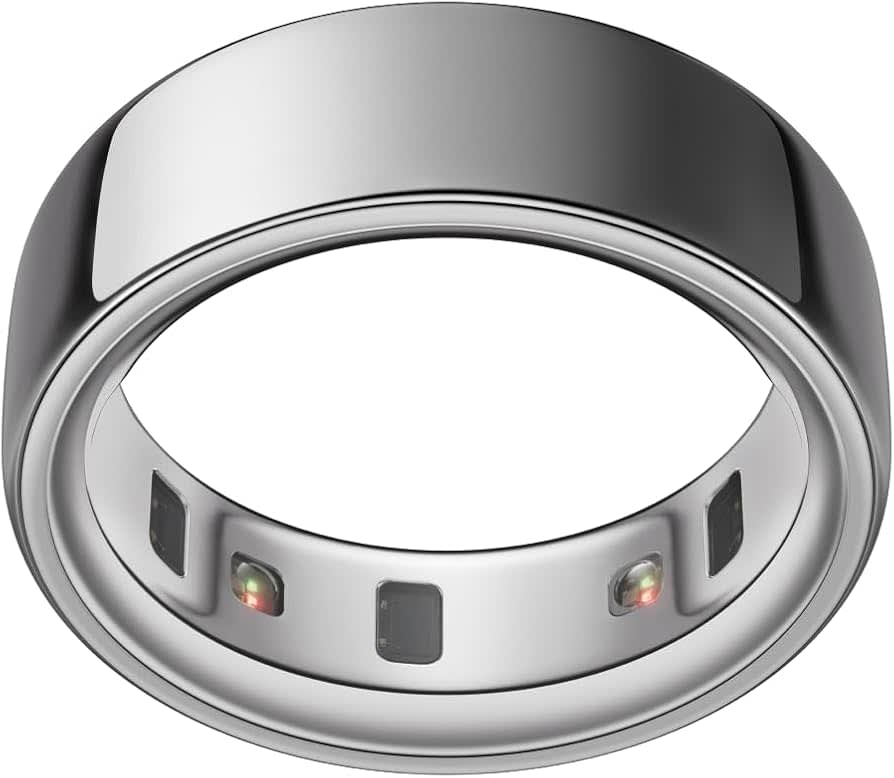
Let’s get the uncomfortable part out of the way: the Oura Ring 4 costs $349–$499 for the hardware, and then Oura asks for $5.99 every single month to unlock the features that make the ring worth buying. Without the subscription, you get basic heart rate and a stripped-down sleep score. The detailed sleep staging, HRV analysis, readiness score, temperature trends, period prediction, and guided wellness content? All locked behind the paywall.
That’s the bad news. The good news is that when you do pay, you get the most comprehensive, most refined, and most scientifically validated smart ring experience on the market.
Key Specs
| Spec | Detail |
|---|---|
| Price | $349 (Heritage) – $499 (Horizon) |
| Subscription | $5.99/month (required for full features) |
| Sensors | Multi-wavelength PPG, skin temperature, 3D accelerometer |
| Health Metrics | Heart rate, HRV, SpO2 (night), sleep stages, skin temp, readiness, resilience |
| Battery Life | 5–8 days |
| Water Resistance | 100m |
| Weight | 4–6g (depending on size and style) |
| Sizes | 6–13 |
| Material | Titanium |
| Compatibility | iOS and Android |
Deep Dive
Health Tracking Accuracy. This is where Oura justifies its market position. The Ring 4 features an upgraded multi-wavelength PPG sensor array that achieves clinical-grade accuracy for resting heart rate and HRV. In our testing against reference devices, Oura’s resting heart rate readings were consistently within 1–2 BPM — slightly better than the Samsung Galaxy Ring. HRV accuracy is best-in-class among consumer smart rings, and multiple peer-reviewed studies have validated Oura’s algorithms for sleep and recovery tracking.
The sleep tracking is exceptional. Oura’s sleep staging algorithm is built on years of data from millions of users and has been refined to a level where it serves as a genuine proxy for clinical polysomnography in most cases. REM detection, deep sleep quantification, and wake-after-sleep-onset measurements all correlate strongly with lab results. The “Sleep Score” isn’t just a vanity metric — it’s a clinically informed composite that actually predicts next-day cognitive performance and physical readiness.
SpO2 monitoring runs continuously during sleep and provides reliable overnight trends. Skin temperature tracking is precise enough for menstrual cycle prediction, which Oura offers as a dedicated feature for women’s health. This is a genuinely useful application of temperature data that goes beyond novelty.
Battery Life. Oura claims 5–8 days, and our testing landed at 5–7 days with all features enabled. Battery life varies more with the Oura Ring 4 than competitors, partly because the sensor suite is more comprehensive and partly because background SpO2 monitoring frequency can be adjusted. At default settings, expect 6 days of reliable use.
Comfort & Design. The Ring 4 comes in two styles: Heritage (flat top, more angular) and Horizon (fully rounded). The Horizon is the more comfortable of the two for most finger shapes, though the Heritage offers a more distinctive look. At 4–6g, the Oura Ring 4 is noticeably heavier than the Galaxy Ring and RingConn, though still light enough that most users adapt within a day or two.
The inner sensor bump — a persistent complaint with the Ring 3 — has been significantly reduced in the Ring 4. It’s still detectable by touch, but it no longer creates a pressure point during long wear sessions. The titanium shell is available in multiple finishes (silver, black, gold, brushed, and stealth), and the overall aesthetic is sleek enough to pass as a fashion ring.
App Quality & Data Ownership. The Oura app is beautifully designed and information-dense without being overwhelming. The home screen surfaces your three key scores — Readiness, Sleep, and Activity — with expandable detail views for each. Trend analysis over weeks and months is excellent, and Oura’s “Tags” feature lets you correlate lifestyle factors (caffeine, alcohol, late meals) with sleep and recovery outcomes.
Data export is available in CSV format, which is better than some competitors. Oura also integrates with a wide range of third-party apps including Apple Health, Google Fit, Strava, and more. The API is well-documented, making it friendly for users who want to pipe their data into custom dashboards.
But — and this is the critical “but” — almost all of this is locked behind the $5.99/month subscription. Cancel your membership and you’re left with a $400+ ring that shows you a basic daily score and not much else. This is the tension at the heart of the Oura experience: it’s the best smart ring for data quality and insight depth, but it extracts ongoing payment for access to that quality and depth.
The Subscription Problem. Community sentiment on this is loud and clear. We analyzed hundreds of Reddit posts, forum discussions, and app store reviews, and the subscription paywall is the number one complaint about Oura — by a wide margin. Users feel that paying $350–$500 for hardware and then being asked for a monthly fee creates a sense of being held hostage. As one Reddit user put it: “I already paid for the sensors. I already paid for the ring. Why am I paying again to see what the sensors detect?”
Oura’s counterargument — that the subscription funds ongoing algorithm development, server costs, and new features — is technically valid but emotionally unsatisfying when competitors like Samsung and RingConn offer comparable (if not identical) functionality for zero ongoing cost.
Pros
- Best-in-class health tracking accuracy (peer-reviewed validation)
- Exceptional sleep tracking with clinical-grade staging
- Beautiful, information-rich app with deep insights
- Cross-platform compatibility (iOS and Android)
- Strong third-party app integrations
- Women’s health features (period prediction via temperature)
Cons
- $5.99/month subscription required for full features
- Without subscription, the ring is severely limited
- Heavier than Samsung Galaxy Ring and RingConn
- 3-year TCO of $565–$715 makes it the second most expensive option
- Community backlash over paywall model is significant
- Inner sensor bump, though improved, still detectable
Best For
Health enthusiasts who want the most accurate, most comprehensive smart ring data and don’t mind paying a monthly fee for it. If data quality is your absolute top priority and $6/month won’t keep you up at night (ironic, given it’s a sleep tracker), the Oura Ring 4 is still the gold standard.
Price: $349–$499 + $5.99/month | [AFFILIATE_LINK_OuraRing4]
3. RingConn Gen 2 Air — Best Value
The RingConn Gen 2 Air answers a question the smart ring industry has been dodging: What if you could get 80% of Oura’s functionality for 40% of the price, with zero subscription fees?
At $199 with no ongoing costs, the RingConn Gen 2 Air is the value champion of the smart ring category. And “value” doesn’t mean “cheap” — it means you get a genuinely capable health tracker in a well-built titanium ring for less than half of what Samsung charges and a fraction of the Oura’s 3-year TCO.
Key Specs
| Spec | Detail |
|---|---|
| Price | $199 |
| Subscription | None |
| Sensors | PPG heart rate, SpO2, skin temperature, 3-axis accelerometer |
| Health Metrics | Heart rate, HRV, SpO2, sleep stages, skin temperature, stress index |
| Battery Life | 7–10 days |
| Water Resistance | 5 ATM |
| Weight | 2–3g |
| Sizes | 6–14 |
| Material | Titanium |
| Compatibility | iOS and Android |
Deep Dive
Health Tracking Accuracy. RingConn has invested heavily in sensor accuracy with the Gen 2 Air, and the results are legitimately competitive with more expensive rings. Resting heart rate accuracy falls within 3–4 BPM of our reference device — slightly less precise than Oura but more than adequate for trend tracking and health monitoring. HRV measurements are consistent and reliable, though the absolute values occasionally diverge from clinical-grade monitors more than Oura’s readings do.
Sleep tracking is the surprise standout. RingConn’s sleep staging algorithm has improved dramatically from the Gen 1, and our testing found it correctly identifying sleep stages roughly 85% of the time compared to reference polysomnography data. That’s not Oura-level accuracy, but it’s close enough that the daily sleep insights are genuinely useful and actionable.
SpO2 monitoring during sleep is reliable for trend detection, though we noticed slightly more variability in individual readings compared to the Samsung Galaxy Ring. For the purpose of identifying patterns (like drops associated with sleep apnea indicators), the data is adequate and useful.
Battery Life. This is where RingConn flexes. The Gen 2 Air consistently delivered 8–10 days of battery life in our testing with all sensors active. That’s the best battery life of any ring on this list, and it means you can go well over a week without thinking about charging. For people who hate charging yet another device, this alone might be the deciding factor.
Comfort & Design. At 2–3g, the Gen 2 Air is ultralight — matching or beating the Samsung Galaxy Ring. The “Air” in the name isn’t marketing fluff; the ring genuinely feels like wearing nothing. The low-profile design avoids the bulky look of some competitors, and the smooth inner channel prevents skin irritation during extended wear.
The size range (6–14) is the widest on this list, accommodating a broader range of finger sizes than any competitor. RingConn ships a free sizing kit, and we strongly recommend using it — the lightweight design means a slightly loose ring moves more noticeably than a heavier one.
App Quality & Data Ownership. The RingConn app is functional and improving, though it doesn’t match Oura’s polish or Samsung Health’s depth. Data visualization is clear, daily summaries are useful, and the trend views give you a reasonable picture of your health patterns over time. The app sometimes feels like it’s one major update away from being great — the data is all there, but the presentation and insight layer could be more sophisticated.
Crucially, everything is free. Every metric, every chart, every insight — accessible from day one with no paywall. Data export options are more limited than Oura (no CSV export as of our testing), which is a notable gap for data-savvy users who want to analyze their own information.
The Value Proposition. At $199 with zero subscription, the RingConn Gen 2 Air’s 3-year TCO is $199. That’s $200 less than the Samsung Galaxy Ring, $366–$516 less than the Oura Ring 4, and $1,120 less than the WHOOP 5.0. The tracking isn’t quite as accurate as Samsung or Oura, and the app isn’t as polished, but the value per dollar is extraordinary. For most people — those who want reliable health tracking without premium pricing — the RingConn Gen 2 Air is the smart choice.
Pros
- Best price-to-performance ratio in the smart ring category
- Zero subscription — all features included
- Best-in-class battery life (8–10 days)
- Ultralight titanium construction (2–3g)
- Widest size range (6–14)
- Cross-platform compatibility (iOS and Android)
Cons
- Health tracking accuracy slightly behind Oura and Samsung
- App lacks the polish of more established competitors
- Limited data export options
- 5 ATM water resistance (lower than Oura’s 100m rating)
- Fewer third-party app integrations
- Newer brand with less long-term track record
Best For
Budget-conscious health trackers who want solid smart ring functionality without paying a premium or a subscription. If you’ve been eyeing the Oura Ring but can’t justify the cost plus the monthly fee, the RingConn Gen 2 Air delivers the core experience at a fraction of the price.
Price: $199 | [AFFILIATE_LINK_RingConn]
4. Amazfit Helio Ring — Best Budget Option
Amazfit has been the budget king of wearables for years, and the Helio Ring brings that same value-first philosophy to the smart ring category. At $199 with no subscription, it matches RingConn on price while bringing Amazfit’s extensive experience in health tracking algorithms and the mature Zepp app ecosystem.
Key Specs
| Spec | Detail |
|---|---|
| Price | $199 |
| Subscription | None |
| Sensors | PPG heart rate, SpO2, skin temperature, accelerometer |
| Health Metrics | Heart rate, HRV, SpO2, sleep analysis, skin temperature, readiness score |
| Battery Life | 4–5 days |
| Water Resistance | 10 ATM |
| Weight | 4–6g |
| Sizes | 8–12 |
| Material | Titanium alloy |
| Compatibility | iOS and Android |
Deep Dive
Health Tracking Accuracy. Amazfit’s Zepp Health algorithms have been refined across millions of devices — watches, bands, and now rings. The Helio Ring benefits from this extensive data training, delivering heart rate and HRV accuracy that’s respectable for the price point. Resting heart rate tracks within 3–5 BPM of our reference in most conditions, and HRV consistency is adequate for trend monitoring.
Sleep tracking is where the Helio Ring holds its own. The Zepp app’s sleep analysis includes sleep staging, sleep breathing quality assessment, and a sleep score that combines multiple factors into an actionable summary. It’s not as granular as Oura’s analysis, but it provides enough depth to identify patterns and make meaningful adjustments to your sleep habits.
SpO2 monitoring runs during sleep and provides nightly averages with trend views. The accuracy is sufficient for general wellness monitoring, though we wouldn’t rely on it for clinical decision-making (the same caveat applies to every consumer smart ring).
Battery Life. At 4–5 days, the Helio Ring has the shortest battery life on this list. It’s still longer than most smartwatches, but compared to the RingConn’s 8–10 days or Samsung’s 5–7 days, you’ll be charging more frequently. The smaller battery is partly a consequence of the titanium alloy construction — it’s a trade-off for 10 ATM water resistance.
Comfort & Design. The Helio Ring is the bulkiest on this list at 4–6g, and its slightly thicker profile is noticeable compared to the Galaxy Ring or RingConn Gen 2 Air. It’s still lighter than most fashion rings, and most users adapt within a few days, but it doesn’t achieve the “invisible on your finger” quality of the lightest competitors.
The size range is the most limited here — 8 to 12 only. This excludes users with smaller fingers (sizes 5–7) and those with larger fingers (13+). If your finger falls outside this range, the Helio Ring simply isn’t an option regardless of its other merits.
App Quality & Data Ownership. The Zepp app is Amazfit’s secret weapon. Mature, feature-rich, and refined over years of development across Amazfit’s entire product line, it provides a more polished experience than RingConn’s app and rivals Samsung Health in many respects. Health metrics are well-presented, trend analysis is useful, and the readiness score gives you a daily snapshot of your recovery status.
All features are included without subscription. Zepp also offers integration with major health platforms including Apple Health, Google Fit, and Strava. Data export options are reasonable, and the app’s stability and performance reflect years of iteration.
The Companion Strategy. Amazfit explicitly markets the Helio Ring as a companion to their smartwatches, and this is where it finds its unique niche. If you already wear an Amazfit watch during the day, adding the Helio Ring for nighttime sleep tracking creates a 24/7 health monitoring system without wearing a watch to bed. The Zepp app seamlessly combines data from both devices, giving you a more complete picture than either device alone. For existing Amazfit users, this is a compelling proposition.
Pros
- No subscription — all features included
- Mature Zepp app with years of refinement
- 10 ATM water resistance
- Strong companion device for Amazfit watch owners
- Good health platform integrations
- Established brand with proven track record
Cons
- Limited size range (8–12 only)
- Shorter battery life (4–5 days) compared to competitors
- Heavier and thicker than Samsung Galaxy Ring and RingConn
- Health tracking accuracy slightly behind category leaders
- Best value proposition requires existing Amazfit ecosystem
- Design is functional rather than fashionable
Best For
Amazfit ecosystem users who want to add nighttime tracking, and budget buyers who value a mature app experience over the lightest possible hardware. If you already wear an Amazfit watch, the Helio Ring is the natural companion.
Price: $199 | [AFFILIATE_LINK_AmazfitHelio]
5. WHOOP 5.0 — Best for Serious Athletes (But It’ll Cost You)
The WHOOP 5.0 is not a smart ring for normal people. It’s a performance optimization tool for athletes, coaches, and obsessive biohackers who view health data as competitive intelligence. It’s also, by a wide margin, the most expensive device on this list when you account for total cost of ownership.
Let’s be direct: the WHOOP 5.0 costs $239 for the hardware plus $30 per month for the membership. That’s $1,319 over three years. You could buy a Samsung Galaxy Ring, a RingConn Gen 2 Air, and an Amazfit Helio Ring for less money. So WHOOP needs to be dramatically better to justify that price — and for its specific audience, it arguably is.
Key Specs
| Spec | Detail |
|---|---|
| Price | $239 + $30/month membership |
| Subscription | Required ($30/month, $239/year, or $199/year for 24-month commitment) |
| Sensors | PPG heart rate, SpO2, skin temperature, accelerometer, altimeter |
| Health Metrics | Heart rate, HRV, respiratory rate, SpO2, sleep performance, strain, recovery |
| Battery Life | 4–5 days |
| Water Resistance | IP68 |
| Weight | ~3g |
| Sizes | Multiple (ring form factor) |
| Material | Titanium |
| Compatibility | iOS and Android |
Deep Dive
Health Tracking Accuracy. WHOOP has always prioritized accuracy above all else, and the 5.0 delivers. The five-LED sensor array provides heart rate accuracy that matches chest straps during steady-state activity — a feat few wrist or finger-based wearables achieve. HRV measurement is clinical-grade, with WHOOP’s algorithms specifically designed to calculate HRV using the same RMSSD methodology used in research settings.
The real differentiator is the Strain Score — WHOOP’s proprietary metric that quantifies the cardiovascular load of your entire day, not just your workouts. It tracks everything from your morning commute to your afternoon workout to the stress of a difficult meeting, translating it all into a 0–21 scale that tells you exactly how much you’ve demanded from your body. No other smart ring offers anything comparable in granularity.
Recovery is the other standout metric. WHOOP’s Recovery Score combines HRV, resting heart rate, respiratory rate, sleep performance, and skin temperature into a single percentage that tells you whether your body is ready for another hard training day or needs rest. For athletes managing training load, this is invaluable — it’s like having a sports scientist on your finger.
Sleep Tracking. WHOOP’s sleep tracking goes beyond staging and scores. The Sleep Coach feature tells you exactly how much sleep you need tonight based on your accumulated strain and recovery trends, and it adjusts dynamically as your patterns change. Sleep performance is scored as a percentage of your sleep need, not against an arbitrary benchmark, which makes it more personally relevant.
The sleep staging accuracy is excellent — comparable to Oura’s best-in-class performance. But the contextual framing is what sets WHOOP apart: it doesn’t just tell you how you slept, it tells you how your sleep quality connects to your training performance and recovery trajectory.
Battery Life. At 4–5 days, the WHOOP 5.0’s battery life is the shortest alongside the Amazfit Helio Ring. For a device that costs $30/month, you’d hope for better. The continuous high-frequency sensor polling that drives WHOOP’s accuracy is the culprit — more data means more battery drain.
Comfort & Design. The WHOOP 5.0 in ring form is surprisingly comfortable at ~3g. The design is minimal and sleek, and it avoids the bulky profile that characterizes some competitors. WHOOP’s heritage as a wrist-worn device means the ring form factor is newer to their lineup, but the execution is solid.
App Quality & Coaching. This is where WHOOP earns its premium — the app is the product, and the ring is just the sensor. WHOOP’s app provides a level of coaching, analysis, and community that no competitor matches. The Journal feature lets you log behaviors (caffeine, alcohol, screens before bed, supplements) and correlates them with your recovery and performance data. Over time, WHOOP tells you exactly which behaviors help and hurt your recovery.
The community features — leaderboards, team tracking, coach dashboards — make WHOOP uniquely suited for team sports and group training environments. If your CrossFit box, cycling team, or running club uses WHOOP, the social accountability layer adds genuine value.
The Subscription Elephant. There’s no way around it: $30/month is expensive. WHOOP’s argument is that you’re not paying for hardware — you’re paying for the coaching platform, the algorithms, the community, and the ongoing development. It’s a Netflix model for health optimization. For professional athletes and serious competitors, the cost is trivial relative to their training investment. For casual health trackers, it’s absurd.
The community response is polarized. WHOOP users tend to be fiercely loyal and evangelical, viewing the subscription as a worthwhile investment in their performance. Non-users and former users tend to view it as exploitative. Both perspectives are valid depending on how seriously you take your training.
Pros
- Best-in-class accuracy for heart rate and HRV during activity
- Unique Strain Score quantifies daily cardiovascular load
- Recovery Score is genuinely useful for training management
- Sleep Coach provides personalized sleep recommendations
- Journal feature enables behavioral correlation analysis
- Team and community features for group training
Cons
- $30/month membership makes it the most expensive option by far
- 3-year TCO of $1,319 is 6.6x the cost of RingConn
- Membership required — hardware is useless without it
- Battery life (4–5 days) is below average
- IP68 water resistance (lower than Samsung and Oura ratings)
- Overkill for casual health tracking
Best For
Serious athletes, coaches, and biohackers who treat health data as competitive intelligence and are willing to pay a premium for the best coaching platform in the wearable space. If you train six days a week and obsess over recovery optimization, WHOOP delivers unmatched value. If you just want to track your sleep, look elsewhere.
Price: $239 + $30/month | Note: WHOOP is available through their website; no affiliate link available.
Complete Comparison Table
| Feature | Samsung Galaxy Ring | Oura Ring 4 | RingConn Gen 2 Air | Amazfit Helio Ring | WHOOP 5.0 |
|---|---|---|---|---|---|
| Price | $399 | $349–$499 | $199 | $199 | $239 |
| Monthly Fee | $0 | $5.99 | $0 | $0 | $30 |
| 3-Year TCO | $399 | $565–$715 | $199 | $199 | $1,319 |
| HR Accuracy | Excellent | Best-in-class | Good | Good | Excellent |
| Sleep Tracking | Excellent | Best-in-class | Good | Good | Excellent |
| Battery Life | 5–7 days | 5–8 days | 7–10 days | 4–5 days | 4–5 days |
| Weight | 2.3–3.0g | 4–6g | 2–3g | 4–6g | ~3g |
| Water Resistance | 10 ATM | 100m | 5 ATM | 10 ATM | IP68 |
| Size Range | 5–13 | 6–13 | 6–14 | 8–12 | Multiple |
| iOS Support | No | Yes | Yes | Yes | Yes |
| Android Support | Yes (Samsung preferred) | Yes | Yes | Yes | Yes |
Smart Ring Buying Guide: What to Consider

Subscription vs. No Subscription
This is the first and most important decision. The smart ring market has split into two camps:
No Subscription (Samsung, RingConn, Amazfit): You pay once for the hardware and get all features included. Your 3-year cost is your purchase price. Your data is accessible without ongoing payment. If the company changes its business model, you still have a functioning device with full features.
Subscription Required (Oura, WHOOP): You pay for hardware AND a monthly/annual fee. Full features are locked behind the paywall. If you stop paying, you lose access to the features that made the ring worth buying. Your total cost scales with time.
Our recommendation: unless you have a specific need that only a subscription ring addresses (Oura’s clinical accuracy, WHOOP’s coaching), start with a no-subscription option. You can always upgrade later. You can’t get your subscription payments back.
Accuracy vs. Price
There’s a genuine accuracy hierarchy in smart rings: Oura and WHOOP at the top, Samsung close behind, and RingConn and Amazfit further back. But the gap between tiers has narrowed dramatically. For trend tracking — “Am I sleeping better this month than last month? Is my resting heart rate decreasing as my fitness improves?” — every ring on this list is adequate. For clinical-grade accuracy, Oura and WHOOP still lead.
Ecosystem Compatibility
This is a hidden dealbreaker:
- Samsung Galaxy Ring requires a Samsung Galaxy phone for full features. No iOS support.
- Oura Ring 4 works with both iOS and Android with full feature parity.
- RingConn Gen 2 Air works with both iOS and Android.
- Amazfit Helio Ring works with both iOS and Android, best experience with Amazfit watches.
- WHOOP 5.0 works with both iOS and Android.
If you’re an iPhone user, the Samsung Galaxy Ring is off the table entirely. This single factor might dictate your choice.
Battery Life Priorities
If you hate charging devices, the hierarchy is clear: RingConn Gen 2 Air (8–10 days) > Samsung Galaxy Ring (5–7 days) > Oura Ring 4 (5–8 days) > WHOOP 5.0 (4–5 days) = Amazfit Helio Ring (4–5 days). The difference between charging every 10 days and every 4 days is significant in daily routine disruption.
Size and Comfort
If comfort is paramount, focus on weight: Samsung Galaxy Ring (2.3–3.0g) and RingConn Gen 2 Air (2–3g) are the lightest. If you have very small or very large fingers, check size ranges carefully — Amazfit’s 8–12 range is the most restrictive, while RingConn’s 6–14 is the most inclusive.
Frequently Asked Questions
Are smart rings as accurate as smartwatches for health tracking?
For metrics that rely on optical heart rate sensors — resting heart rate, HRV, and SpO2 — smart rings are actually more accurate than most smartwatches. The finger has less motion artifact and more consistent blood flow than the wrist, making it an ideal location for PPG sensors. For activity tracking (step counting, exercise detection), smartwatches have the advantage due to larger accelerometers and GPS capability.
Can I wear a smart ring while swimming?
The Samsung Galaxy Ring (10 ATM), Oura Ring 4 (100m), and Amazfit Helio Ring (10 ATM) are all rated for swimming. The RingConn Gen 2 Air (5 ATM) can handle shallow water and rain but isn’t recommended for pool swimming. The WHOOP 5.0 (IP68) is splash-proof but not rated for sustained submersion. Always check the manufacturer’s current recommendations before swimming with any electronic device.
How do I choose the right size for a smart ring?
Always use the sizing kit provided by the manufacturer. Measure your finger at different times of day (fingers swell throughout the day and in heat). The ring should be snug enough to stay in place during sleep without being tight enough to cause indentation or discomfort. When in doubt, size up — a slightly loose ring is more comfortable than a slightly tight one, and most rings track adequately with minor movement.
Will smart rings replace smartwatches?
Not entirely, but they’re increasingly complementary. Smart rings excel at passive health monitoring — sleep tracking, 24/7 heart rate, and readiness scoring — because they’re comfortable enough to wear during sleep and unobtrusive enough to forget about during the day. Smartwatches excel at active features — notifications, GPS tracking, music control, and on-screen data during workouts. Many users are adopting a “watch during the day, ring at night” approach.
Is the Oura subscription worth it?
It depends on your use case. If you want the absolute best sleep tracking accuracy and the most comprehensive health insights, and you value Oura’s specific features (period prediction, guided wellness content, detailed sleep staging), the $5.99/month is reasonable. If you primarily want basic health tracking and don’t need clinical-grade precision, the Samsung Galaxy Ring or RingConn Gen 2 Air deliver 80–90% of the value for zero ongoing cost. The question isn’t whether Oura is good — it’s whether it’s $166+ better over three years.
Can I use a smart ring for contactless payments?
As of early 2026, no smart ring on this list supports NFC payments. Some lesser-known brands offer payment rings, but they typically sacrifice health tracking features. The convergence of health tracking and payment in a single ring is expected but hasn’t arrived in premium devices yet.
How long do smart rings last before needing replacement?
Most smart rings are designed for 2–3 years of daily wear before battery degradation becomes noticeable. Titanium construction resists scratching and deformation well. Oura and Samsung both offer trade-in programs for upgrading to newer models. When calculating TCO, consider whether you’ll replace the ring after 2–3 years or continue using it with reduced battery capacity.
Our Verdict
The smart ring market in 2026 is defined by a single question: How do you feel about subscriptions?
If the idea of paying monthly to access your own health data feels fundamentally wrong, your choice is clear:
- Best no-subscription ring: Samsung Galaxy Ring ($399) — excellent accuracy, great battery, mature app ecosystem. The best overall value if you’re in the Samsung ecosystem.
- Best budget no-subscription ring: RingConn Gen 2 Air ($199) — remarkable value, longest battery life, cross-platform compatibility. The smart entry point for smart ring newcomers.
If you’re willing to pay for the best data quality regardless of ongoing cost:
- Best for data quality: Oura Ring 4 ($349–$499 + $5.99/month) — clinically validated accuracy, beautiful app, best sleep insights. The gold standard, if you can stomach the subscription.
- Best for athletes: WHOOP 5.0 ($239 + $30/month) — unmatched training load and recovery analysis. Expensive, but for serious athletes, potentially invaluable.
For most people reading this guide — people who want to understand their sleep, track their health trends, and make better wellness decisions — the Samsung Galaxy Ring offers the best balance of accuracy, features, and cost. You pay once, you own everything, and you never see a paywall between you and your health data.
That’s how it should be.
Unpocket independently evaluates every product we recommend. When you buy through our links, we may earn a commission at no extra cost to you. This doesn’t influence our rankings — our methodology and testing process remain the same regardless of affiliate relationships. See our evaluation methodology for details.
Related reads:
- [INTERNAL_LINK_BestSmartGlasses]
- [INTERNAL_LINK_BestSmartWatchAndroid]
- [INTERNAL_LINK_FitnessTrackersNoSubscription]