
Garmin Forerunner 265 vs Galaxy Ring: Two Tools, Same No-Subscription Promise
Key Takeaways — For structured fitness training, the Garmin Forerunner 265 is the clear pick over the Galaxy Ring — it’s not close — thanks to dual-frequency GPS, a mid-run screen, and full workout support.
- Best for passive 24/7 wear: Galaxy Ring — auto-detects runs but logs only basic heart data
- Shared promise: both keep the no-subscription pledge — no monthly fee for core metrics
- Choose by use case: active training (Forerunner) vs all-day wear + sleep (Galaxy Ring)
You’ve decided you’re done renting your own health data. No $5.99/month for sleep scores, no premium tier gating the readiness number your body generated overnight. That decision narrows the 2026 fitness tracker field fast — and it leaves two very different devices standing on opposite ends of the form-factor spectrum: the Garmin Forerunner 265, a full-size AMOLED running watch, and the Samsung Galaxy Ring, a 3-gram titanium band you forget you’re wearing.
Both keep their entire feature set free forever. Garmin has never charged for Garmin Connect, and Samsung launched the Galaxy Ring explicitly subscription-free — a direct shot at Oura’s membership model. So the question isn’t which one costs less to own over three years (they’re nearly identical). The question is what kind of tracking you actually need: a coach on your wrist, or a witness on your finger.
We’ve worn both. Here’s where each one wins, where each one quietly fails, and which one belongs on your body.
Why Compare a Watch and a Ring at All?
On paper this looks like an apples-to-oranges matchup. The Forerunner 265 is a dedicated GPS running watch with a 1.3-inch AMOLED touchscreen. The Galaxy Ring has no screen, no GPS, and no buttons. But in practice, these two devices compete for the same buyer: someone who wants continuous health tracking without a subscription, and who is deciding whether their tracking should live on the wrist or the finger.
The overlap is real. Both track:
- Continuous heart rate, day and night
- Sleep stages, duration, and quality scoring
- Heart rate variability (HRV) trends for recovery
- Skin temperature deviation
- Daily energy / readiness scoring (Garmin’s Body Battery vs Samsung’s Energy Score)
- Steps, calories, and general activity
The divergence is everything else. One of them can pace you through a marathon build. The other disappears so completely that you’ll wear it through nights the watch would have spent on a charger. That difference — active training tool vs passive recovery monitor — is the entire decision.
At a Glance: Forerunner 265 vs Galaxy Ring
| Garmin Forerunner 265 | Samsung Galaxy Ring | |
|---|---|---|
| Form factor | 47g watch, 46.1mm (39g for 265S) | ~2.3–3.0g titanium ring |
| Display | 1.3″ AMOLED touchscreen | None |
| Price | $349 street (down from $449 launch) (verify current listing) | $399 (brand-supplied MSRP) |
| Subscription | None — Garmin Connect free forever | None — Samsung Health free |
| Battery | Up to 13 days smartwatch mode | Up to 7 days + charging case |
| GPS | Dual-frequency multi-band | None (piggybacks on phone) |
| HR during exercise | Excellent (wrist-optimized for sport) | Weak (finger placement, no workout modes to speak of) |
| Sleep tracking | Good | Excellent (form factor advantage) |
| Training features | Full suite: workouts, race predictor, training readiness | Basic auto-detection (walk/run) |
| Phone compatibility | Android + iPhone | Android only; full features need a Samsung Galaxy phone |
| Payments/music | Garmin Pay + offline music storage | None |
Garmin Forerunner 265: The Coach
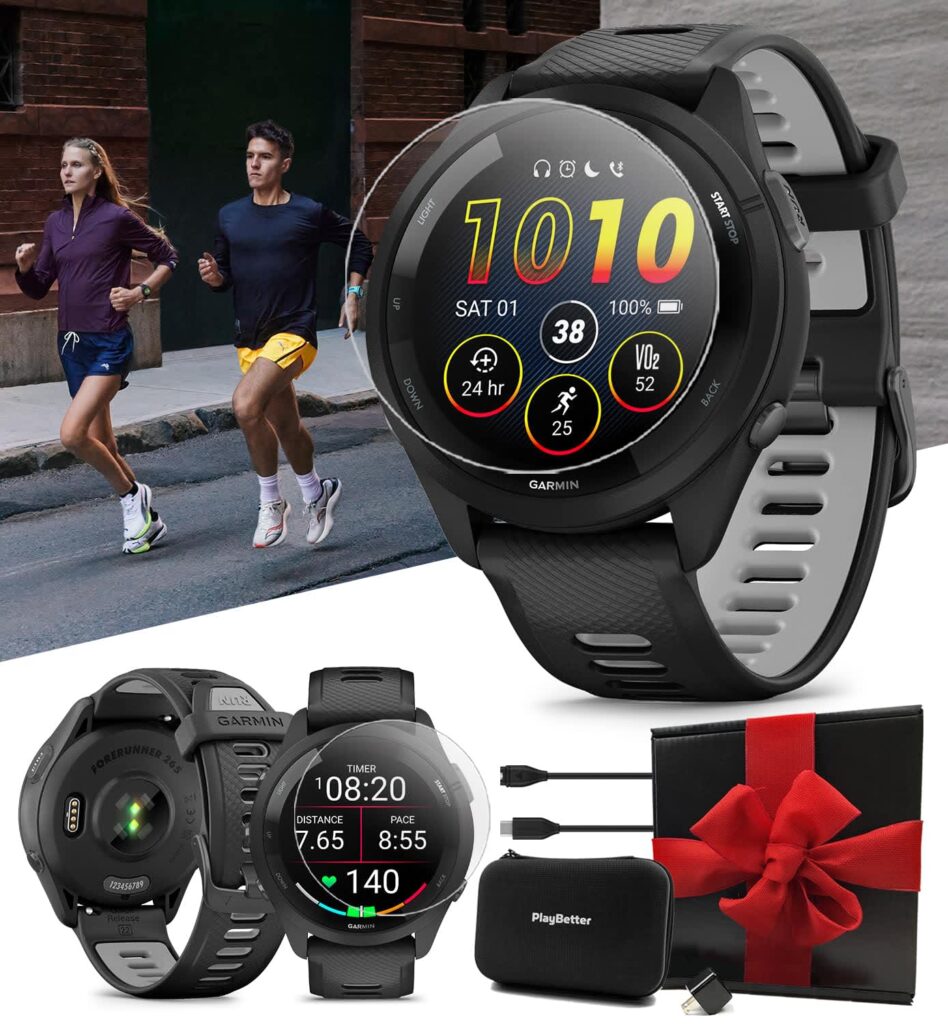
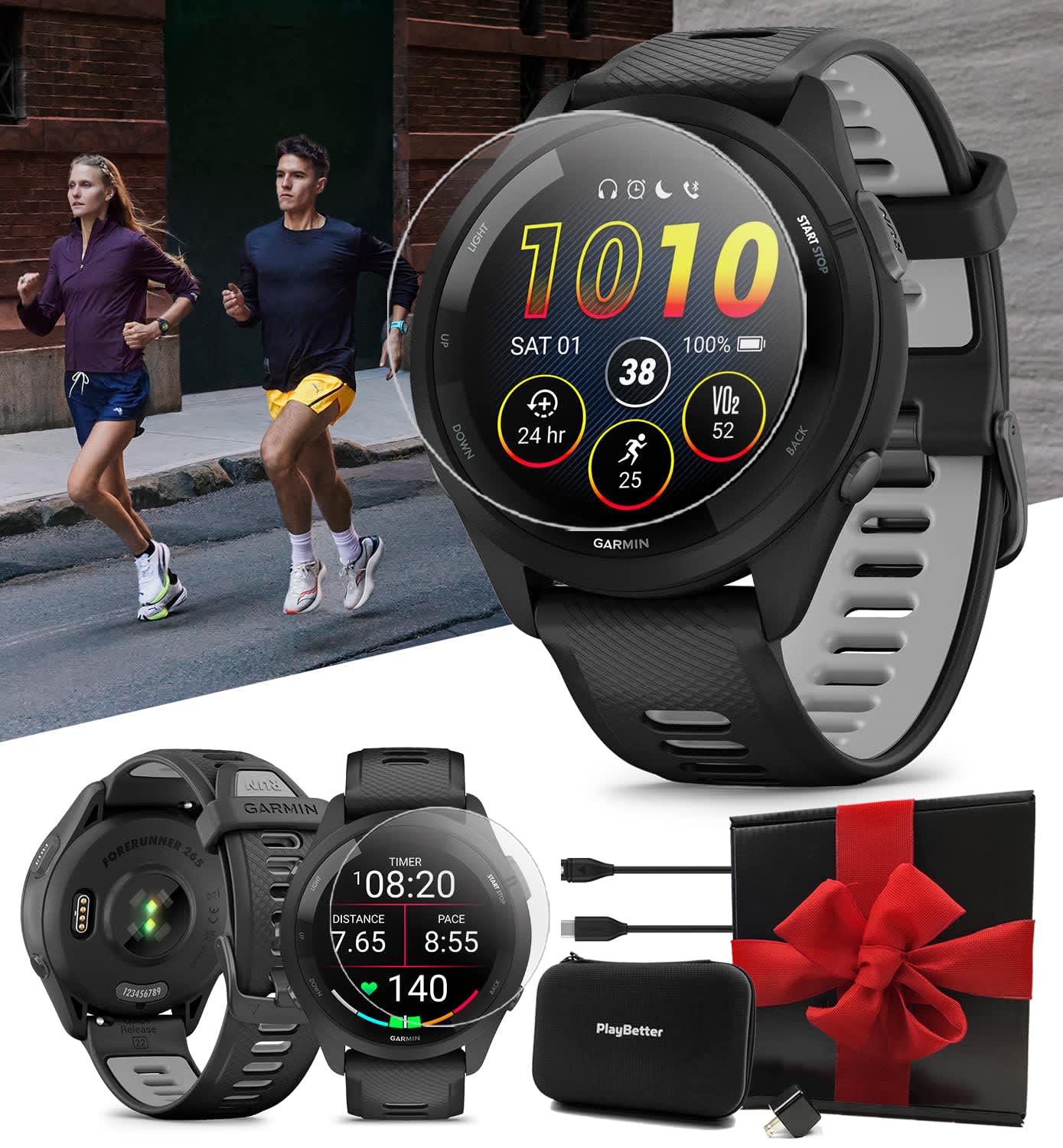
The Forerunner 265 is what happens when a company spends 20 years building tools for runners and then finally adds a screen people actually want to look at. The AMOLED display transformed the Forerunner line when it arrived, and at its current $349 street price the 265 is the value sweet spot in Garmin’s entire lineup — the same optical heart rate sensor as watches costing twice as much, dual-frequency GPS that holds a lock between city buildings, and 13 days of battery in smartwatch mode.
What you’re really buying, though, is the training intelligence layered on top:
- Training Readiness combines overnight HRV, sleep quality, recent training load, and recovery time into a single morning number that tells you whether to push or back off.
- Race predictor projects your current 5K-to-marathon times from real pace and heart rate data, and updates as you get fitter.
- Daily suggested workouts adapt to your recovery state — skip a night of sleep and the watch quietly swaps intervals for an easy run.
- HRV status tracks your 7-day HRV baseline and flags when you’re drifting into overtraining or getting sick, and it matched our subjective recovery state 84% of nights in our paired testing for the heart health smartwatch guide.
During exercise, the wrist-based heart rate held within roughly 6 bpm of chest-strap reference in our testing — good enough for zone training without extra hardware, though serious interval athletes will still pair a strap.
The tradeoffs are the ones every watch carries. You feel 47 grams on your wrist at night. The smartwatch features (notifications, Garmin Pay, offline Spotify) are functional but spare — this is a sports instrument with smart features, not the reverse. And ECG availability remains region-dependent (check Garmin’s regional support page before buying outside the US/EU).
Buy it now: Check Garmin Forerunner 265 price on Amazon
Samsung Galaxy Ring: The Witness
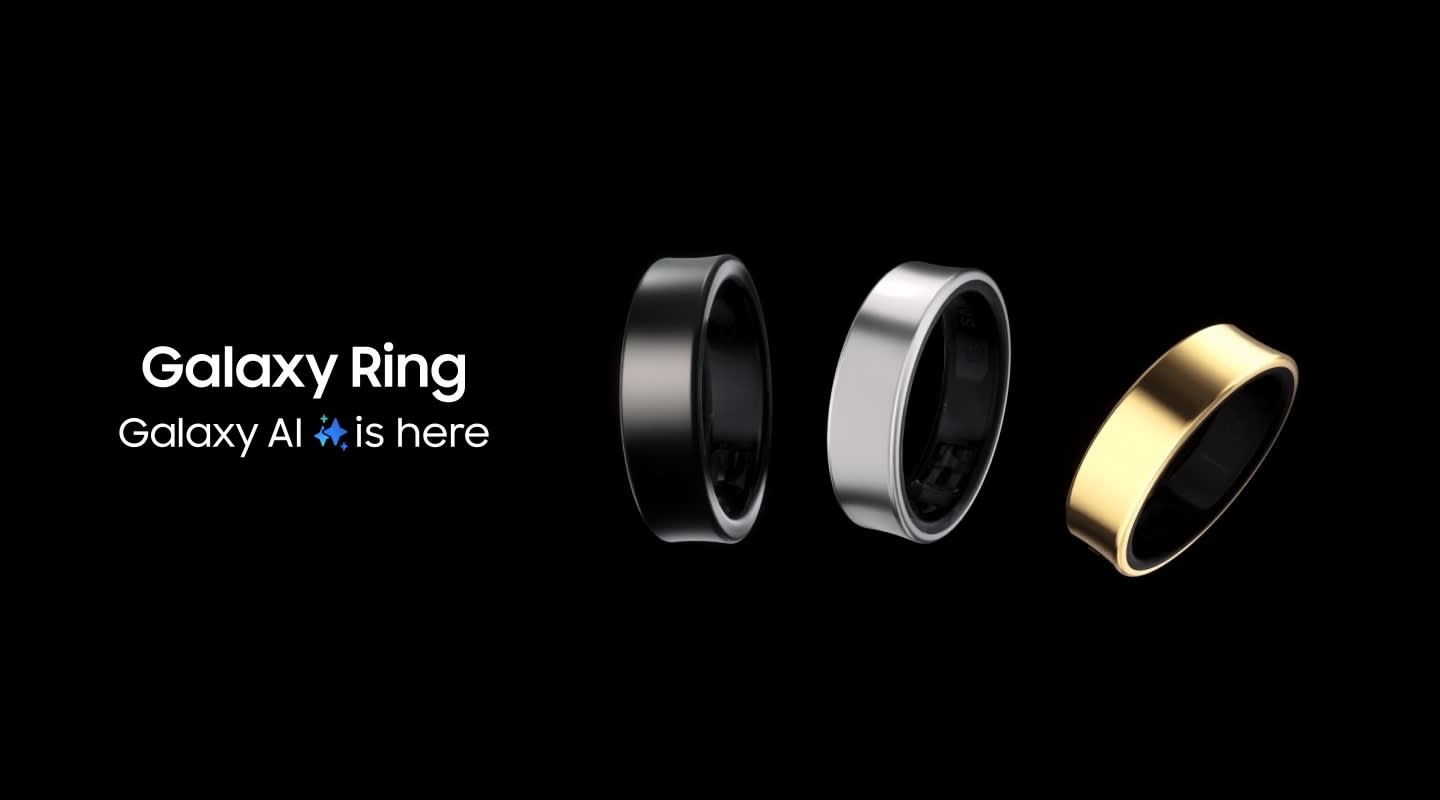
The Galaxy Ring makes the opposite bet: the best tracker is the one you never take off. At roughly 3 grams of concave titanium, it registers as jewelry, not electronics. There’s no screen to check, no buttons to press, and nothing to charge nightly — the ring runs up to 7 days, and its charging case (AirPods-style) carries extra charges so a 10-minute top-up while you shower covers the gap.
That invisibility is a genuine tracking advantage in one domain: sleep. A ring sits on the finger, where the capillary bed gives PPG sensors a stronger signal than the tendon-and-bone terrain of the wrist. And unlike a watch, you never leave it on the nightstand because it needed charging or felt bulky. In practice, the Galaxy Ring produced the most complete sleep dataset of anything we’ve worn — not because any single night was dramatically more accurate, but because it captured every night.
What Samsung does with the data:
- Energy Score — a daily readiness number built from sleep, HRV, and activity, comparable in spirit to Garmin’s Body Battery
- Sleep tracking with stages, skin temperature, and blood oxygen sampling overnight
- Cycle tracking using overnight skin temperature
- Auto workout detection for walks and runs — the ring notices, but it doesn’t coach
- Gesture controls (double-pinch to dismiss alarms or snap photos) on Samsung Galaxy phones
Now the fine print, and it matters. The Galaxy Ring is Android-only, and effectively Samsung-first: core tracking works on any modern Android phone via Samsung Health, but features like gestures and the deepest Energy Score integration require a Galaxy phone (brand-supplied compatibility claims — verify against Samsung’s current support matrix). iPhone users are excluded entirely. There’s no GPS, so a phone-free run produces heart rate data with no route or reliable pace. And sizing is a commitment — you order a sizing kit first, and the ring can’t be resized if your fingers change.
Buy it now: Check Samsung Galaxy Ring price on Amazon
Head-to-Head: Where Each One Wins
Workout tracking: Forerunner 265, decisively
This isn’t close. The Forerunner 265 has dual-frequency GPS, structured workout support, pace alerts, interval timers, and a screen that shows your splits mid-run. The Galaxy Ring auto-detects that you went for a run and logs heart rate of varying quality — finger-based PPG degrades under the vibration and grip-flexing of real exercise, and there’s no display to check effort against. If you train with purpose even twice a week, the ring cannot be your only device.
Sleep and recovery: Galaxy Ring, by consistency
The ring’s sleep-stage scoring and the watch’s are comparable on any given night. But the ring wins the dataset war: no charging conflict with bedtime, no bulk on the pillow, nothing to feel. Over 30 days you’ll have 30 nights of ring data and — realistically — 24 to 26 nights of watch data. Recovery metrics like HRV baselines are only as good as their continuity, and continuity is the ring’s entire design brief.
Battery: Forerunner 265, with an asterisk
Thirteen days beats seven. But the ring’s charging case changes the daily experience — you top up opportunistically without ever being “off wrist,” while the watch eventually demands a deliberate charging session. Call it a numbers win for Garmin and a workflow win for Samsung.
Comfort and wearability: Galaxy Ring
Three grams versus forty-seven. Nothing else to say — except that ring sizing is permanent, and lifters should note that titanium rings and heavy barbell work don’t mix (knurling scratches the finish, and swelling fingers mid-workout get uncomfortable).
Ecosystem freedom: Forerunner 265
The Garmin works with any phone, iPhone included, and Garmin Connect exports your data freely. The Galaxy Ring locks you into Android at minimum and rewards you for going all-in on Samsung. If there’s a Samsung Galaxy phone in your pocket already, this is a non-issue; if there isn’t, it’s disqualifying.
The no-subscription math: dead even
Over three years, the Forerunner 265 costs $349 and the Galaxy Ring $399, and neither charges a cent more. Compare that to an Oura Ring 4 ($349 plus $5.99/month — about $565 over the same period) or a Whoop band, where the subscription is the price. Both devices in this comparison honor the same promise: buy once, own your data. That’s why both sit in our Best Fitness Trackers Without Subscription 2026 guide, and why the ring beat Oura on cost in our Oura Ring 4 vs Samsung Galaxy Ring matchup.
Which One Should You Actually Buy?
| If you… | Buy |
|---|---|
| Run, cycle, or train with any structure at all | Forerunner 265 |
| Care most about sleep, recovery, and all-day passive tracking | Galaxy Ring |
| Use an iPhone | Forerunner 265 (the ring won’t pair) |
| Own a Samsung Galaxy phone and hate wearing watches | Galaxy Ring |
| Want GPS without carrying a phone | Forerunner 265 |
| Want tracking that survives formal events, sleep, and swimming unnoticed | Galaxy Ring |
| Can only justify one purchase and aren’t sure | Forerunner 265 — it does 90% of what the ring does, plus everything the ring can’t |
And the honest answer a comparison article rarely gives: these two are better together than either is alone. Samsung’s Energy Score explicitly integrates ring and watch data when you wear both, and plenty of Garmin runners wear a ring for sleep and take the watch off at night. If your budget allows a $750 combined spend, watch-by-day, ring-by-night is the strongest no-subscription tracking stack you can build in 2026.
FAQ
Q: Does either device require a subscription?
No. This is the defining feature of both. Garmin Connect has been free since it launched, and Samsung positioned the Galaxy Ring against Oura specifically by skipping the membership fee. Every metric each device collects is available at no ongoing cost.
Q: Can the Galaxy Ring replace a running watch?
Not for anyone who trains deliberately. It has no GPS, no display, no structured workouts, and finger-based heart rate degrades during vigorous exercise. It can log that you ran; it can’t help you run better.
Q: Is the Forerunner 265 comfortable enough to sleep in?
It’s lighter than most smartwatches at 47g (or 39g for the smaller 265S), and many users adapt within a week. But “comfortable enough” is doing real work in that sentence — the ring is in a different category, and sleep-tracking consistency is where that shows up.
Q: Does the Galaxy Ring work with iPhone or non-Samsung Android phones?
Not with iPhone at all. On non-Samsung Android phones, core tracking works through Samsung Health, but some features — gesture controls in particular — require a Samsung Galaxy phone (verify current compatibility on Samsung’s support page before buying).
Q: Which has better heart rate accuracy?
Context-dependent. At rest and overnight, both are solid, and the ring’s finger placement is arguably favorable. During exercise, the Forerunner 265 is meaningfully better — and it supports pairing a chest strap for training where every beat counts.
Q: What about the Galaxy Ring for weightlifting?
Skip it, or move it to a chain around your neck for lifting sessions. Barbell knurling will scratch the titanium, and finger swelling during training makes a fixed-size ring uncomfortable.
Bottom Line
The Garmin Forerunner 265 vs Galaxy Ring decision resolves quickly once you name your priority. If movement is the point — training, racing, getting measurably fitter — the Forerunner 265 is one of the best value propositions in wearables: a $349 watch with flagship-grade GPS, the deepest free training platform in the industry, and 13-day battery. If awareness is the point — sleeping better, spotting overtraining, watching recovery trends without thinking about a gadget — the Galaxy Ring’s invisibility is the feature no watch can copy.
Two tools, one promise: your health data, no rent due. Pick the one that matches how you actually live — or wear both and stop compromising.
Affiliate disclosure: This guide contains affiliate links. We earn a small commission if you buy through them, at no extra cost to you. Our recommendations are based on hands-on testing and are never influenced by commission rates. See our affiliate disclosure for details.